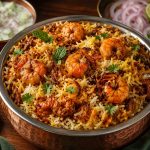
Authentic Kerala Malabar Prawn Biryani Recipe | Traditional Chemmeen Dum Biryani
Authentic Prawn Biryani brings together fresh prawns, fragrant Jeerakasala (Kaima) rice or aged basmati, aromatic whole spices, fresh herbs, and the traditional dum cooking method. Known as Kerala Prawn Biryani, Malabar Prawn Biryani, or Chemmeen Biryani, this regional speciality is prepared by layering marinated prawns with partially cooked rice so that every ingredient cooks together gently. The result is a biryani with separate grains of fragrant rice, tender prawns, and a well-balanced blend of spices that allows the natural sweetness of the seafood to shine.
Servings 5 People
Calories 540kcal
Equipment
- Heavy-bottomed pot or traditional biryani handi with a tight-fitting lid (for dum cooking)Large mixing bowls (for marinating the prawns and preparing the masala)Wide frying pan (for frying the prawns and onions)Slotted spoon (for lifting the prawns and fried onions)Measuring cups and measuring spoonsSharp knife and chopping boardClean kitchen cloth or atta dough (for sealing the pot during dum cooking)
Ingredients
- For the Prawn Marinade
- 500 –600 g fresh prawns cleaned and deveined
- 1 tsp red chilli powder
- ½ tsp turmeric powder
- 1 tsp freshly ground black pepper
- 1 tbsp ginger-garlic paste
- 1 tbsp lemon juice
- Salt to taste
- A few fresh curry leaves optional
- For the Biryani Masala
- 3 –4 tbsp coconut oil or ghee
- 3 large onions thinly sliced
- 2 medium tomatoes finely chopped
- 1 tbsp ginger-garlic paste
- 2 –3 green chillies slit lengthwise
- ½ cup plain curd yoghurt or thick coconut milk
- 1 tsp coriander powder
- 1 –1½ tsp Malabar biryani masala or garam masala, if unavailable
- ¼ cup fresh mint leaves chopped
- ¼ cup fresh coriander cilantro leaves, chopped
- Salt to taste
- For the Rice
- 2 cups Jeerakasala Kaima rice or aged basmati rice
- 2 bay leaves
- 4 cloves
- 1- inch cinnamon stick
- 4 green cardamom pods
- 1 star anise
- 1 tbsp ghee
- Salt to taste
- A generous pinch of saffron strands soaked in 2–3 tbsp warm milk optional
- For Garnishing
- Crispy fried onions birista
- Fried cashews
- Fried raisins
- Additional fresh mint and coriander leaves optional
- 1 tbsp ghee for drizzling before dum cooking (optional)
Instructions
- Step 1: Marinate the Prawns
- In a bowl, combine the prawns with red chilli powder, turmeric powder, black pepper, ginger-garlic paste, lemon juice, and salt. Mix well and set aside for 20–30 minutes.
- Step 2: Cook the Prawns
- Heat a little coconut oil or ghee in a wide frying pan. Add the marinated prawns and cook over medium heat for 2–3 minutes on each side, just until they turn pink and lightly golden. Remove from the pan and keep aside. Avoid overcooking, as prawns become firm very quickly.
- Step 3: Prepare the Masala
- Heat the remaining coconut oil or ghee in a heavy-bottomed pot or biryani handi. Fry the sliced onions until golden brown, then transfer half to a plate for garnishing. Add the ginger-garlic paste, green chillies, and chopped tomatoes. Cook until the tomatoes soften.
- Stir in the curd or coconut milk, coriander powder, Malabar biryani masala, and salt. Cook for a few minutes until the masala comes together. Gently add the cooked prawns and half of the chopped mint and coriander leaves. Mix carefully to coat the prawns without breaking them.
- Step 4: Cook the Rice
- Wash and soak the Jeerakasala (Kaima) rice or aged basmati rice for 20–30 minutes. Bring plenty of water to a boil with the whole spices, salt, and ghee. Add the soaked rice and cook until it is about 70–75% done. Drain well.
- Step 5: Layer the Biryani
- Spread half of the prawn masala evenly over the base of the handi. Cover it with half of the partially cooked rice. Repeat with the remaining masala and rice. Top with the reserved fried onions, saffron milk, fried cashews, fried raisins, a drizzle of ghee, and the remaining mint and coriander leaves.
- Step 6: Cook on Dum
- Cover the pot with a tight-fitting lid. If desired, seal the edges with atta dough or place a clean kitchen cloth under the lid to help retain the steam. Cook over low heat for 20–25 minutes.
- Step 7: Rest and Serve
- Turn off the heat and let the biryani rest for 10 minutes before opening the pot. Gently fluff the rice with a fork or slotted spoon and serve hot with raita, pickle, papad, or your favourite side dish.
Notes
Madhu Savara’s Tips and Variations
- Choose fresh, medium to large prawns, as they hold their shape better during dum cooking.
- Avoid overcooking the prawns while frying, as they will continue to cook during the final dum.
- For a traditional Kerala Malabar Prawn Biryani, use Jeerakasala (Kaima) rice and coconut milk.
- Fresh mint, coriander, and curry leaves add the characteristic aroma of coastal biryanis.
- Adjust the quantity of green chillies and red chilli powder to suit your preferred spice level.
- For a seafood variation, combine the prawns with firm fish or squid.
- A small pinch of fennel powder is used in some coastal households for additional flavour.
- Fried cashews and raisins add a festive touch and are especially popular for special occasions.