Authentic Kerala Malabar Prawn Biryani Recipe | Traditional Chemmeen Dum Biryani
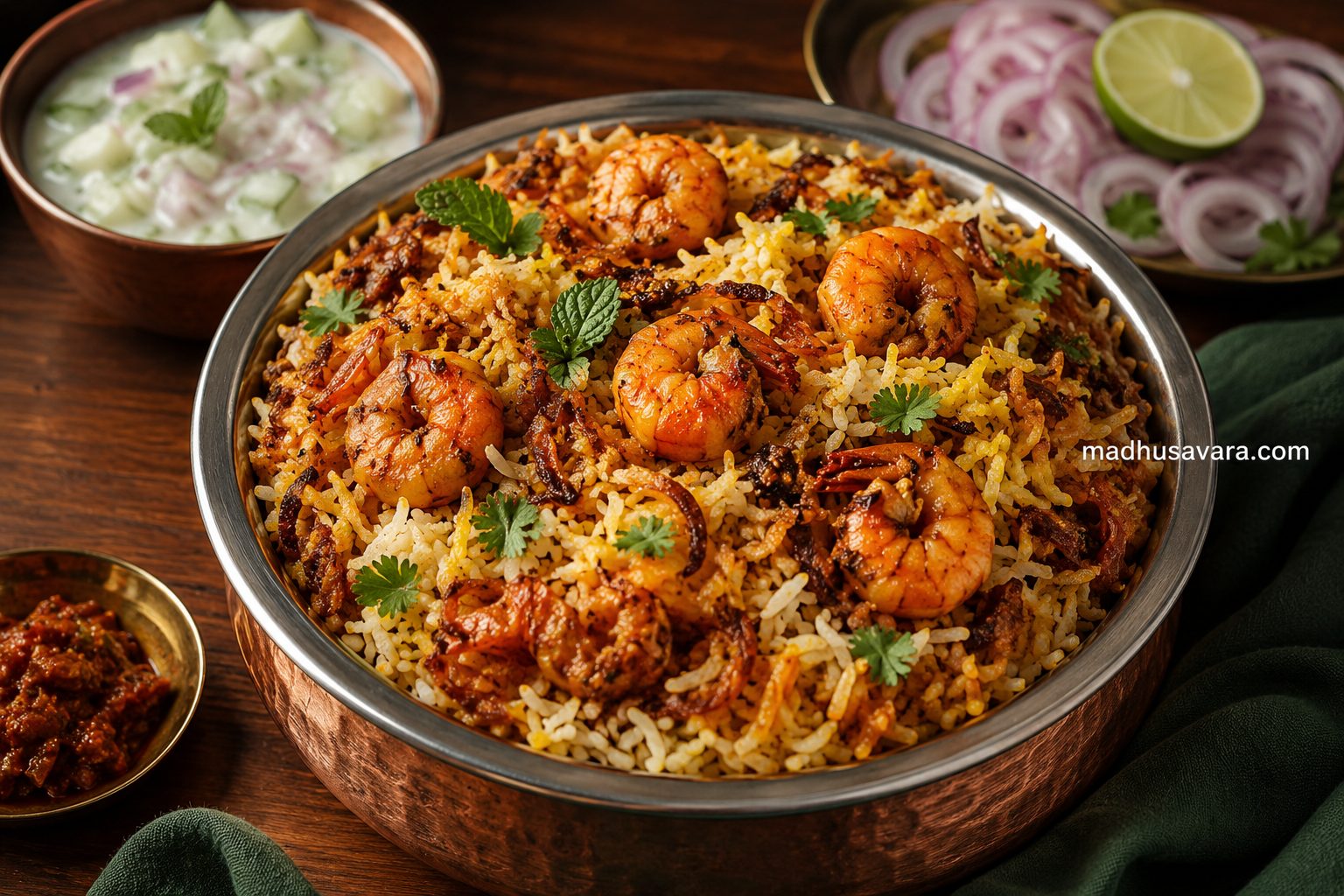
Authentic Kerala Malabar Prawn Biryani served in a traditional copper handi with fragrant Jeerakasala rice, tender prawns, caramelised onions, fresh mint, coriander, fried cashews, raisins, cucumber raita, lemon wedges, papad, and pickle.

Author’s Note

Hello friends, I am Madhu Savara, the home cook behind madhusavara.com. Having grown up close to the coastal traditions of Karnataka and inspired by the flavours of Kerala’s Malabar region, Prawn Biryani has always been one of the dishes I enjoy making for family meals. The aroma of fresh prawns, fragrant rice, whole spices, and curry leaves slowly cooking on dum always reminds me why coastal cuisine is loved across southern India. This Authentic Prawn Biryani Recipe, inspired by the traditional Kerala Malabar Prawn Biryani (also known as Chemmeen Biryani), stays true to those regional flavours while remaining simple enough to prepare in a home kitchen.

Authentic Prawn Biryani brings together fresh prawns, fragrant Jeerakasala (Kaima) rice or aged basmati, aromatic whole spices, fresh herbs, and the traditional dum cooking method. Known as Kerala Prawn Biryani, Malabar Prawn Biryani, or Chemmeen Biryani, this regional speciality is prepared by layering marinated prawns with partially cooked rice so that every ingredient cooks together gently. The result is a biryani with separate grains of fragrant rice, tender prawns, and a well-balanced blend of spices that allows the natural sweetness of the seafood to shine.

The origins of Kerala Malabar Prawn Biryani lie along the Malabar Coast, where the Mappila community developed a distinctive biryani tradition influenced by centuries of maritime trade with Arab merchants. Surrounded by abundant seafood, aromatic spices, and locally grown Jeerakasala rice, the region created biryanis that reflect Kerala’s rich coastal food heritage while preserving the traditional dum cooking method.

For generations, Chemmeen Biryani has been prepared for Eid celebrations, weddings, family gatherings, and festive meals across northern Kerala. It represents the close connection between the people of the Malabar Coast and the Arabian Sea, where fresh seafood has always been an important part of everyday cooking as well as special occasions. Today, it remains one of Kerala’s most cherished regional biryanis.

People love this Authentic Prawn Biryani Recipe for its light yet satisfying character. The tender prawns cook quickly, the fragrant rice absorbs the delicate flavours of the spices, and the biryani feels balanced without being overly rich. Whether served with onion raita, pickle, papad, or salan, Kerala Prawn Biryani is equally suited to a relaxed family lunch, a festive dinner, or a special weekend meal.

Table of Contents

  • Author’s Note
  • About This Authentic Prawn Biryani Recipe
  • Origin and Cultural Significance
  • Why You’ll Love This Kerala Malabar Prawn Biryani
  • Cuisine and Course
  • Preparation Time, Cooking Time, Servings & Nutrition
  • Comparison with Other Famous Biryanis
  • Ingredients
  • Equipment Needed
  • Step-by-Step Cooking Method
  • Allergen Information
  • Madhu Savara’s Tips and Variations
  • Things to Avoid
  • Storage Instructions
  • Frequently Asked Questions
  • Final Thought
  • Author’s Bio

Servings

5 Serving

Preparation Time:

40 Minutes

Cooking Time:

50 minutes

Calories

540

Ingredients

Ingredients

For the Prawn Marinade

  • 500–600 g fresh prawns, cleaned and deveined
  • 1 tsp red chilli powder
  • ½ tsp turmeric powder
  • 1 tsp freshly ground black pepper
  • 1 tbsp ginger-garlic paste
  • 1 tbsp lemon juice
  • Salt, to taste
  • A few fresh curry leaves (optional)

For the Biryani Masala

  • 3–4 tbsp coconut oil or ghee
  • 3 large onions, thinly sliced
  • 2 medium tomatoes, finely chopped
  • 1 tbsp ginger-garlic paste
  • 2–3 green chillies, slit lengthwise
  • ½ cup plain curd (yoghurt) or thick coconut milk
  • 1 tsp coriander powder
  • 1–1½ tsp Malabar biryani masala (or garam masala, if unavailable)
  • ¼ cup fresh mint leaves, chopped
  • ¼ cup fresh coriander (cilantro) leaves, chopped
  • Salt, to taste

For the Rice

  • 2 cups Jeerakasala (Kaima) rice or aged basmati rice
  • 2 bay leaves
  • 4 cloves
  • 1-inch cinnamon stick
  • 4 green cardamom pods
  • 1 star anise
  • 1 tbsp ghee
  • Salt, to taste
  • A generous pinch of saffron strands soaked in 2–3 tbsp warm milk (optional)

For Garnishing

  • Crispy fried onions (birista)
  • Fried cashews
  • Fried raisins
  • Additional fresh mint and coriander leaves (optional)
  • 1 tbsp ghee, for drizzling before dum cooking (optional)

Equipment Needed

  • Heavy-bottomed pot or traditional biryani handi with a tight-fitting lid (for dum cooking)
  • Large mixing bowls (for marinating the prawns and preparing the masala)
  • Wide frying pan (for frying the prawns and onions)
  • Slotted spoon (for lifting the prawns and fried onions)
  • Measuring cups and measuring spoons
  • Sharp knife and chopping board
  • Clean kitchen cloth or atta dough (for sealing the pot during dum cooking)

Nutrition Information

(Approximate per Serving – 1 Plate, ~300 g)

Nutrient Approximate Amount % Daily Value*
Calories 510 kcal 26%
Protein 24–30 g 48–60%
Carbohydrates 55–65 g 20–22%
Total Fat 16–20 g 22–28%
Saturated Fat 4–6 g 20–30%
Dietary Fiber 3–4 g 12–15%
Cholesterol 170–210 mg 57–70%
Sodium 700–900 mg 30–39%
Potassium 450–550 mg 10–12%
Omega-3 Fatty Acids Moderate

* Per cent Daily Values are based on a 2,000-calorie diet and may vary depending on the ingredients and portion size.

Nutritional Highlights: Fresh prawns provide high-quality lean protein, omega-3 fatty acids, vitamin B12, iodine, selenium, and phosphorus. Aromatic spices, herbs, and curry leaves contribute flavour along with beneficial plant compounds, making this Authentic Prawn Biryani Recipe a balanced and satisfying meal.

Comparison with Other Famous Biryanis

Biryani Main Ingredient Flavour Profile Rice Traditionally Used Cooking Time What Makes It Special
Kerala Malabar Prawn Biryani Fresh prawns Coastal, aromatic, gently spiced Jeerakasala (Kaima) or aged basmati Medium Tender prawns, coconut, curry leaves, and traditional Malabar flavours
Hyderabadi Mutton Biryani Mutton Rich, bold, and deeply spiced Aged basmati Long Royal dum cooking with robust spices and tender meat
Lucknowi (Awadhi) Biryani Mutton or chicken Mild, delicate, and fragrant Aged basmati Long Refined flavours with subtle whole spices and saffron
Chicken Biryani Chicken Well-balanced and mildly spicy Aged basmati Medium Popular family favourite with versatile regional variations
Egg Biryani Boiled eggs Light, comforting, and moderately spiced Aged basmati Short Simple, protein-rich, and ideal for everyday meals

How This Recipe Stands Out: Kerala Malabar Prawn Biryani offers the freshness of seafood, the fragrance of Jeerakasala rice, and the distinctive flavours of curry leaves, coconut, and coastal spices. Compared with many meat-based biryanis, it cooks more quickly while delivering a light, aromatic, and satisfying meal that reflects the rich culinary heritage of Kerala’s Malabar Coast.

Step by Step Instructions

Step 1: Marinate the Prawns

In a bowl, combine the prawns with red chilli powder, turmeric powder, black pepper, ginger-garlic paste, lemon juice, and salt. Mix well and set aside for 20–30 minutes.

Step 2: Cook the Prawns

Heat a little coconut oil or ghee in a wide frying pan. Add the marinated prawns and cook over medium heat for 2–3 minutes on each side, just until they turn pink and lightly golden. Remove from the pan and keep aside. Avoid overcooking, as prawns become firm very quickly.

Step 3: Prepare the Masala

Heat the remaining coconut oil or ghee in a heavy-bottomed pot or biryani handi. Fry the sliced onions until golden brown, then transfer half to a plate for garnishing. Add the ginger-garlic paste, green chillies, and chopped tomatoes. Cook until the tomatoes soften.

Stir in the curd or coconut milk, coriander powder, Malabar biryani masala, and salt. Cook for a few minutes until the masala comes together. Gently add the cooked prawns and half of the chopped mint and coriander leaves. Mix carefully to coat the prawns without breaking them.

Step 4: Cook the Rice

Wash and soak the Jeerakasala (Kaima) rice or aged basmati rice for 20–30 minutes. Bring plenty of water to a boil with the whole spices, salt, and ghee. Add the soaked rice and cook until it is about 70–75% done. Drain well.

Step 5: Layer the Biryani

Spread half of the prawn masala evenly over the base of the handi. Cover it with half of the partially cooked rice. Repeat with the remaining masala and rice. Top with the reserved fried onions, saffron milk, fried cashews, fried raisins, a drizzle of ghee, and the remaining mint and coriander leaves.

Step 6: Cook on Dum

Cover the pot with a tight-fitting lid. If desired, seal the edges with atta dough or place a clean kitchen cloth under the lid to help retain the steam. Cook over low heat for 20–25 minutes.

Step 7: Rest and Serve

Turn off the heat and let the biryani rest for 10 minutes before opening the pot. Gently fluff the rice with a fork or slotted spoon and serve hot with raita, pickle, papad, or your favourite side dish.

Tips and Variations

Madhu Savara’s Tips and Variations

  • Choose fresh, medium to large prawns, as they hold their shape better during dum cooking.
  • Avoid overcooking the prawns while frying, as they will continue to cook during the final dum.
  • For a traditional Kerala Malabar Prawn Biryani, use Jeerakasala (Kaima) rice and coconut milk.
  • Fresh mint, coriander, and curry leaves add the characteristic aroma of coastal biryanis.
  • Adjust the quantity of green chillies and red chilli powder to suit your preferred spice level.
  • For a seafood variation, combine the prawns with firm fish or squid.
  • A small pinch of fennel powder is used in some coastal households for additional flavour.
  • Fried cashews and raisins add a festive touch and are especially popular for special occasions.

Allergen Information

Allergen Information

  • Shellfish: Contains prawns (shellfish), a common seafood allergen.
  • Dairy: Contains curd (yoghurt) and ghee.
  • Tree Nuts: May contain cashews if used for garnishing.
  • Gluten: Most ingredients are naturally gluten-free, but some ready-made biryani masalas may contain traces of gluten. Check the label if required.
  • Dietary Suitability: This recipe is not suitable for vegetarians, vegans, or anyone with shellfish, dairy, or tree nut allergies.
  • Ingredient Check: If cooking for someone with food allergies, always read the labels of packaged ingredients before use.
Other Essentials

Things to Avoid

  • Overcooking the prawns, as they can become firm and lose their natural tenderness.
  • Cooking the rice completely before layering; it should remain about 70–75% cooked.
  • Using high heat during the dum stage, which may scorch the bottom of the biryani.
  • Stirring the biryani after layering, as this can break the prawns and the rice.
  • Skipping fresh mint and coriander leaves, which contribute to the characteristic flavour of a traditional Malabar biryani.

Storage Instructions

  • Allow the biryani to cool completely before storing.
  • Refrigerate in an airtight container for up to 2 days.
  • Reheat gently on the stovetop or in the microwave with a tablespoon of water to keep the rice moist.
  • For longer storage, freeze in a freezer-safe container for up to 3 weeks.
  • Thaw overnight in the refrigerator before reheating.

Frequently Asked Questions

What type of prawns are best for Kerala Malabar Prawn Biryani?

Medium or large prawns are the best choice because they remain tender during dum cooking and hold their shape well. Fresh prawns are ideal, but good-quality frozen prawns can also be used after thawing completely.

Can I make this prawn biryani less spicy?

Yes. Reduce the quantity of red chilli powder and green chillies while keeping the other spices the same to maintain the traditional flavour.

What is the difference between Kerala Malabar Prawn Biryani and Hyderabadi Prawn Biryani?

Kerala Malabar Prawn Biryani is traditionally prepared with Jeerakasala (Kaima) rice, coconut oil or coconut milk, and the characteristic flavours of the Malabar Coast. Hyderabadi Prawn Biryani is usually made with aged basmati rice, yoghurt, and a more robust blend of dum spices.

How do I keep the prawns tender?

Cook the prawns only briefly before layering, as they will continue to cook during the dum stage. Overcooking is the most common reason prawns become firm.

What can I serve with prawn biryani?

Kerala Malabar Prawn Biryani pairs well with cucumber raita, onion raita, pickle, papad, or a simple fresh salad.

Explore More Biryani Recipes

If you enjoy discovering India’s rich biryani traditions, don’t miss my World Biryani Day guide, where I’ve brought together the stories and flavours of regional biryanis from across the country. From Hyderabadi and Lucknowi to Malabar, Bhatkali, Kolkata, Kashmiri, Egg, Fish, and many more, it’s a wonderful place to explore the diversity of Indian biryani.

Final Thought

Kerala Malabar Prawn Biryani reflects the rich seafood traditions of India‘s southwest coast, where fragrant rice, fresh prawns, and aromatic spices come together in a meal that has been enjoyed for generations. Whether prepared for a family gathering or a special occasion, this authentic recipe celebrates the timeless flavours of Kerala’s coastal kitchens.

About the Author

Madhu Savara is the founder of madhusavara.com, where she shares authentic Indian regional recipes inspired by family traditions and local food heritage. Her collection celebrates the diverse cuisines of India, with a special focus on Himalayan dishes, traditional biryanis, and time-honoured home cooking that brings people together around the table.

Disclaimer

Important Notice: Read Before Proceeding

The recipes, preparation methods, nutritional details, and related content published on Madhu Savara’s website, social media, and associated platforms are intended solely for general informational and educational purposes. While every effort has been made to ensure accuracy and reliability, we make no guarantees regarding the results, safety, or accuracy of any recipe presented here.

We are not licensed nutritionists, dieticians, or medical professionals. The nutritional values provided are estimates only, calculated using third-party tools, and should not be used for medical diagnosis, dietary treatment, or allergy management. If you have any medical conditions, dietary restrictions, or food allergies, please consult your doctor or certified dietitian before attempting any recipe.

Cooking inherently involves sharp tools, high heat, and the risk of injury or fire. You assume full responsibility for your kitchen practices. Madhu Savara, the website, and all contributors shall not be held liable for any damage, injury, loss, or adverse outcome resulting directly or indirectly from the preparation, consumption, or interpretation of any content herein.

By using this website and attempting any recipe, you agree to hold harmless and indemnify Madhu Savara and her team from any liability, legal claim, or damages arising from the use of this content. You are encouraged to exercise independent judgment and take full responsibility for your health, kitchen safety, and actions.


Authentic Kerala Malabar Prawn Biryani served in a traditional copper handi with fragrant Jeerakasala rice, tender prawns, caramelised onions, fresh mint, coriander, fried cashews, raisins, cucumber raita, lemon wedges, papad, and pickle.
Print

Authentic Kerala Malabar Prawn Biryani Recipe | Traditional Chemmeen Dum Biryani

Authentic Prawn Biryani brings together fresh prawns, fragrant Jeerakasala (Kaima) rice or aged basmati, aromatic whole spices, fresh herbs, and the traditional dum cooking method. Known as Kerala Prawn BiryaniMalabar Prawn Biryani, or Chemmeen Biryani, this regional speciality is prepared by layering marinated prawns with partially cooked rice so that every ingredient cooks together gently. The result is a biryani with separate grains of fragrant rice, tender prawns, and a well-balanced blend of spices that allows the natural sweetness of the seafood to shine.
Course Main Course
Cuisine Kerala (Malabar), South Indian Coastal
Keyword Authentic Prawn Biryani Recipe, Chemmeen Biryani, Homemade Prawn Biryani I, Kerala Malabar Prawn Biryani, Kerala Malabar Prawn Biryani Recipe, Kerala Prawn Biryani, Malabar Prawn Biryani, Prawn Biryani, Prawn Dum Biryani, Traditional Kerala Prawn Biryani
Prep Time 40 minutes
Cook Time 50 minutes
Total Time 1 hour 30 minutes
Servings 5 People
Calories 540kcal
Author Madhu Savara

Equipment

  • Heavy-bottomed pot or traditional biryani handi with a tight-fitting lid (for dum cooking)Large mixing bowls (for marinating the prawns and preparing the masala)Wide frying pan (for frying the prawns and onions)Slotted spoon (for lifting the prawns and fried onions)Measuring cups and measuring spoonsSharp knife and chopping boardClean kitchen cloth or atta dough (for sealing the pot during dum cooking)

Ingredients

  • For the Prawn Marinade
  • 500 –600 g fresh prawns cleaned and deveined
  • 1 tsp red chilli powder
  • ½ tsp turmeric powder
  • 1 tsp freshly ground black pepper
  • 1 tbsp ginger-garlic paste
  • 1 tbsp lemon juice
  • Salt to taste
  • A few fresh curry leaves optional
  • For the Biryani Masala
  • 3 –4 tbsp coconut oil or ghee
  • 3 large onions thinly sliced
  • 2 medium tomatoes finely chopped
  • 1 tbsp ginger-garlic paste
  • 2 –3 green chillies slit lengthwise
  • ½ cup plain curd yoghurt or thick coconut milk
  • 1 tsp coriander powder
  • 1 –1½ tsp Malabar biryani masala or garam masala, if unavailable
  • ¼ cup fresh mint leaves chopped
  • ¼ cup fresh coriander cilantro leaves, chopped
  • Salt to taste
  • For the Rice
  • 2 cups Jeerakasala Kaima rice or aged basmati rice
  • 2 bay leaves
  • 4 cloves
  • 1- inch cinnamon stick
  • 4 green cardamom pods
  • 1 star anise
  • 1 tbsp ghee
  • Salt to taste
  • A generous pinch of saffron strands soaked in 2–3 tbsp warm milk optional
  • For Garnishing
  • Crispy fried onions birista
  • Fried cashews
  • Fried raisins
  • Additional fresh mint and coriander leaves optional
  • 1 tbsp ghee for drizzling before dum cooking (optional)

Instructions

  • Step 1: Marinate the Prawns
  • In a bowl, combine the prawns with red chilli powder, turmeric powder, black pepper, ginger-garlic paste, lemon juice, and salt. Mix well and set aside for 20–30 minutes.
  • Step 2: Cook the Prawns
  • Heat a little coconut oil or ghee in a wide frying pan. Add the marinated prawns and cook over medium heat for 2–3 minutes on each side, just until they turn pink and lightly golden. Remove from the pan and keep aside. Avoid overcooking, as prawns become firm very quickly.
  • Step 3: Prepare the Masala
  • Heat the remaining coconut oil or ghee in a heavy-bottomed pot or biryani handi. Fry the sliced onions until golden brown, then transfer half to a plate for garnishing. Add the ginger-garlic paste, green chillies, and chopped tomatoes. Cook until the tomatoes soften.
  • Stir in the curd or coconut milk, coriander powder, Malabar biryani masala, and salt. Cook for a few minutes until the masala comes together. Gently add the cooked prawns and half of the chopped mint and coriander leaves. Mix carefully to coat the prawns without breaking them.
  • Step 4: Cook the Rice
  • Wash and soak the Jeerakasala (Kaima) rice or aged basmati rice for 20–30 minutes. Bring plenty of water to a boil with the whole spices, salt, and ghee. Add the soaked rice and cook until it is about 70–75% done. Drain well.
  • Step 5: Layer the Biryani
  • Spread half of the prawn masala evenly over the base of the handi. Cover it with half of the partially cooked rice. Repeat with the remaining masala and rice. Top with the reserved fried onions, saffron milk, fried cashews, fried raisins, a drizzle of ghee, and the remaining mint and coriander leaves.
  • Step 6: Cook on Dum
  • Cover the pot with a tight-fitting lid. If desired, seal the edges with atta dough or place a clean kitchen cloth under the lid to help retain the steam. Cook over low heat for 20–25 minutes.
  • Step 7: Rest and Serve
  • Turn off the heat and let the biryani rest for 10 minutes before opening the pot. Gently fluff the rice with a fork or slotted spoon and serve hot with raita, pickle, papad, or your favourite side dish.

Notes

Madhu Savara’s Tips and Variations

  • Choose fresh, medium to large prawns, as they hold their shape better during dum cooking.
  • Avoid overcooking the prawns while frying, as they will continue to cook during the final dum.
  • For a traditional Kerala Malabar Prawn Biryani, use Jeerakasala (Kaima) rice and coconut milk.
  • Fresh mint, coriander, and curry leaves add the characteristic aroma of coastal biryanis.
  • Adjust the quantity of green chillies and red chilli powder to suit your preferred spice level.
  • For a seafood variation, combine the prawns with firm fish or squid.
  • A small pinch of fennel powder is used in some coastal households for additional flavour.
  • Fried cashews and raisins add a festive touch and are especially popular for special occasions.