
Author’s Note
I am Madhu Savara, founder and owner of madhusavara.com.
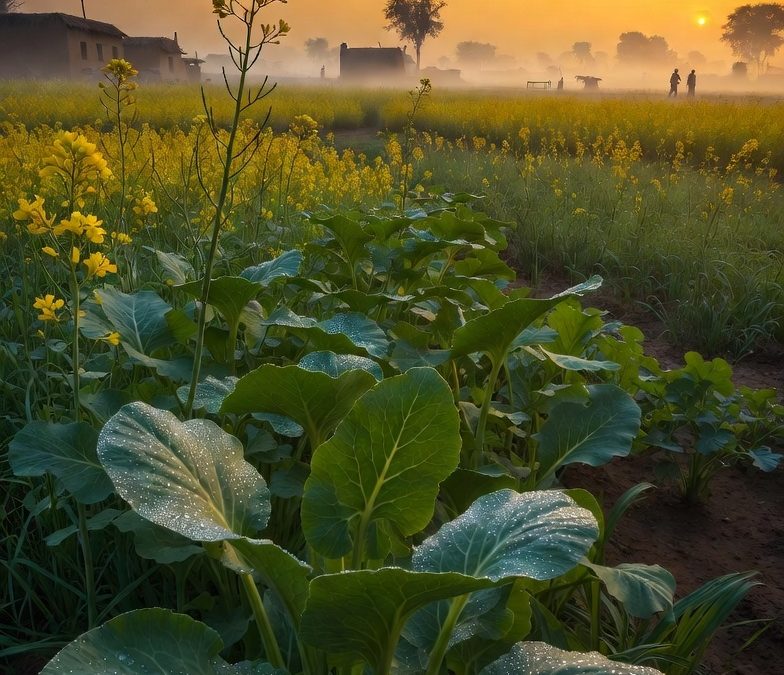
Among all the traditional foods that shaped my childhood in Punjab, Bathu occupies a special place in my memories. Winter in our villages was not merely a season; it was a celebration of nature’s abundance. The fields wore a blanket of fog every morning, mustard flowers coloured the landscape golden yellow and kitchens filled with the comforting aroma of seasonal foods.
One vegetable that quietly arrived every winter was Bathua.
Nobody called it a superfood. Nobody discussed nutrients or dietary trends. Yet almost every household welcomed Bathua because generations already understood its value.
Today, when many traditional foods are disappearing from urban diets, I believe Bathua deserves renewed recognition. This article is my effort to preserve the story of this remarkable winter green for future generations.
A Childhood Memory of Bathua
One winter morning remains vivid in my memory.
I accompanied the elders to nearby wheat fields before sunrise. Dewdrops sparkled on young crops, and cold air carried the fragrance of damp soil. While returning home, women gathered fresh Bathua leaves growing naturally along field edges.
Back in the kitchen, those freshly harvested leaves were washed carefully and transformed into delicious Bathua Parathas and Bathua Saag.
At that age, I simply enjoyed the meal.
Years later, I realised that Bathua represented something much greater. It was a symbol of seasonal eating, village self-reliance and traditional food wisdom.
Today, many expensive foods are marketed as modern health discoveries, yet Bathua has quietly nourished Indian families for centuries.
Preface
Bathu, popularly known as Bathua, is one of India’s most nutritious and widely loved winter leafy vegetables.
For generations, Bathua has supported household nutrition, enriched traditional recipes and strengthened rural food security across northern India. Despite its long history and impressive nutritional profile, Bathua often receives less attention than many commercially promoted vegetables.
As people increasingly return to traditional foods and seasonal eating habits, Bathua is once again gaining recognition as a valuable part of India’s culinary heritage.
This article explores Bathua benefits, Bathua nutrition, history, cultural significance, village life importance and the enduring relationship between Bathua and Indian food traditions.
Table of Contents
- About Bathua
- Origin and History of Bathua
- Botanical Profile
- Regional Names
- Cultural Significance
- Why Villagers Loved Bathua
- Nutritional Value of Bathua
- Why Bathua is a Traditional Indian Superfood
- Bathua and Winter Traditions
- Bathua and Food Security
- Bathua in Village Life
- Why Bathua Became a Lost Food Among Urban Populations
- Traditional Wisdom Associated with Bathua
About Bathua
Bathua is a highly nutritious leafy vegetable that grows abundantly during the winter season.
Scientifically known as Chenopodium album, Bathua has been part of Indian agriculture and cuisine for centuries. The tender Bathua leaves are widely used in traditional recipes and are appreciated for their flavour, versatility and nutritional value.
Bathua is commonly found:
- In cultivated fields
- Along agricultural boundaries
- In kitchen gardens
- Across rural farming landscapes
For many families, the appearance of Bathua marks the arrival of winter and the beginning of a season filled with wholesome traditional foods.
Origin and History of Bathua
The history of Bathua is deeply connected with India’s agricultural heritage.
Long before supermarkets and year-round vegetable availability became common, families relied heavily upon seasonal foods. Bathua emerged as one of the most dependable winter greens because it adapted easily to local conditions and provided abundant edible foliage.
Traditional farming communities across Punjab, Haryana, Rajasthan, Uttar Pradesh and neighbouring regions recognised its value and incorporated it into everyday meals.
Over generations, Bathua became an integral part of Indian village life and culinary traditions.
Botanical Profile
Common Name: Bathu
Popular Name: Bathua
Scientific Name: Chenopodium album
Family: Amaranthaceae
Plant Type: Annual leafy vegetable
Growth Habit: Upright herbaceous plant
Leaf Colour: Green to grey-green
Season: Winter
Harvest Stage: Tender leaves and young shoots
Life Cycle: Annual
Regional Names of Bathua
Bathua is known by different names across various regions of India.
| Region | Common Name |
|---|---|
| Punjab | Bathu |
| Haryana | Bathua |
| Rajasthan | Bathua |
| Uttar Pradesh | Bathua |
| Delhi | Bathua |
| Himachal Pradesh | Bathua |
| Uttarakhand | Bathua Saag |
| Bihar | Bathua |
The widespread use of Bathua across multiple states highlights its importance in Indian food culture.
Cultural Significance of Bathua
Bathua is much more than a leafy vegetable.
It represents:
- Seasonal eating
- Agricultural wisdom
- Traditional nutrition
- Family-centred cooking
- Rural self-reliance
- Indian culinary heritage
For generations, Bathua connected people with nature’s seasonal cycles and encouraged appreciation for locally available foods.
Why Villagers Loved Bathua
Bathua earned a permanent place in village kitchens because of its practicality and nutritional value.
Easy Availability
Bathua grows abundantly during winter and is easily accessible in rural areas.
Affordability
Families could gather or cultivate Bathua without significant expense.
Seasonal Nutrition
Bathua provided valuable nourishment during the colder months.
Culinary Versatility
Bathua recipes could range from simple preparations to festive dishes.
Traditional Trust
Generations relied upon Bathua because it consistently contributed to household nutrition.
Nutritional Value of Bathua
One of the strongest reasons behind the enduring popularity of Bathua is its nutritional richness.
Approximate Nutritional Value Per 100 g Fresh Bathua Leaves
| Nutrient | Approximate Value |
| Energy | 43 kcal |
| Protein | 4.2 g |
| Carbohydrates | 7 g |
| Dietary Fibre | 4 g |
| Calcium | 300+ mg |
| Iron | 4–5 mg |
| Vitamin A | High |
| Vitamin C | Good Source |
| Potassium | Present |
| Magnesium | Present |
Values may vary depending upon soil quality, climate and cultivation practices.
Why Bathua is a Traditional Indian Superfood
The term “superfood” may be modern, but Bathua has quietly fulfilled that role for centuries.
Bathua is considered a traditional Indian winter superfood because it offers:
- Nutrient density
- Dietary fibre
- Essential vitamins
- Important minerals
- Seasonal freshness
- Affordability
- Culinary versatility
Unlike many imported foods promoted as superfoods, Bathua has remained accessible to ordinary Indian families for generations.
Bathua and Winter Traditions
Winter in northern India is closely associated with traditional foods.
The arrival of Bathua often coincides with beloved seasonal dishes such as:
- Sarson Ka Saag
- Makki Ki Roti
- Gajar Ka Halwa
- Bathua Paratha
- Bathua Saag
For many households, winter meals feel incomplete without Bathua.
Its seasonal appearance creates excitement that few vegetables can match.
Bathua and Food Security
One of the lesser-known contributions of Bathua is its role in food security.
For generations, Bathua helped families by:
- Supplementing household nutrition
- Increasing dietary diversity
- Providing affordable food
- Supporting self-sufficiency
In rural communities, seasonal vegetables such as Bathua often played a vital role during challenging periods.
Bathua in Village Life
Few vegetables are as closely associated with village life as Bathua.
Women harvested leaves.
Farmers observed its growth.
Children enjoyed Bathua Parathas before school.
Grandparents shared recipes and traditional knowledge.
Bathua became part of everyday routines and family memories.
Why Bathua Became a Lost Food Among Urban Populations
Although Bathua remains popular in many villages, it has gradually disappeared from urban diets.
Several factors contributed to this decline:
- Expansion of commercial vegetable markets
- Rise of packaged foods
- Decline of kitchen gardens
- Changing lifestyles
- Reduced connection with farming traditions
As a result, many younger generations became unfamiliar with Bathua despite its long history and nutritional value.
Fortunately, growing interest in traditional foods and seasonal eating is helping revive appreciation for Bathua.
Traditional Wisdom Associated with Bathua
Traditional communities understood food through observation and experience.
They recognised that Bathua:
- Thrived during winter
- Produced abundant edible leaves
- Enhanced meals
- Supported household nutrition
This practical knowledge was passed from one generation to another and continues to remain relevant today.
Bathu Benefits: Why Bathua Has Been Valued for Generations
The enduring popularity of Bathua is not accidental. For centuries, families across northern India have appreciated Bathua for its taste, versatility and nutritional contribution to traditional diets.
Some of the most commonly recognised Bathu benefits include:
Nutrient-Rich Seasonal Food
Bathua provides vitamins, minerals, dietary fibre and plant-based nutrients that contribute to a balanced diet.
Supports Dietary Diversity
Traditional Indian diets relied upon seasonal variety rather than a limited selection of vegetables. Bathua helped diversify winter meals.
Easy to Grow
Bathua cultivation is relatively simple and adaptable to different agricultural environments.
Affordable Nutrition
Unlike many expensive health foods, Bathua has historically remained accessible to ordinary farming families.
Culinary Versatility
From Bathua Parathas to Bathua Saag, the vegetable adapts beautifully to a wide range of recipes.
Bathua Cultivation
Bathua cultivation has been practised for generations across northern India.
The plant thrives naturally during the winter season and requires comparatively fewer inputs than many commercial vegetable crops.
Farmers appreciate Bathua because it:
- Grows vigorously during cool weather.
- Adapts to different soil conditions.
- Produces abundant foliage.
- Can be harvested multiple times during the growing season.
Today, Bathua cultivation continues in both traditional farms and kitchen gardens.
Areas of Bathua Cultivation
Bathua cultivation is common in several Indian states.
Major growing regions include:
- Punjab
- Haryana
- Rajasthan
- Uttar Pradesh
- Himachal Pradesh
- Uttarakhand
- Delhi
- Bihar
- Madhya Pradesh
The widespread distribution of Bathua reflects its adaptability and importance within Indian agriculture.
Climate Required for Bathua Cultivation
Bathua performs best under cool climatic conditions.
Ideal conditions include:
- Mild to cool winters
- Moderate sunlight
- Seasonal moisture
- Good air circulation
The winter season provides the most favourable environment for healthy Bathua growth.
Soil Requirements for Bathua
Although Bathua is adaptable, certain soil conditions encourage better growth.
Preferred soils include:
- Well-drained loamy soil
- Fertile agricultural land
- Organic-rich soil
- Moderately moist fields
Excessive waterlogging should generally be avoided.
Sowing of Bathua
Bathua seeds are usually sown during the cooler months of the year.
Traditional farmers often prepare the field by:
- Ploughing the soil.
- Removing weeds.
- Incorporating organic matter.
- Broadcasting or line-sowing seeds.
Under suitable conditions, germination occurs quickly, and seedlings establish themselves rapidly.
Harvesting Season of Bathua
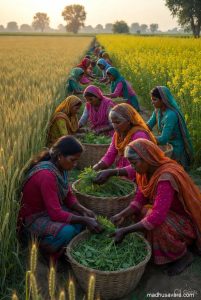
Women from the village lovingly harvesting nutritious Bathua leaves during the winter season.
One reason for the popularity of Bathua is its timely availability during winter.
The harvesting season generally extends from:
- Late autumn
- Winter
- Early spring
Tender leaves and young shoots are preferred for culinary use because they offer the best flavour and texture.
In many villages, fresh Bathua is harvested in the morning and cooked the same day.
Bathua in Traditional Farming Systems
Bathua has long been associated with mixed farming systems.
Traditionally, it was often observed:
- Along field boundaries.
- In kitchen gardens.
- Among winter crops.
- In small household plots.
Its presence contributed to the diversity and resilience of traditional agricultural landscapes.
Why Farmers Never Considered Bathua a Burden
Modern discussions sometimes classify naturally occurring plants as weeds.
However, many traditional farmers viewed Bathua differently.
They recognised that Bathua:
- Produced edible leaves.
- Required little maintenance.
- Added nutritional value to household diets.
- Grew abundantly during winter.
For generations, Bathua was appreciated as a useful seasonal resource rather than an unwanted plant.
Traditional Bathua Recipes

Freshly made Bathua Parathas and Bathua Saag – a wholesome winter meal from rural India.
One of the greatest strengths of Bathua is its culinary versatility.
Numerous Bathua recipes have become part of India’s food heritage.
Bathua Saag
Bathua Saag remains one of the most beloved traditional winter dishes.
Prepared using fresh Bathua leaves, this dish is enjoyed across northern India and often served with roti or makki ki roti.
Bathua Paratha
Among all Bathua recipes, Bathua Paratha enjoys immense popularity.
Fresh Bathua leaves are incorporated into dough to create flavourful and nutritious stuffed or mixed parathas.
Bathua Raita
Bathua Raita combines cooked Bathua leaves with curd, creating a refreshing accompaniment to meals.
Bathua Poori
In certain regions, Bathua is mixed into dough to prepare flavourful pooris during the winter season.
Mixed Winter Saag
Many households combine Bathua with mustard greens, spinach and other seasonal vegetables to create richly flavoured saag preparations.
Bathua Soup
Modern kitchens increasingly use Bathua in soups, blending traditional ingredients with contemporary culinary preferences.
Bathua Rice Preparations
Some regional cuisines incorporate Bathua leaves into rice dishes to add flavour and nutritional value.
Bathua Chilla
Bathua can also be mixed with gram flour batter to prepare savoury chillas enjoyed during breakfast or evening meals.
Bathua and Winter Festivals
The popularity of Bathua increases during the winter season when families gather for festivals and celebrations.
In Punjab and neighbouring states, winter foods hold a special place in festive traditions.
The same season that brings:
- Lohri
- Maghi
- Winter fairs
- Community gatherings
also brings fresh Bathua to village kitchens.
For many families, traditional winter meals are incomplete without Bathua-based dishes.
Bathua vs Palak (Spinach)
A question often asked is whether Bathua and Palak are the same.
Although both are leafy greens, they differ in several respects.
| Feature | Bathua | Palak |
|---|---|---|
| Season | Winter | Winter and other seasons |
| Taste | Earthy and distinctive | Mild |
| Traditional Heritage | Very strong | Strong |
| Village Association | High | Moderate |
| Culinary Uses | Saag, Paratha, Raita | Saag, Curries, Soups |
| Cultural Significance | Deeply rooted in rural traditions | Widely consumed |
Both vegetables are valuable additions to traditional diets.
Why Bathua Deserves More Recognition
Despite its impressive history and nutritional profile, Bathua often remains overshadowed by commercially promoted foods.
Yet Bathua offers several advantages:
- Rich cultural heritage.
- Seasonal freshness.
- Culinary flexibility.
- Agricultural significance.
- Traditional acceptance.
As consumers increasingly seek authentic and sustainable foods, Bathua deserves renewed appreciation.
Economic Importance of Bathua
Bathua contributes to local economies in multiple ways.
Fresh Vegetable Markets
Farmers and vendors sell fresh Bathua during winter.
Kitchen Garden Production
Many households cultivate Bathua for home consumption.
Small-Scale Farming
Bathua provides supplemental income opportunities for farmers.
Traditional Food Businesses
Restaurants and food enterprises increasingly feature Bathua-based dishes.
As awareness grows, Bathua may become an even more valuable seasonal crop.
Bathua and Sustainable Food Systems
One reason Bathua remains relevant today is its connection to sustainable food practices.
Bathua supports:
- Seasonal eating.
- Local agriculture.
- Reduced transportation requirements.
- Traditional food knowledge.
- Agricultural biodiversity.
These qualities align closely with modern interest in sustainable and environmentally responsible food systems.
Storage and Preservation of Bathua
Fresh Bathua leaves are best consumed soon after harvesting. However, proper storage helps maintain freshness and quality.
To store Bathua:
- Remove damaged or yellow leaves.
- Wash thoroughly to remove soil and impurities.
- Allow excess water to drain.
- Wrap the leaves in a clean cotton cloth or paper towel.
- Store in the vegetable compartment of a refrigerator.
Under suitable conditions, fresh Bathua can remain usable for several days.
Some households also blanch Bathua leaves and freeze them for later use during the off-season.
Can Bathua Be Grown in Home Gardens?
Yes.
One of the reasons Bathua remained popular for generations is its adaptability.
Bathua can be grown in:
- Kitchen gardens
- Backyard vegetable plots
- Terrace gardens
- Raised beds
- Large containers and pots
With proper sunlight and watering, home gardeners can enjoy fresh Bathua leaves throughout the winter season.
Bathua in Modern Diets
As people become increasingly interested in traditional foods and seasonal eating, Bathua is experiencing a revival.
Many consumers are rediscovering Bathua because it aligns with modern food trends such as:
- Farm-to-table eating
- Seasonal diets
- Sustainable food systems
- Traditional nutrition
- Local food movements
Bathua demonstrates that some of the healthiest and most sustainable foods are often those that have been part of traditional diets for generations.
Can Bathua Become India’s Next Traditional Superfood?
India possesses a rich heritage of nutrient-dense foods that have yet to receive the recognition they deserve.
Bathua is one such example.
Unlike many imported foods marketed as superfoods, Bathua offers:
- Deep cultural roots
- Seasonal freshness
- Traditional acceptance
- Nutritional richness
- Agricultural significance
As awareness grows, Bathua has the potential to become one of India’s most celebrated traditional winter superfoods.
What Future Generations Can Learn from Bathua
The story of Bathua extends beyond agriculture and nutrition.
It teaches valuable lessons about:
- Respecting seasonal foods.
- Preserving traditional knowledge.
- Supporting local agriculture.
- Appreciating biodiversity.
- Maintaining a connection with nature.
In a world increasingly dominated by processed foods, Bathua reminds us that simple traditional ingredients often possess extraordinary value.
Related Articles You May Enjoy
If you enjoyed learning about Bathua, you may also like exploring:
- Pahadi Garlic – A treasured Himalayan ingredient known for its distinctive flavour and cultural importance.
- Lingri – The famous Himalayan fiddlehead fern is cherished as a seasonal delicacy.
- Lasura – A remarkable traditional fruit used in pickles and village cuisine.
- Monkey Jackfruit – A fascinating wild fruit closely associated with forest food traditions.
- Kala Jeera – The prized Himalayan black cumin is valued for its aroma and culinary significance.
- Bhangjeera – An aromatic Himalayan seed deeply rooted in mountain food culture.
- 25 Lost Foods of the Himalayas – A journey through forgotten ingredients that once nourished generations.
Frequently Asked Questions (FAQs)
What is Bathua called in English?
Bathua is commonly known as Lamb’s Quarters, White Goosefoot or Chenopodium album in English.
Is Bathua and Bathu the same?
Yes. Bathu and Bathua are regional names used for the same leafy vegetable.
When is the Bathua harvesting season?
Bathua is generally harvested during winter and early spring when the leaves are tender and suitable for cooking.
Why is Bathua considered a traditional Indian superfood?
Bathua is often described as a traditional Indian superfood because it combines nutritional richness, affordability, seasonal availability and centuries of culinary use.
What are the most popular Bathua recipes?
Popular Bathua recipes include:
- Bathua Saag
- Bathua Paratha
- Bathua Raita
- Bathua Poori
- Mixed Winter Saag
- Bathua Soup
- Bathua Chilla
Can Bathua be grown at home?
Yes. Bathua grows successfully in kitchen gardens, backyard plots and containers when provided with suitable growing conditions.
Is Bathua a winter vegetable?
Yes. Bathua is primarily a winter leafy vegetable and is most commonly available during the cooler months.
Why did Bathua disappear from many urban diets?
Urbanisation, changing food habits, reduced kitchen gardening and increased dependence on commercial vegetables contributed to the decline of Bathua in many cities.
Is Bathua still popular in villages?
Absolutely. Bathua remains an important seasonal food in many rural communities and continues to be valued for its taste and versatility.
Can Bathua become popular again?
Yes. Growing interest in traditional foods, sustainability and seasonal eating is helping Bathua regain popularity among modern consumers.
Conclusion
Bathu, popularly known as Bathua, is far more than a simple winter vegetable.
It is a living symbol of India’s agricultural heritage, culinary wisdom and village traditions.
For generations, Bathua has nourished families, enriched seasonal diets and strengthened the bond between people and the land. Its story reflects the beauty of traditional food systems that valued freshness, seasonality and local abundance.
At a time when many traditional foods are being forgotten, Bathua reminds us that some of the most remarkable ingredients have been hiding in plain sight all along.
Whether enjoyed as Bathua Saag, Bathua Paratha or another traditional preparation, Bathua continues to demonstrate why India’s food heritage deserves preservation and celebration.
By rediscovering Bathua, we honour not only a nutritious leafy vegetable but also the generations of farmers, cooks and families who kept its traditions alive.
Call to Action
Do you have childhood memories of Bathua Parathas, Bathua Saag or winter meals prepared by your grandmother?
Share your experiences in the comments section on madhusavara.com and help preserve India’s rich culinary heritage.
If you enjoyed this article, explore our growing collection of traditional foods, forgotten ingredients, Himalayan treasures and village food stories that continue to inspire generations.
Disclaimer
This article is intended solely for educational, informational, historical and cultural awareness purposes.
Information relating to Bathu, Bathua benefits, Bathua nutrition, Bathua cultivation, traditional uses and recipes has been compiled from traditional knowledge, publicly available resources and general food heritage information. Nutritional values may vary according to soil conditions, cultivation practices, climate and other factors.
The content should not be considered medical, nutritional, dietary, agricultural, legal or professional advice. Readers should consult qualified healthcare professionals, nutritionists, agricultural experts or other relevant specialists before making decisions based upon information contained in this article.
While every effort has been made to ensure accuracy, neither Madhu Savara nor Madhusavara.com shall be liable for any loss, damage, injury, claim or consequence arising directly or indirectly from the use of information presented in this article. All reliance upon the information is entirely at the reader’s own discretion and risk.
Author
Madhu Savara
Founder & Owner, Madhusavara.com
Preserving Traditional Foods, Forgotten Ingredients, Village Wisdom and India’s Culinary Heritage for Future Generations.
