
Ancient Rock Salt History, Village Life and Natural Mineral Wisdom
Author’s Note
Some memories remain with us not because they were extraordinary, but because they quietly changed the way we looked at ordinary things.
Several years ago, while travelling through a small Himalayan village, I noticed an elderly lady opening a wooden cabinet before serving lunch. Instead of reaching for a modern packet of salt, she carefully untied a small cotton cloth and took out a few pieces of rock salt. Smiling gently, she said, “This is not just salt; this is the mountain’s blessing.”
That sentence never left my mind.
For her family, salt represented respect for nature, gratitude for hard work, and appreciation for every meal placed before them. It reminded me that many traditional practices disappear not because they lose value, but because people slowly stop talking about them.
Through this article, I want to revive one such forgotten chapter of Indian food heritage. These forgotten Himalayan salt traditions deserve to be remembered because they tell the story of resilience, simplicity, and wisdom that modern generations can still learn from.
— Madhu Savara
Owner, Madhusavara.com
Preface
Every kitchen has its own stories. Some are written through recipes, while others are preserved through ingredients.
Salt is one such ingredient.
Today, it quietly sits on our dining tables inside attractive containers. We sprinkle it without thinking twice. Yet there was a time when salt travelled hundreds of kilometres on the backs of mules, crossed dangerous mountain passes, and became one of the most treasured possessions inside Himalayan homes.
The forgotten Himalayan salt traditions are not merely about seasoning food. They represent an entire way of life built around survival, community, trade, health, and respect for natural resources. Long before supermarkets existed, mountain families understood the value of every crystal of rock salt.
This article explores those traditions through history, science, culture, and personal stories while separating myths from facts and appreciating the remarkable knowledge preserved by Himalayan communities for generations.
Table of Contents
- Origin of Himalayan Salt Traditions
- The Ancient Salt Routes of the Himalayas
- Why Salt Was Once More Valuable Than Money
- Importance of Salt in Himalayan Village Life
- Cultural and Spiritual Significance
- Different Types of Himalayan Salt
- Traditional Culinary Uses
- Traditional Household and Medicinal Uses
- Nutritional Value of Himalayan Salt
- Himalayan Salt vs Refined Table Salt
- Frequently Asked Questions
- Conclusion
- Disclaimer
- Scientific References
Introduction
Forgotten Himalayan salt traditions are among the most fascinating yet least discussed chapters of India’s culinary heritage. Long before refined table salt entered Indian kitchens, Himalayan communities depended upon naturally occurring rock salt for cooking, preserving food, caring for livestock, treating minor ailments, and maintaining trade with neighbouring regions.
For mountain families, salt was much more than a flavour enhancer. It represented security during harsh winters, prosperity through barter, and hospitality towards every guest who entered their homes.
Even today, many elderly villagers remember a time when obtaining salt required several days of travel through rugged mountain terrain. Every handful carried the effort of countless footsteps.
Understanding these traditions helps us appreciate not only Himalayan cuisine but also the remarkable resilience of people who transformed limited natural resources into sustainable ways of living.
Origin of Forgotten Himalayan Salt Traditions
The story of Himalayan salt began nearly 250 million years ago when an ancient inland sea gradually evaporated, leaving behind vast mineral deposits. Over millions of years, enormous geological pressure transformed these deposits into crystalline rock salt.
Although the most famous deposits today lie in the Salt Range of present-day Pakistan, communities throughout the Himalayan region—including parts of Jammu & Kashmir, Himachal Pradesh and Uttarakhand—have historically depended upon rock salt brought through established trade routes. The traditions discussed in this article relate to the cultural use of Himalayan rock salt across these mountain communities rather than to local mining alone.
For centuries, caravans carrying salt travelled through narrow mountain passes connecting high-altitude settlements with markets in the plains. These journeys were physically demanding and often dangerous because of snowfall, landslides, swollen rivers and difficult terrain.
Yet people continued making these journeys because every household needed salt.
Unlike many luxury goods, salt was essential for both humans and livestock. Without it, preserving food during long Himalayan winters became difficult, and maintaining animal health was equally challenging.
Over time, these journeys gave birth to unique traditions that combined trade, culture, hospitality and community cooperation.
The Ancient Salt Routes of the Himalayas
Long before motor roads connected Himalayan villages, ancient salt routes formed the backbone of mountain commerce.
Merchants travelled with mule caravans carrying:
- Rock salt
- Wool
- Barley
- Millets
- Medicinal herbs
- Dried fruits
- Handmade textiles
These routes connected remote villages with larger trading centres across northern India and neighbouring Himalayan regions.
Every journey demanded careful planning because weather conditions could change within hours. Snowfall frequently blocked passes, while heavy rains increased the risk of landslides.
Experienced traders memorised resting points, natural springs, and safe shelters. Many villages welcomed these travelling merchants, offering food and temporary accommodation in exchange for news from distant regions.
Salt, therefore, became more than a trading commodity—it became a bridge connecting isolated communities.
Why Salt Was Once More Valuable Than Money
Modern readers may find it difficult to imagine that salt once held extraordinary value.
In remote Himalayan settlements, money could not always purchase what was unavailable. Salt, however, had universal importance.
It preserved vegetables, cured meat, balanced flavours, supported livestock health, and became an indispensable part of everyday cooking.
During severe winters, families measured their remaining stock of salt almost as carefully as they counted grain.
Several Himalayan communities even used salt during barter exchanges, trading it for cereals, pulses, handmade tools, dairy products and woollen clothing.
This practical value earned salt tremendous respect within village households.
A popular saying among mountain elders suggested that wasting salt invited hardship because every crystal represented days of labour undertaken by traders travelling across dangerous terrain.
Importance of Salt in Himalayan Village Life
Life in the Himalayas has never been easy. Steep mountains, harsh winters, limited agricultural land, and long periods of isolation taught people to value every natural resource. Among these, salt occupied a unique place.
Unlike people living in the plains, villagers could not simply visit a nearby market whenever they needed essential supplies. They planned their yearly requirements well in advance, and salt was always included among the most important household necessities.
A wooden or earthen container filled with rock salt was often considered a sign that the family was prepared for the approaching winter. Mothers carefully measured the quantity used in cooking, ensuring there was enough to last until the next trading season.
Salt also played an important role in preserving vegetables, leafy greens, radishes, and locally available meat wherever communities consumed it. During heavy snowfall, when fresh food became scarce, preserved foods often became the family’s primary source of nourishment.
For shepherds spending months in high-altitude meadows, rock salt was equally important. It helped maintain livestock health, encouraged water intake among animals, and became part of their seasonal migration supplies.
Even today, elderly villagers often recall how children were taught never to waste salt because every grain represented hard work, difficult journeys, and nature’s generosity.
Cultural and Spiritual Significance of Salt
Across many Himalayan communities, salt was associated with honesty, gratitude, and hospitality.
Offering food prepared with good-quality rock salt was considered a gesture of respect towards guests. Refusing such food without reason was often regarded as discourteous.
Several communities believed that sharing salt strengthened relationships and symbolised mutual trust. This belief gave rise to many traditional sayings where loyalty was compared with “sharing someone’s salt.”
Salt also found a place in local customs. Some families placed small quantities near newly harvested grains as a symbol of prosperity, while others used salt during household purification rituals after seasonal illnesses or long journeys.
Although these practices differed from one village to another, they reflected a common belief that salt represented purity, protection, and abundance.
Different Types of Himalayan Salt
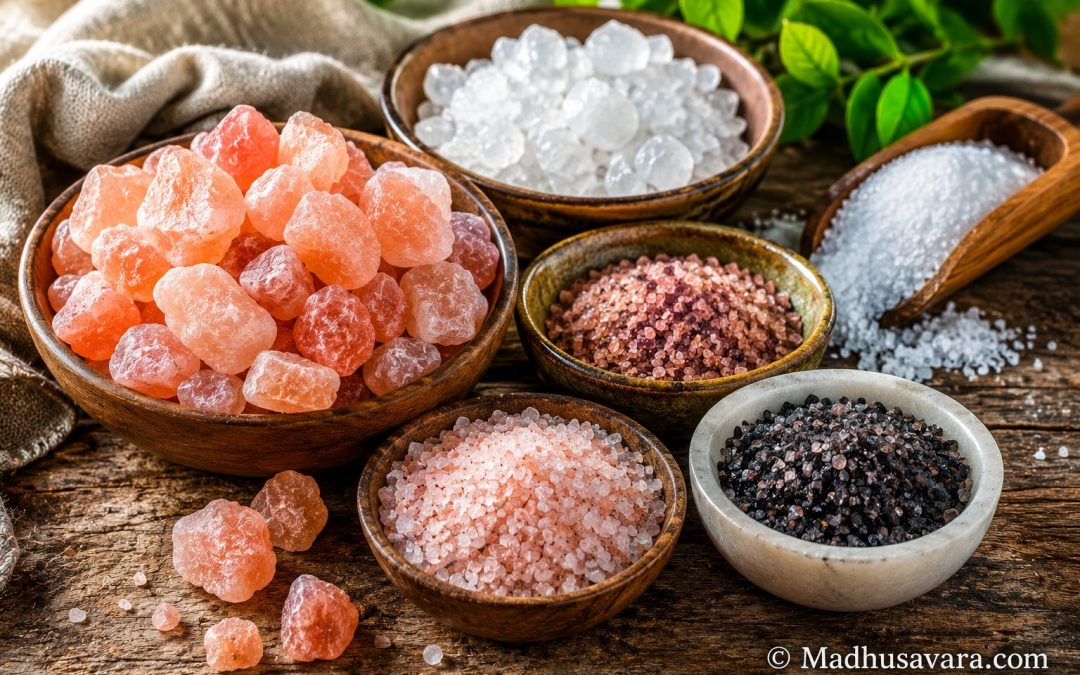
Pink Rock Salt (Sendha Namak)
Pink rock salt is the best-known variety and is recognised for its pale pink colour, which comes from naturally occurring iron compounds. It has long been preferred during fasting in many Indian households because it is minimally processed and traditionally accepted in fasting recipes.
Its mild flavour makes it suitable for vegetables, curries, salads, fruit chaat, buttermilk, and spice blends.
White Rock Salt
White rock salt is comparatively lighter in colour and contains fewer visible mineral pigments. Traditionally, it was used for everyday cooking where a neutral taste was preferred.
Many older Himalayan households considered it ideal for preserving vegetables and preparing simple meals.
Black Salt (Kala Namak)
Black salt develops its distinctive flavour because of naturally occurring sulphur compounds.
Its smoky aroma makes it a favourite ingredient in chutneys, chaats, fruit preparations, raitas, and digestive drinks.
Traditional Ayurvedic practitioners have also recommended black salt in limited quantities for supporting digestion, although it should never be considered a substitute for medical treatment.
Natural Salt Licks
Large blocks of mineral-rich salt were traditionally kept for cattle, sheep, and goats.
Animals instinctively licked these blocks to obtain essential minerals, making them an important part of livestock management in mountain communities.
Traditional Culinary Uses
Rock salt was far more versatile than many people realise.
It was commonly used for:
- Cooking lentils and mountain pulses
- Preparing millet-based dishes
- Seasoning wild leafy vegetables
- Preserving seasonal vegetables
- Making traditional pickles
- Preparing herbal chutneys
- Flavouring buttermilk
- Fermenting certain local foods
Because the flavour of natural rock salt is generally milder than refined salt, it complements simple mountain recipes without overpowering their natural taste.
Traditional Household Uses
Himalayan families also found practical household uses for rock salt.
Some families used warm salt water to clean wooden kitchen utensils, believing it reduced unpleasant odours.
Salt was occasionally mixed with ash while cleaning cooking vessels.
During humid weather, small cloth bags containing salt were sometimes placed near stored grains to reduce excess moisture, although this practice varied from region to region.
These simple methods reflected the resourcefulness of mountain households, where every available material served multiple purposes.
Traditional Medicinal Uses
Traditional knowledge systems often included rock salt in simple home remedies.
Common practices included:
- Warm salt-water gargles for sore throats
- Salt compresses for minor muscle discomfort
- Black salt mixed with digestive herbs after heavy meals
- Salt water for cleaning minor cuts before proper treatment became available
Modern medical science supports some uses, such as warm salt-water gargles for temporary throat relief. However, Himalayan salt should not be viewed as a cure for diseases or a replacement for qualified medical care.
Nutritional Value of Himalayan Salt
Himalayan rock salt contains sodium chloride as its primary component, along with very small amounts of naturally occurring minerals.
| Nutrient | Approximate Presence |
|---|---|
| Sodium | High |
| Chloride | High |
| Potassium | Trace |
| Calcium | Trace |
| Magnesium | Trace |
| Iron | Trace |
Although these trace minerals contribute to the salt’s colour and flavour, scientific research indicates that their quantities are too small to meet daily nutritional requirements.
A balanced diet rich in fruits, vegetables, pulses, whole grains, dairy products, nuts, and seeds remains the best source of essential minerals.
Himalayan Salt vs Refined Table Salt
One of the most debated questions today is whether Himalayan salt is healthier than refined table salt.
The answer requires balance rather than marketing claims.
| Feature | Himalayan Rock Salt | Refined Table Salt |
|---|---|---|
| Processing | Minimal | Highly refined |
| Trace Minerals | Present in small amounts | Mostly removed |
| Iodine | Usually absent unless fortified | Commonly iodised |
| Colour | Pink, white or off-white | Pure white |
| Additives | Generally absent | Anti-caking agents may be present |
From a scientific perspective, both salts mainly provide sodium. Excess consumption of either may contribute to high blood pressure in susceptible individuals.
One important advantage of iodised table salt is its contribution to preventing iodine deficiency, particularly in regions where dietary iodine intake is low. Therefore, replacing iodised salt entirely with non-iodised Himalayan salt without considering overall iodine intake may not be advisable.
Rather than viewing one salt as universally superior, the focus should remain on moderation, dietary balance, and informed choices.
Buying and Storage Tips
If you prefer using Himalayan rock salt, keep these simple points in mind:
- Purchase from reliable brands that disclose the source.
- Choose food-grade rock salt.
- Store it in airtight glass or ceramic containers.
- Keep it away from moisture.
- Break large crystals only when required to preserve freshness.
Frequently Asked Questions
Is Himalayan salt naturally pink?
Yes. Its pink colour comes primarily from naturally occurring iron compounds along with other trace minerals.
Can Himalayan salt replace iodised salt?
It can be used in cooking, but if it is not fortified with iodine, you should ensure adequate iodine intake from other dietary sources after consulting a healthcare professional if needed.
Why was salt so valuable in Himalayan villages?
Because transporting salt through difficult mountain terrain required enormous effort, it was an essential yet precious commodity.
Was salt really exchanged through barter?
Yes. Historical accounts show that salt was commonly exchanged for grains, wool, dairy products, herbs, and household goods in many Himalayan regions.
Does Himalayan salt contain more minerals?
It contains trace amounts of several minerals, but the quantities are generally too small to provide significant nutritional benefits.
Is Himalayan salt healthier than refined salt?
Current scientific evidence suggests that both primarily provide sodium. The overall quantity of salt consumed matters more than the variety.
Why is black salt different from pink salt?
Black salt contains sulphur compounds that give it its distinctive aroma and flavour, making it especially popular in Indian chaats and digestive preparations.
Can Himalayan salt cure diseases?
No. There is no reliable scientific evidence supporting claims that Himalayan salt cures diseases. It should never replace professional medical treatment.
What is the best way to store rock salt?
Store it in a clean, dry, airtight glass or ceramic container away from moisture.
Is Himalayan salt suitable for everyday cooking?
Yes. It can be used like any other culinary salt, provided total sodium intake remains within recommended limits.
Continue Your Himalayan Food Journey with Madhusavara
If you enjoyed discovering these forgotten Himalayan salt traditions, you may also like reading these articles on Madhusavara.com:
- Forgotten Himalayan Herbs and Their Culinary Uses
- Jakhya – The Forgotten Himalayan Spice
- Jambu Herb – The Fragrant Treasure of the Mountains
- Bhangjeera – The Tiny Seed with Big Flavour
- Jhangora – The Ancient Himalayan Millet
- Traditional Forgotten Foods of India
Together, these articles preserve India’s rich culinary heritage and celebrate ingredients that deserve a place in modern kitchens.
Conclusion
Salt has travelled an extraordinary journey—from ancient seas to Himalayan rocks, from mountain caravans to village kitchens, and finally to our dining tables.
The forgotten Himalayan salt traditions remind us that true food heritage is not measured by luxury but by the wisdom with which ordinary ingredients were used. For generations, mountain communities treated salt with gratitude because they understood its value through experience rather than convenience.
While modern science encourages us to consume salt in moderation, history teaches us another valuable lesson—to respect our food, preserve traditional knowledge, and appreciate the remarkable resilience of Himalayan communities.
Every grain of rock salt carries not only minerals but also centuries of stories waiting to be remembered.
Disclaimer
This article is intended solely for educational and informational purposes. It does not provide medical advice, diagnosis, or treatment. Himalayan salt and other natural salts should not be considered cures for any disease. Individuals with hypertension, kidney disorders, heart disease, or those following sodium-restricted diets should consult a qualified healthcare professional before making significant dietary changes. Nutritional information presented in this article is based on currently available scientific literature and may vary depending on the natural source of the salt.
References
He, F. J., & MacGregor, G. A. (2009). A comprehensive review of salt and health. Proceedings of the Nutrition Society. DOI: 10.1017/S0029665109001438
World Health Organisation. Guideline: Sodium Intake for Adults and Children.
Cappuccio, F. P., & Campbell, N. R. C. (2016). Salt and health. DOI: 10.1136/heartjnl-2015-307711
Institute of Medicine. Dietary Reference Intakes for Water, Potassium, Sodium, Chloride, and Sulfate.
If you enjoyed reading about these forgotten Himalayan salt traditions, I warmly invite you to explore more authentic recipes, forgotten foods, traditional spices, and timeless culinary stories on Madhusavara.com. Every article is a step towards preserving India’s rich food heritage and passing its wisdom on to future generations.
