
Madhu Savara’s Note
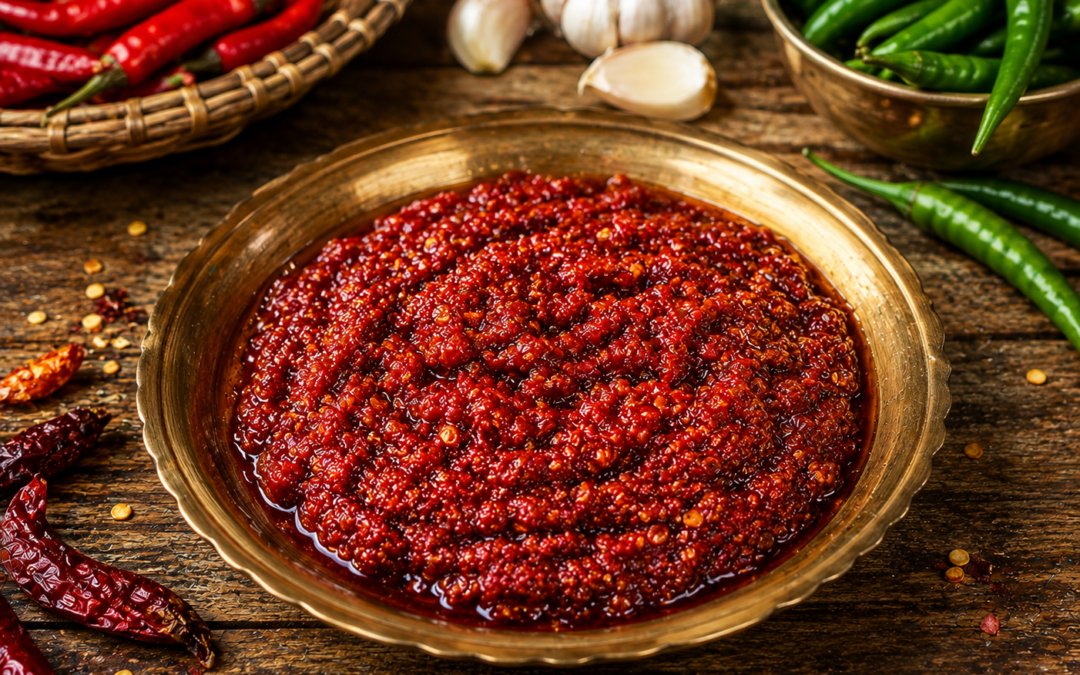
Chamba Chukh is one of the distinctive chilli preparations associated with Chamba in Himachal Pradesh. Made traditionally with locally grown chillies, citrus and spices, Chamba Chukh sits somewhere between a chutney, chilli paste and pickle. Its characteristic combination of heat, sourness and the aroma of mustard oil makes it a familiar accompaniment in many Chamba households.
Unlike a conventional fresh chutney that is prepared and eaten immediately, traditional Chamba Chukh is cooked and can be prepared in a form suitable for keeping and using over a longer period. Both green chillies and sun-dried red chillies are used in different preparations.
Historical Background of Chamba Chukh
Chamba has a long and well-documented history, with the region preserving many old traditions, crafts and food practices. Its mountain geography also helped local communities develop food traditions based on ingredients that were available in the surrounding valleys and hills.
The exact origin date of Chamba Chukh is not clearly documented, so it is better to describe it as a generations-old traditional preparation rather than assign it a specific historical period. The preparation has traditionally been made in homes across parts of Chamba district, with variations in chillies, souring ingredients and spices.
The Himachal Pradesh government has also sought Geographical Indication recognition for Chamba Chukh, reflecting its connection with the food traditions of the Chamba region.
Traditional Cultivation of Chillies for Chamba Chukh
The chilli is the heart of Chamba Chukh. Traditional preparations are associated with locally grown chillies, including the chilli varieties commonly referred to as Chitrali chillies in Chamba food traditions.
Mountain agriculture depends greatly on local conditions, including altitude, soil, water availability and the length of the growing season. Chillies grown in these conditions are harvested fresh for green Chukh or allowed to mature and dry for red Chukh.
Sun-drying is particularly important when red chillies are used. Drying reduces moisture and allows the chilli harvest to be kept beyond the fresh season. The dried chillies can then be brought back into the kitchen when Chukh is prepared.
This simple practice connects Chamba Chukh with an older Himalayan approach to food preservation: use the seasonal harvest carefully and extend its usefulness through drying, cooking and preservation.
Nutritional Significance of Chamba Chukh
The nutritional value of Chamba Chukh depends on its ingredients and the quantity consumed. Chillies provide vitamin C and carotenoids, while fresh chillies also contain various plant compounds associated with their colour and pungency.
The characteristic heat of chilli comes primarily from capsaicin, a naturally occurring compound found in chilli peppers. Citrus used in Chamba Chukh contributes acidity and can provide vitamin C, although the final nutritional content depends on the ingredients and cooking method.
Chamba Chukh is normally eaten in small quantities as an accompaniment rather than as a main dish. Therefore, its nutritional importance should be considered alongside its role as a flavouring and condiment rather than as a major source of calories or protein.
Regional Variations of Chamba Chukh
There is no single formula that represents every household preparation of Chamba Chukh. Traditional recipes can vary according to the ingredients available in a particular household.
Some preparations use fresh green chillies, while others use sun-dried red chillies. Citrus is an important part of the traditional character of Chukh, giving the chilli paste its characteristic sourness.
Ginger, garlic and different spices may also appear in regional or household versions. Mustard oil is commonly used in traditional preparations, adding its own strong aroma to the chilli.
These variations are not necessarily different foods. They are part of the way traditional household recipes evolve while retaining the basic identity of Chamba Chukh.
Cultural Importance of Chamba Chukh
Food in the Himalayan regions is closely connected with seasonality, local agriculture and household knowledge. Chamba Chukh represents all three.
The preparation makes use of locally available chillies and other regional ingredients and transforms them into a condiment that can accompany everyday food. Knowledge of the proportions, cooking and preservation of Chukh was traditionally maintained within households and passed from one generation to another.
Chamba Chukh is therefore more than a chilli chutney. It is a small but distinctive part of Chamba’s culinary heritage, connecting the kitchen with local agriculture and the seasonal availability of ingredients.
Traditional Ways of Eating Chamba Chukh
Traditionally, Chamba Chukh is used as an accompaniment with everyday meals. A small amount can be served with roti, rice, dal, paratha and snacks.
It can also be added directly to cooked food when a stronger chilli and sour flavour is wanted. This makes Chukh particularly useful in a simple mountain kitchen, where one prepared condiment can add flavour to otherwise uncomplicated meals.
Traditional Chamba Chukh Recipe
A traditional-style Chamba Chukh recipe generally brings together chilli, citrus, mustard oil, salt and selected spices.
Red Chukh is commonly associated with sun-dried red chillies, while green Chukh uses fresh green chillies. The chilli is ground or crushed, combined with the souring ingredient and spices, and cooked with mustard oil until the flavours come together.
The exact ingredients and proportions differ from household to household, which is an important part of traditional regional cooking.
Preservation Methods
Preservation is one of the important features of Chamba Chukh. Sun-drying the chillies reduces their moisture and makes them available for later use. Cooking the chilli preparation with oil and an acidic ingredient further contributes to its keeping quality.
Traditionally, the finished Chukh was stored in a clean container and protected from moisture. Today, hygienic preparation, clean dry jars and refrigeration can provide additional protection.
The traditional method illustrates a practical Himalayan food practice: preserve the seasonal harvest so that its flavour can be enjoyed beyond the harvest period.
Modern Culinary Applications of Chamba Chukh
Although Chamba Chukh remains a traditional accompaniment, its strong chilli flavour has found new uses in modern kitchens.
It can be used as a spread, dip or cooking paste and added to sandwiches, grilled vegetables, noodles, stir-fries and marinades. Contemporary producers have also developed variations such as ginger and garlic Chukh.
These newer applications do not have to replace traditional uses. They can introduce Chamba Chukh to people who may never have encountered the original preparation with a traditional Himachali meal.
Scientific Perspective on Chamba Chukh
From a food-science perspective, Chamba Chukh is interesting because several traditional preservation principles work together.
Chilli provides pungency through capsaicin. Citrus contributes acidity, while cooking reduces moisture and helps combine the ingredients into a stable paste. Mustard oil contributes both flavour and fat to the preparation.
Research associated with Himachal Pradesh agricultural institutions has also examined Chukh and its nutritional characteristics. One study reported measurable acidity and ascorbic acid in a Chukh preparation, demonstrating that this traditional condiment can be studied using modern food-science methods.
This does not mean that every household Chukh has the same nutritional composition. Ingredients, proportions and cooking methods can alter the final product considerably.
Agricultural Relevance of Chamba Chukh
The importance of Chamba Chukh extends beyond the kitchen. A traditional food based on locally grown chillies can create demand for regional chilli cultivation and help maintain interest in local agricultural varieties.
When local crops are used in a recognised regional food, farmers have an opportunity to connect agricultural production with a distinctive food identity. This can be particularly valuable in mountain regions where agriculture is shaped by terrain, climate and limited cultivable land.
The continued production of Chamba Chukh can therefore support not only culinary heritage but also the wider idea of value addition to local Himalayan produce.
Chamba Chukh and the Future of Himachali Food Heritage
The growing interest in regional Indian foods has brought preparations such as Chamba Chukh beyond their traditional homes. At the same time, commercial production needs to be balanced with respect for the regional character of the food.
For Chamba, preserving Chukh means more than preserving a recipe. It means remembering the local chillies, the citrus, the traditional methods of preparation and the household knowledge associated with them.
Chamba Chukh has a place both in the traditional kitchen and in the changing world of Indian food. Its future will depend on keeping its connection with Chamba alive while allowing the preparation to find new uses.
For anyone exploring Himachali cuisine, Chamba Chukh offers a simple introduction to the bold flavours of the region: chilli, sourness, mustard oil and spices brought together in one traditional preparation.
