
The Author’s Note
By Madhu Savara
Founder & Owner, MadhuSavara.com
Every generation has a fruit that instantly takes them back to childhood. For many Indians, the Ber Indian Jujube is that fruit.
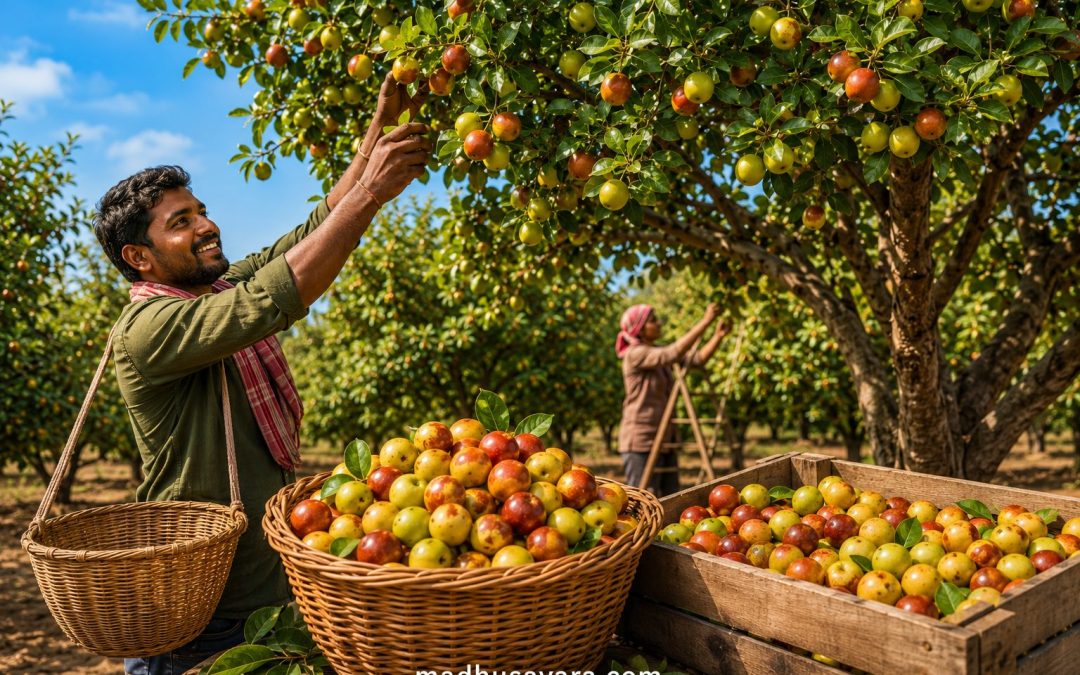
A glimpse of a basket filled with ripe Ber can bring back memories of school holidays, village fairs, roadside vendors and afternoons spent sharing this sweet-tangy treat with friends. Long before imported fruits became fashionable, Ber quietly occupied a special place in Indian homes and hearts.
As a child growing up in North India, I remember eagerly waiting for the Ber season. The fruit was simple, affordable and delicious. We enjoyed it fresh, sprinkled with spices, and sometimes transformed into pickles and preserves by our mothers and grandmothers.
Childhood Memory
I still remember buying Ber from roadside vendors near my school. A pinch of black salt and chilli powder was all it took to make a simple fruit feel like a feast. The The The
Today, despite its remarkable nutritional value and cultural importance, the Ber Indian Jujube is often overlooked. Yet it remains one of the most resilient and beneficial fruits found across the Indian subcontinent.
Through this article, I hope to celebrate this extraordinary fruit and help readers rediscover its nutritional, agricultural and traditional significance.
Table of Contents
- Introduction
- Origin and Distribution of Ber
- Botanical Classification
- Why Ber Matters Today
- About the Ber Tree
- Popular Varieties of Ber
- Nutritional Profile of Ber
- Health Benefits of Ber Indian Jujube
- Cultivation Guide
- Traditional and Modern Uses
- Economic Importance
- Popular Ber Recipes
- Frequently Asked Questions
- Conclusion
- Disclaimer
Preface
Ber Indian Jujube is more than a fruit. It represents a rich agricultural heritage, traditional knowledge and sustainable food culture that has supported communities for centuries.
In a world increasingly searching for climate-resilient crops and nutrient-dense foods, Ber offers both. It grows where many other fruit trees struggle, requires relatively low inputs and rewards growers with nutritious fruits that can be consumed fresh or processed into a variety of products.
This guide has been prepared for farmers, gardeners, health enthusiasts, food lovers and anyone interested in learning more about one of India’s most underrated fruits.
Whether you are looking for Ber Fruit Benefits, Ber Nutrition information, Ber Cultivation guidance or simply wish to learn more about this Indian Superfruit, this article aims to provide practical and reliable information in an easy-to-understand manner.
Introduction Bhangjeera Kala Jeera The
Ber Indian Jujube has nourished generations of Indians, yet it rarely receives the recognition enjoyed by many imported fruits marketed as modern superfoods.
Known scientifically as Ziziphus mauritiana, Ber is among the toughest fruit trees cultivated in India. It thrives in harsh climates, tolerates drought and poor soils, and continues to produce nutritious fruits even under challenging conditions.
What makes Ber particularly remarkable is the combination of affordability, nutrition and adaptability. While consumers often spend significant amounts on imported fruits, Ber provides impressive nutritional benefits at a fraction of the cost.
The fruit is rich in Vitamin C, dietary fibre, antioxidants and beneficial plant compounds. Traditional systems of medicine have valued different parts of the Ber tree for generations, while modern research continues to explore its health-promoting properties.
For farmers, Ber represents an opportunity to cultivate a low-maintenance fruit crop with increasing market potential. For consumers, it offers a nutritious and flavourful addition to a balanced diet. For future generations, it serves as a reminder that some of the most valuable foods are often those closest to our roots.
Origin and Distribution of BerTheTheThe
Ber Indian Jujube has a long history in the Indian subcontinent. Historical references suggest that the fruit has been consumed and cultivated in India for thousands of years.
Today, Ber has grown extensively across:
- Punjab
- Haryana
- Rajasthan
- Gujarat
- Uttar Pradesh
- Madhya Pradesh
- Maharashtra
- Telangana
- Andhra Pradesh
The fruit is particularly well-suited to arid and semi-arid regions where water availability may be limited.
Beyond India, Ber is cultivated in several countries across Asia, Africa and Australia. Its ability to withstand heat, drought and salinity has contributed to its widespread adoption in regions with challenging growing conditions.
Apart from producing nutritious fruits, Ber trees also contribute to soil conservation, act as windbreaks and support agroforestry systems.
Botanical Classification
| Classification | Details |
|---|---|
| Kingdom | Plantae |
| Division | Magnoliophyta |
| Class | Magnoliopsida |
| Order | Rosales |
| Family | Rhamnaceae |
| Genus | Ziziphus |
| Species | Ziziphus mauritiana Lam. |
The scientific name Ziziphus mauritiana is commonly associated with Indian Jujube or Ber.
It is important not to confuse the Ber Indian Jujube with the Chinese Jujube (Ziziphus jujuba). Although both belong to the same genus, they differ in appearance, flavour, climatic adaptation and cultivation requirements.
Why Ber Matters Today
The renewed interest in Ber Indian Jujube is not accidental.
Climate change, rising food costs and increasing awareness about nutrition have encouraged consumers and farmers to re-evaluate traditional crops.
Ber offers several advantages:
- Excellent drought tolerance
- Low maintenance requirements
- High nutritional value
- Adaptability to poor soils
- Potential for value-added products
- Support for sustainable agriculture
Few fruit crops combine resilience, nutrition and affordability as effectively as Ber.
About the Ber Tree
The Ber Tree is typically a thorny shrub or small to medium-sized tree that may reach heights of 10 to 15 metres under favourable conditions.
Leaves
The leaves are oval in shape with a glossy green upper surface and a lighter underside.
Flowers
Ber flowers are small, yellowish-green and attract a variety of pollinators.
Fruits
The fruits vary in size, shape and colour depending upon the variety. They generally change from green to yellow and finally develop shades of reddish-brown as they ripen.
The flesh is crisp, juicy and pleasantly sweet when fully mature.
Seeds
Each fruit contains a hard stone that protects the seed inside.
Popular Varieties of Ber in India
India is home to several excellent Ber varieties.
Umran
Known for large fruits, good shelf life and commercial popularity.
Gola
Produces attractive, round fruits with pleasant sweetness.
Banarasi
A premium dessert variety appreciated for its flavour and texture.
Kaithli
Widely cultivated and valued for reliable productivity.
Sanauri
Adaptable to different growing conditions.
Thornless
Preferred by many growers due to easier harvesting and orchard management.
Nutritional Profile of Ber Indian Jujube
One of the biggest reasons behind the growing popularity of Ber Indian Jujube is its impressive nutritional profile. While many people consider Ber to be just another seasonal fruit, it actually contains a remarkable combination of vitamins, minerals, fibre and plant compounds that contribute to overall health.
Nutritional Value per 100 g of Fresh Ber
| The Approximate | Value |
|---|---|
| Energy | 79 kcal |
| Carbohydrates | 20 g |
| Protein | 1.2 g |
| Fat | 0.2 g |
| Dietary Fibre | 3–5 g |
| Vitamin C | 70–80 mg |
| Calcium | 20–25 mg |
| IronForgotten aromatic herbs of the Himalayas | 0.5–1 mg |
| Potassium | 250 mg |
| Phosphorus | 20–25 mg |
Ber Nutrition also includes naturally occurring antioxidants, flavonoids, polyphenols, alkaloids and saponins that have attracted scientific interest in recent years.
Ber vs Popular Fruits
| Nutrient | Ber | Apple | Mango |
| Vitamin C | High | Low | Moderate |
| Fibre | High | Moderate | Moderate |
| Calories | Moderate | Moderate | Higher |
| Cost | Low | Moderate | Moderate |
This comparison highlights why Ber Indian Jujube deserves greater recognition as an affordable Indian Superfruit.
Health Benefits of Ber Indian Jujube
For generations, Ber Fruit Benefits have been recognised in traditional households and Ayurveda. Modern research is now beginning to validate many of these traditional observations.
1. Supports Immune Health
Ber Indian Jujube is naturally rich in Vitamin C, which plays an important role in supporting the body’s immune system. Regular consumption as part of a balanced diet may help maintain normal immune function.
2. Rich Source of Antioxidants
The fruit contains flavonoids and polyphenols that help protect cells against oxidative stress caused by free radicals. Antioxidants are increasingly valued for their role in supporting long-term health.
3. Promotes Digestive Wellness
The dietary fibre present in Ber supports digestive health by encouraging regular bowel movements and contributing to gut health.
Many rural communities have traditionally consumed Ber during the winter months to support digestive comfort.
4. May Support Heart Health
Potassium present in Ber contributes to maintaining normal blood pressure levels when consumed as part of a healthy diet.
Its antioxidant content may also support cardiovascular wellbeing.
5. Supports Healthy Skin
Vitamin C plays a role in collagen production, making Ber a fruit that may contribute to maintaining healthy skin.
Traditional beauty practices in some regions have long valued fruits rich in Vitamin C.
6. May Help During Seasonal Changes
Many people consume Ber during seasonal transitions due to its nutritional richness and traditional reputation for supporting general well-being.
7. Supports Healthy Ageing
The antioxidants present in Ber Indian Jujube may help combat oxidative stress associated with ageing.
8. May Assist Weight Management
Ber is naturally low in fat and provides dietary fibre, which can contribute to feelings of fullness when included in a balanced diet.
9. Traditional Support for Relaxation
Various traditional systems have used parts of the Ber Tree for calming purposes. However, more human studies are required before specific conclusions can be drawn.
10. Supports Bone Health
Calcium and phosphorus present in Ber contribute to normal bone maintenance as part of an overall healthy diet.
A Word of Balance
While Ber Health Benefits are promising, it should not be viewed as a cure or treatment for any disease. A balanced diet, regular exercise and professional medical advice remain essential.
Ber Cultivation Guide
One reason behind the popularity of Ber Cultivation is its ability to thrive under conditions where many other fruit crops struggle.
Climate Requirements
| Factor | Ideal Condition |
| Temperature | 15°C–45°C |
| Rainfall | 150–1000 mm |
| Sunlight | Full Sun |
| Humidity | Moderate |
Ber performs exceptionally well in semi-arid and arid regions.
Soil Requirements
The Ber Tree can grow in:
- Sandy soils
- Sandy loam soils
- Clay loam soils
- Slightly alkaline soils
Good drainage is essential for healthy growth.
Propagation Methods
Ber Cultivation can be carried out through:
- Seeds
- Budding
- Grafting
- Layering
- Cuttings
Commercial orchards generally prefer budding and grafting to ensure quality fruit production.
Planting Season
The ideal planting season in most parts of India is during the monsoon period, particularly July to August.
Spacing
Recommended spacing:
- 6 m × 6 m
- 8 m × 8 m, depending upon variety
Irrigation
Once established, Ber requires comparatively little irrigation.
Young plants benefit from regular watering, while mature trees tolerate drought remarkably well.
Pruning
Annual pruning helps:
- Improve fruit production
- Maintain tree shape
- Enhance sunlight penetration
- Reduce disease incidence
Harvesting
Ber fruits are harvested when:
- Full size is achieved
- Colour develops
- Sweetness increases
Depending upon variety and management practices, mature trees may yield between 50 and 200 kg of fruit annually.
Home Gardening Tips
Ber can also be grown successfully in home gardens.
For best results:
- Choose a sunny location.
- Use well-drained soil.
- Water regularly during establishment.
- Prune annually.
Dwarf and thornless varieties are particularly suitable for home gardeners.
Traditional and Modern Uses of Ber
The versatility of Ber Indian Jujube extends far beyond fresh consumption.
Traditional Uses
Across India, Ber has traditionally been used in:
- Pickles
- Murabba
- Chutneys
- Dried fruit preparations
- Traditional snacks
- Seasonal preserves
Many families continue to preserve age-old recipes passed down through generations.
Ayurvedic Importance
In traditional systems, different parts of the Ber Tree have been used for various purposes.
These include:
- Fruit
- Leaves
- Bark
- Roots
- Seeds
Traditional practitioners have long valued Ber for its role in supporting general well-being.
Modern Uses
Today, Ber is increasingly being incorporated into:
- Smoothies
- Health drinks
- Fruit bars
- Natural snacks
- Functional foods
- Nutritional supplements
Its pleasant flavour and nutritional profile make it attractive to modern consumers.
Other Uses of the Ber Tree
The tree itself provides additional value through:
- Livestock fodder
- Fuelwood
- Live fencing
- Soil conservation
- Agroforestry systems
Few fruit trees offer such diverse benefits.
Economic Importance of BerTheTheThe
Ber Indian Jujube represents an important opportunity for farmers, particularly in regions facing water scarcity and climate challenges.
Advantages for Farmers
- Low input requirements
- High drought tolerance
- Good market demand
- Long productive life
- Adaptability to marginal lands
Value-Added Products
Income can be enhanced through processing into:
- Ber Pickle
- Ber Murabba
- Ber Candy
- Dried Ber Powder
- Ber Chutney
- Ber Sherbet
These products create additional earning opportunities for rural households and women’s self-help groups.
Future Potential
As consumers increasingly seek traditional and nutritious foods, Ber Indian Jujube is well-positioned to gain wider recognition in domestic and international markets.
Popular Ber Recipes
Dedicated recipes for the following preparations can be found in the recipe section of MadhuSavara.com:
- Traditional Ber Pickle
- Ber Murabba
- Ber Chutney
- Ber Sherbet
- Dried Ber Powder
- Ber Candy
- Ber Smoothie
- Spiced Ber Preserve
Each recipe showcases a different aspect of this versatile fruit and demonstrates why Ber has remained a favourite across generations.
Frequently Asked Questions
Is the Ber Indian Jujube good for health?
Ber is a nutritious fruit containing Vitamin C, fibre, minerals and antioxidants that can contribute to a balanced diet.
What is the scientific name of Ber?
The scientific name of the Ber Indian Jujube is Ziziphus mauritiana.
Can Ber be grown in pots?
Yes. Dwarf varieties can be grown successfully in large containers.
Is Ber suitable for dry regions?
Yes. Ber Cultivation is particularly popular in arid and semi-arid regions due to its excellent drought tolerance.
Which Ber variety is best?
Umran, Gola and Banarasi are among the most popular varieties grown in India.
Is Ber the same as Chinese Jujube?
No. They belong to the same genus but differ in characteristics and growing requirements.
When is Ber harvested in India?
Harvesting generally takes place during winter months, although timing varies by region and variety.
Can Ber be eaten daily?
When consumed in moderation as part of a balanced diet, Ber can be enjoyed regularly.
Is Ber rich in Vitamin C?
Yes. Ber Nutrition includes significant amounts of Vitamin C compared with many commonly consumed fruits.
Does Ber require heavy irrigation?
No. Mature Ber Trees are highly drought-tolerant and require comparatively less irrigation than many fruit crops.
Why is Ber called an Indian Superfruit?
Because it combines nutrition, affordability, climate resilience and traditional value in a single fruit.
Can Ber support sustainable agriculture?
Yes. Its drought tolerance and adaptability make it a valuable crop for sustainable farming systems.
Conclusion
Ber Indian Jujube is a shining example of how traditional foods can remain relevant in the modern world.
For centuries, this humble fruit has nourished families, supported farmers and adapted to some of the harshest growing conditions found in India. Yet despite its remarkable qualities, Ber often remains overshadowed by imported fruits marketed as exotic superfoods.
The reality is that Ber Nutrition, Ber Health Benefits and Ber Cultivation advantages make it one of the most valuable fruits available to Indian consumers today.
Whether you are a farmer seeking a resilient crop, a gardener looking for an easy-to-grow fruit tree, or a health-conscious individual searching for nutritious seasonal foods, Ber Indian Jujube deserves serious consideration.
As we move towards a future that values sustainability, nutrition and local food systems, this forgotten Indian Superfruit may once again claim the recognition it has always deserved.
If you enjoyed this article, do share it with friends, gardeners, farmers and fellow food lovers. Together, we can help revive awareness about one of India’s most treasured traditional fruits.
Disclaimer
This article has been prepared for educational and informational purposes only. Information regarding Ber Indian Jujube, Ber Nutrition, Ber Health Benefits and Ber Cultivation is based on traditional knowledge, publicly available research and horticultural practices.
The content should not be considered medical, nutritional, agricultural or professional advice. Readers should consult qualified healthcare professionals regarding medical concerns and local agricultural experts before making cultivation decisions.
Madhu Savara and MadhuSavara.com make no guarantees regarding individual health outcomes, crop performance or financial returns. Conditions may vary according to climate, soil, management practices and personal circumstances.
- If you enjoy discovering forgotten Indian fruits, do not miss our detailed guide on Lasura (Gunda) and its traditional culinary uses.
- Explore the unique story, uses and nutritional value of Monkey Jackfruit in our dedicated blog.
