
Author’s Note
Some foods are not grown in farms, sold in supermarkets, or promoted by advertising campaigns. They survive through memory, tradition, and the wisdom of generations.
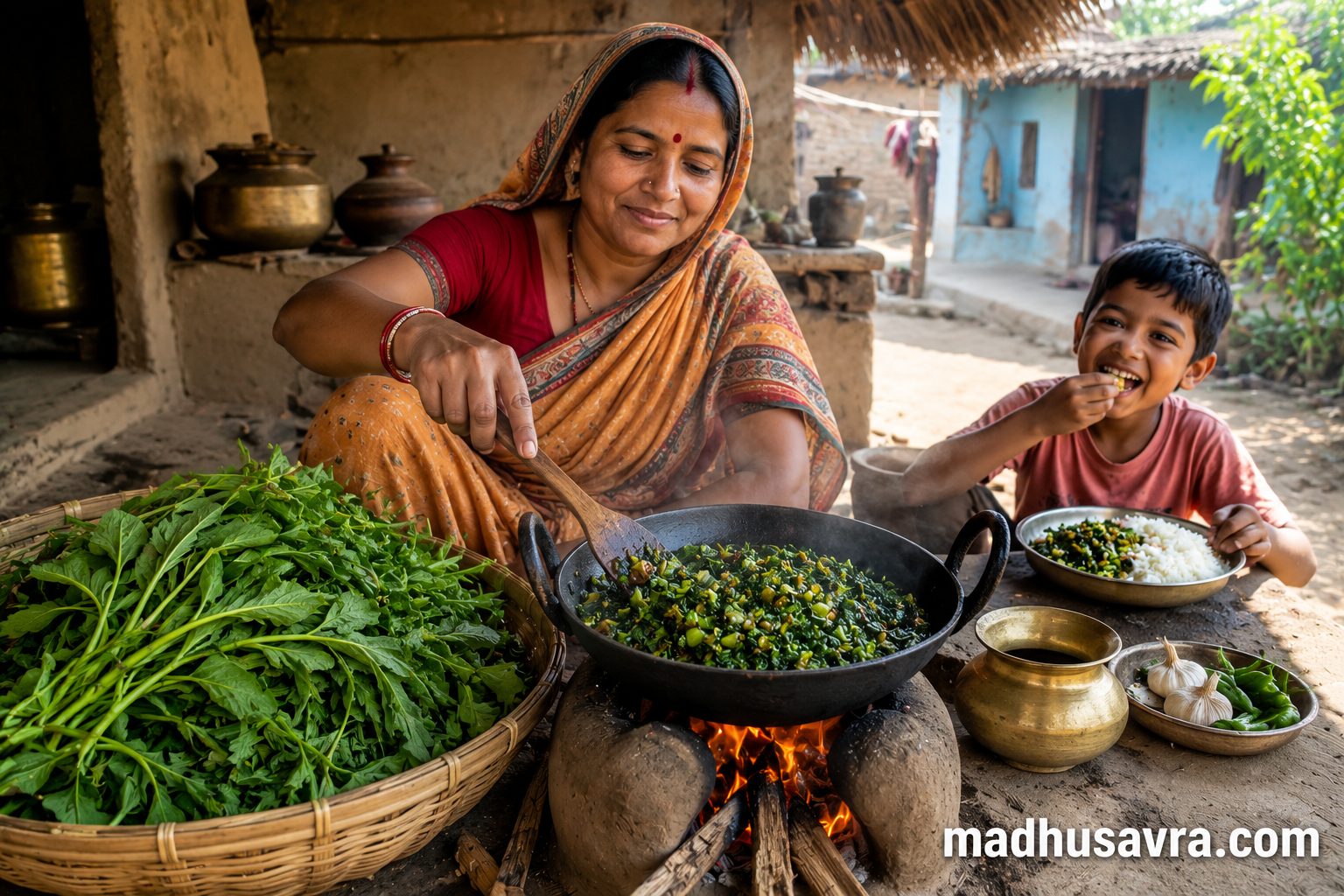
Karmuha Saag, also known as Karemua Saag, is one such treasure.
As monsoon rains nourish India’s paddy fields, this seasonal green emerges naturally from fertile soil. For generations, rural families have harvested it and transformed it into simple yet nourishing meals.
Today, while imported superfoods receive global attention, traditional wild greens such as Karmuha Saag remain largely forgotten despite their nutritional value and cultural significance.
This article explores the history, nutritional profile, health benefits, traditional recipe, comparison with other edible wild greens, and enduring relevance of Karmuha Saag in Indian food heritage.

Karmuha Saag (Karemua Saag): Benefits, Nutrition, Recipe & Why This Forgotten Monsoon Superfood
Equipment
- Large bowlKnifeChopping boardKadhaiWooden spatulaStrainer
Ingredients
- 500 grams fresh Karmuha Saag
- 2 medium onions finely chopped
- 8 garlic cloves crushed
- 2 green chillies chopped
- 2 tablespoons mustard oil
- ½ teaspoon turmeric powder
- Salt to taste
- 1 tablespoon maize flour or gram flour optional
Instructions
- How to Clean Karmuha Saag Properly
- Step 1
- Remove yellow, damaged, or wilted leaves.
- Step 2
- Wash thoroughly under running water.
- Step 3
- Soak briefly in clean water.
- Step 4
- Rinse again to remove remaining soil particles.
- Step 5
- Drain completely before cooking.
- Step-by-Step Cooking Method
- Step 1: Prepare the Greens
- Wash and finely chop the Karmuha Saag.
- Step 2: Heat the Oil
- Heat mustard oil in a kadhai.
- Step 3: Add Garlic
- Sauté garlic until fragrant.
- Step 4: Add Onions
- Cook until light golden brown.
- Step 5: Add Green Chillies
- Stir briefly.
- Step 6: Add Turmeric
- Mix thoroughly.
- Step 7: Add the Saag
- Add chopped Karemua Saag and cook on medium heat.
- Step 8: Adjust Consistency
- Add maize flour or gram flour if a thicker texture is desired.
- Step 9: Final Cooking
- Cook until excess moisture evaporates.
- Add salt and mix thoroughly.
- Step 10: Serve
- Serve hot with:
- Makki Ki Roti
- Bajra Roti
- Jowar Roti
- Steamed Rice
- Moong Dal
- Homemade White Butter
Notes
Common Mistakes to Avoid
- Skipping thorough washing.
- Overcooking the leaves.
- Using excessive spices.
- Storing unwashed greens.
- Harvesting from polluted or contaminated water sources.
