
Author’s Note:
Some foods feed the body in times of plenty. Others become lifelines when the mountains turn harsh, and isolation is complete. My journeys through remote Himalayan villages revealed how communities survived for months without external help, relying entirely on the generosity of the wild. This article is a tribute to those unsung Himalayan famine foods that kept generations alive. — Madhu Savara, Owner of madhusavara.com
In the remote Himalayan valleys, long before motorable roads connected villages to the plains, communities faced long winters, landslides, and crop failures. When stored grains ran low, it was the surrounding forests, meadows, and high-altitude slopes that provided remarkable famine foods. These wild edibles not only prevented starvation but also nourished entire families with vital nutrients, keeping traditional knowledge alive across generations. This article explores 25 such life-saving plants that formed the backbone of mountain survival.
Table of Contents
- Preface
- The Reality of Mountain Life Before Roads
- Why These Himalayan Famine Foods Matter Today
- 25 Life-Saving Himalayan Famine Foods
- Nutritional Comparison Chart
- Traditional Uses and Preparation Methods
- Challenges Facing These Foods and Pathways for Revival
- Conclusion
- Call to Action
- Disclaimer
- Research References
Preface:
Himalayan famine foods represent one of the most remarkable examples of human resilience and traditional ecological knowledge in the world. In the high mountains of Uttarakhand, Himachal Pradesh, Ladakh, and Jammu & Kashmir, where roads were absent and supply lines non-existent, villagers relied heavily on wild edibles in the Himalayas for survival during lean periods. These forgotten Himalayan edibles provided essential calories, vitamins, minerals, and medicinal benefits, forming the backbone of mountain food security for centuries. This detailed exploration honours these traditional Himalayan foods, their role in sustaining communities, and their potential relevance in today’s changing climate.
The Reality of Mountain Life Before Roads
Life in the Himalayas before the arrival of modern roads was marked by extreme isolation. Villages could remain cut off for six to eight months during winter due to heavy snowfall, avalanches, and landslides. Crop failures were common because of unpredictable weather, short growing seasons, and poor soil in higher altitudes. In such conditions, stored food grains are often depleted rapidly. It was during these testing times that knowledge of mountain survival foods became critical. Women, elders, and children foraged daily, collecting leaves, shoots, roots, fruits, and mushrooms from nearby forests and alpine meadows. These wild plants were not just emergency rations — they were integral to daily diets and cultural identity. Ethnobotanical studies document hundreds of wild edible species used across the Indian Himalayas, with many playing a direct role in famine relief.
Why These Himalayan Famine Foods Matter Today.
In an era of climate change, biodiversity loss, and growing interest in sustainable and nutrient-dense diets, the wild edibles of the Himalayas offer invaluable lessons. Many of these plants are highly resilient, thriving in poor soils and extreme temperatures where cultivated crops struggle. They are rich in micronutrients often lacking in modern diets and require minimal inputs. Reviving knowledge of forgotten Himalayan edibles can strengthen local food systems, reduce dependence on external supplies, support rural livelihoods through foraging-based enterprises, and contribute to nutritional security. Moreover, promoting these foods aligns with national goals of biodiversity conservation and sustainable mountain development.
25 Life-Saving Himalayan Famine Foods
The following list highlights 25 important Himalayan famine foods, many of which continue to be used in remote areas even today. Each has unique nutritional and ecological value.
- Stinging Nettle (Urtica dioica) — Young leaves are cooked as saag or dried for winter. Exceptionally rich in iron, calcium, protein, and vitamins.
- Wild Amaranth (Amaranthus spp.) — Leaves and seeds are used as vegetables and flour. High in protein and minerals.
- Buckwheat (Fagopyrum tataricum/esculentum) — Hardy pseudo-cereal grown or collected wild for rotis and porridge. Excellent source of rutin and complex carbohydrates.
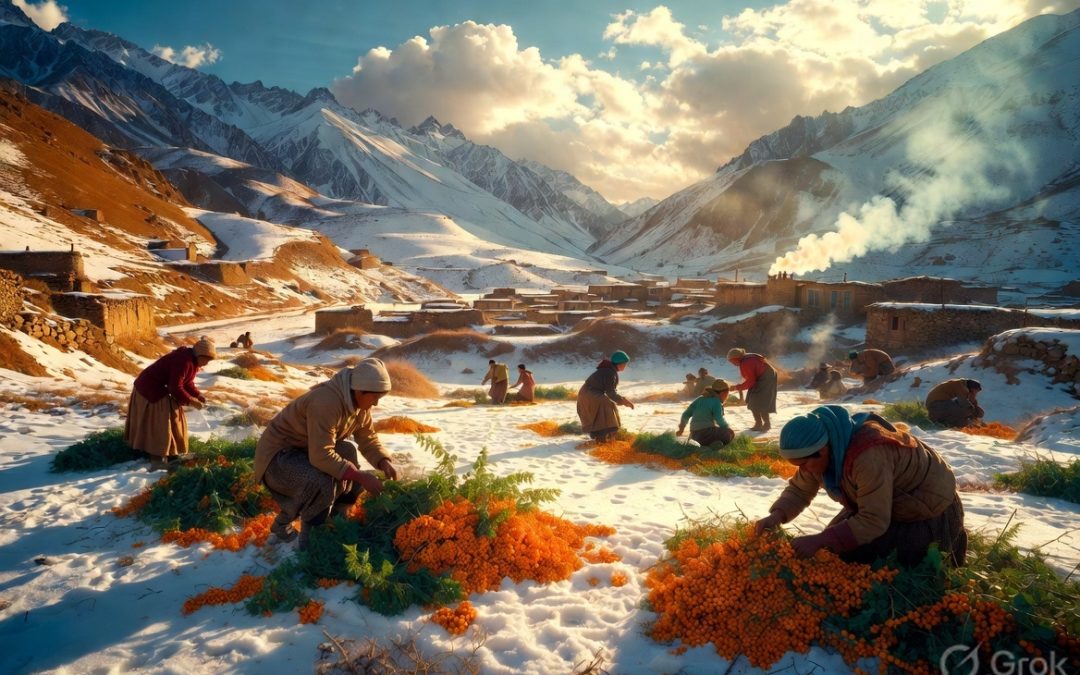
- Seabuckthorn (Hippophae rhamnoides) — Bright orange berries consumed fresh, as juice, or dried. One of the richest natural sources of Vitamin C.
- Wild Apricot (Chulu/Chulli – Prunus armeniaca) — Dried fruits and kernel oil provided sustained energy and essential fats.
- Fern Shoots (Diplazium esculentum) — Tender fiddleheads boiled and eaten as a vegetable, common in Uttarakhand and Himachal.
- Watercress (Nasturtium officinale) — Peppery leaves eaten raw or cooked, rich in Vitamin K and antioxidants.
- Rheum / Himalayan Rhubarb (Rheum australe) — Sour stalks used in chutneys and preserves.
- Lambsquarters / Bathua (Chenopodium album) — Protein-packed leaves widely consumed.
- Wild Mustard Greens — Hardy leafy greens providing essential micronutrients.
- Yarrow (Achillea millefolium) — Leaves used in teas and as seasoning.
- Wild Rose Hips — High Vitamin C fruits dried for winter use.
- Barberry (Berberis spp.) — Tangy berries used in pickles and medicines.
- Wild Onion / Garlic — Flavourful bulbs adding taste and health benefits.
- Bitter Buckwheat Greens — Used in soups and as fodder.
- Mountain Sorrel (Oxyria digyna) — Lemon-flavoured leaves are refreshing in summer.
- Plantain (Plantago spp.) — Nutrient-dense leaves.
- Wild Mushrooms (Morchella spp. – Morels) — Highly prized spring delicacy.
- Dandelion (Taraxacum officinale) — Leaves and roots are used in salads and teas.
- Dock (Rumex spp.) — Sour leaves cooked as a vegetable.
- Mallow (Malva spp.) — Soothing leaves for soups.
- Wild Strawberry — Small, fragrant fruits.
- Himalayan Raspberry — Antioxidant-rich berries.
- Gundruk and Sinki — Fermented leafy greens (from mustard, radish, or other leaves), a cornerstone preservation technique.
- Wild Tubers and Roots (Dioscorea spp., etc.) — Energy-rich underground parts stored for winter.
Nutritional Comparison Chart
| Food Item | Key Nutrients (per 100g approx., dry basis where applicable) | Primary Survival Benefit |
|---|---|---|
| Stinging Nettle | Protein 23-33%, Iron 52mg, Calcium 347mg, Vitamin A & C | Combats anaemia, boosts immunity |
| Seabuckthorn Berries | Vitamin C 200-800mg, Antioxidants, Carotenoids | Prevents scurvy, provides energy |
| Wild Amaranth Leaves | Protein 25-30%, Iron, Calcium | Muscle repair, blood health |
| Buckwheat | Rutin, Complex Carbs, Fibre | Sustained energy, heart health |
| Gundruk (Fermented Greens) | Probiotics, Enhanced Vitamins & Minerals | Gut health, long-term storage |
These Himalayan famine foods frequently surpass many modern cultivated vegetables in micronutrient density, making them particularly valuable during periods of food scarcity.
Traditional Uses and Preparation Methods
Communities developed sophisticated techniques to maximise nutrition and shelf life. Leaves were blanched, dried in the sun, or fermented into Gundruk and Sinki — processes that not only preserve but also enhance the bioavailability of nutrients and introduce beneficial probiotics. Fruits like seabuckthorn and wild apricot were dried or turned into preserves. Roots and tubers were carefully stored in traditional granaries (kothars). Recipes varied by region: nettle saag in Garhwal, seabuckthorn juice in Ladakh, and fern preparations in Kinnaur. These methods ensured that even during the harshest winters, families had access to balanced nutrition.
Challenges Facing These Foods and Pathways for Revival.
Modern connectivity and market access have, unfortunately, led to a decline in the use and transmission of knowledge about these wild edibles in the Himalayas. Younger generations often prefer commercial foods, while climate change, overharvesting, and habitat loss threaten many species. Conservation efforts, community-led documentation, school programmes, and integration into modern value chains (such as dried powders, herbal teas, or functional foods) can help revive these forgotten Himalayan edibles. Government initiatives and NGOs working in the region can play a vital role in promoting sustainable foraging practices.
Conclusion:
The 25 Himalayan famine foods profiled here stand as powerful symbols of mountain resilience, ingenuity, and deep ecological wisdom. For centuries, they sustained villagers when no other support was available, proving that nature, when respected, provides abundantly even in the most challenging environments. As we face global uncertainties around food security and climate resilience, revisiting and respectfully reviving these traditional Himalayan foods offers hope and practical solutions. Preserving this knowledge is not merely about cultural heritage — it is about securing a more sustainable and nourished future for mountain communities and beyond.
Call to Action:
Let us honour and actively revive these remarkable Himalayan famine foods. Support local foragers and mountain communities, experiment with these traditional Himalayan foods in your own kitchen, and pass on the knowledge to younger generations. For more inspiring stories on lost and forgotten foods of India, wild edibles, and Himalayan culinary heritage, explore my other articles on madhusavara.com, including the Chulu (Wild Apricot) series, rare Himalayan potato varieties, and various wild edibles of the mountains. Share this article and contribute to keeping these traditions alive.
Disclaimer
This article is intended solely for educational, informational, cultural, and general awareness purposes. While every effort has been made to ensure accuracy based on available research and traditional knowledge at the time of writing, identification and consumption of any wild plants must be approached with extreme caution. Many edible species have toxic look-alikes, and individual tolerances vary. Always consult local knowledgeable elders, qualified botanists, or healthcare professionals before foraging or consuming wild edibles. The author Madhu Savara and madhusavara.com shall not be liable for any loss, damage, injury, or consequence arising directly or indirectly from the use or reliance on information contained in this article. All actions are undertaken entirely at the reader’s own discretion and risk.
Research References
- Thakur et al. (2017). Patterns of wild edible plants consumption in tribal communities.
- Studies from the GB Pant National Institute of Himalayan Environment, ICAR, and various ethnobotanical surveys of Uttarakhand, Himachal Pradesh, and Ladakh.
- Traditional knowledge documented from Himalayan communities over generations.
potato waste valorisation, Chulu, horse gram kulthi superfood, 7-day red and black rice glow swap challenge, red rice
