Bicchu Ghaas Saag Recipe | Traditional Himalayan Stinging Nettle Saag
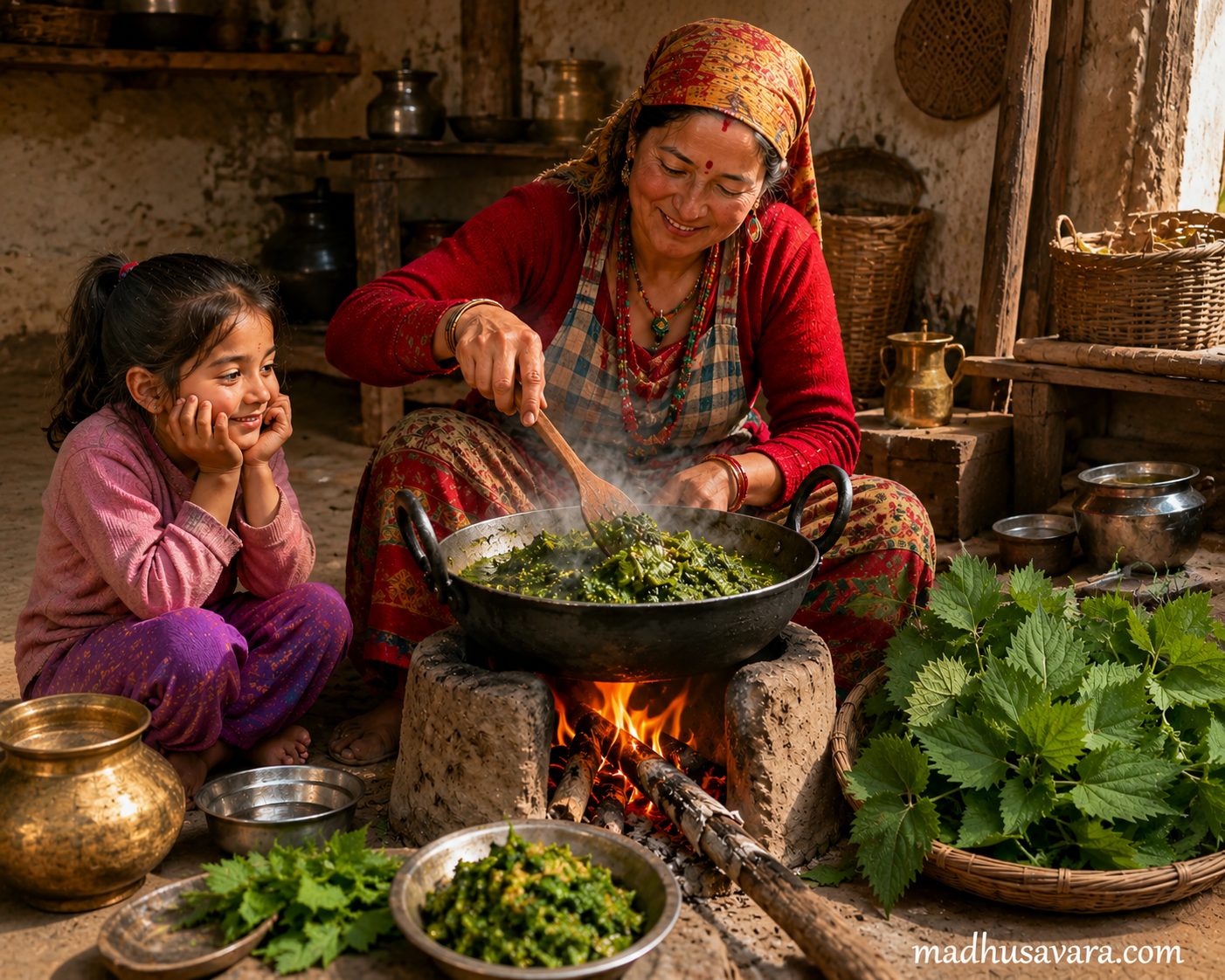
A smiling grandmother in traditional attire cooks fresh green leafy vegetables in a large iron wok over a wood fire, while a young girl sits beside her watching with delight in a rustic village kitchen.

Recipe Description

The bicchu ghaas saag recipe is a traditional Himalayan green preparation made from stinging nettle leaves (Urtica dioica). Across Uttarakhand, Himachal Pradesh, Nepal, and other Himalayan regions, this plant has been used for generations as a seasonal, nutrient-rich vegetable.

Once carefully harvested, the leaves are blanched to remove their natural sting, then cooked in mustard oil with garlic and simple spices. The result is a deeply earthy, rustic saag that reflects true Himalayan food culture.

This bicchu ghaas saag recipe represents more than just cooking—it reflects survival wisdom, seasonal eating, and traditional mountain knowledge.

Health Benefits of Bicchu Ghaas Saag Recipe

The bicchu ghaas saag recipe is traditionally valued for its natural nutrition.

Rich in Iron

Supports healthy blood and energy levels.

Strengthens Bones

High calcium content supports bone health.

Improves Digestion

Natural fibre supports gut health.

Boosts Immunity

Contains vitamin C and antioxidants.

Seasonal Detox Food

Traditionally used as a cleansing winter green.

Servings

4

Preparation Time:

15 minutes

Cooking Time:

25 minutes

Calories

120

Ingredients

Main Ingredients

  • 400–500 g bicchu ghaas leaves
  • 1 cup spinach (optional)
  • Salt to taste

Tempering

  • 2–3 tbsp mustard oil
  • 1 tsp cumin seeds
  • 8–10 garlic cloves
  • 1–2 green chillies
  • ½ tsp turmeric
  • ½ tsp hing
  • 1 small onion (optional)
  • 2 dried red chillies

Equipment Needed

  • Large cooking pot
  • Heavy-bottom kadhai
  • Strainer
  • Knife and chopping board
  • Wooden spatula
  • Gloves

Nutrition Information

Nutritional Information (Per Serving Approx.)

Nutrient Value
Calories 110–120 kcal
Protein 4–5 g
Fat 6–7 g
Carbohydrates 10–12 g
Fibre 5–6 g
Iron 3–4 mg
Calcium 300–500 mg

Nutritional Value (Approximate per 100g cooked)

Nutrient Value
Calories 40–45 kcal
Protein 3–4 g
Calcium 350–600 mg
Iron 2–4 mg
Vitamin C 120–180 mg
Fibre 5–7 g

Nutritional Comparison Chart

Nutrient Bicchu Ghaas Spinach Bathua
Calcium Very High Medium Medium
Iron High Medium Medium
Fibre High Low Medium
Antioxidants Very High Medium Medium

Step by Step Instructions

Step 1: Cleaning

Wash leaves thoroughly using gloves.

Step 2: Blanching

Boil for 5–7 minutes until soft.

Step 3: Draining

Drain and rinse with cold water.

Step 4: Chopping

Squeeze and finely chop leaves.

Step 5: Tempering

Heat mustard oil, add cumin, garlic, chillies, hing, and onion.

Step 6: Cooking

Add bicchu ghaas, salt, and turmeric. Cook 15–20 minutes.

Step 7: Final Texture

Adjust consistency and finish cooking.

Tips and Variations

Variations of Bicchu Ghaas Saag Recipe

Traditional Style

Mustard oil, garlic, and cumin only.

Garhwali Style

Add roasted mandua flour.

Protein Rich Version

Add lentils or black gram.

Vegan Version

Skip ghee, use only mustard oil.

Allergen Information

The bicchu ghaas saag recipe is safe when properly cooked.

  • May irritate skin during handling
  • Avoid if allergic to the nettle family
  • Not suitable in raw form
  • Consult a doctor if medically sensitive
Other Essentials

Foraging and Identification Guide

The bicchu ghaas saag recipe starts with correct identification.

Identification

  • Serrated green leaves
  • Fine stinging hairs on the surface
  • Grows in clusters
  • Found in moist Himalayan soil

Best Season

  • Late winter to early spring
  • Only young tender shoots

Safe Harvesting

  • Always wear gloves
  • Avoid polluted areas
  • Do not collect near roadsides

Safety Tips Before Cooking

Never Eat Raw

Raw leaves cause skin irritation.

Always Blanch

Boiling removes the sting completely.

Discard First Water

Traditional practice improves safety.

Handle Carefully

Use gloves or tools during cleaning.

Common Mistakes to Avoid

  • Using mature plants
  • Skipping blanching
  • Overcooking after final mixing
  • Not using mustard oil

Serving Suggestions

The bicchu ghaas saag recipe is best enjoyed as part of a traditional Himalayan meal where simple ingredients create deep comfort.

Best Pairings

  • Makki ki roti (corn flatbread)
  • Mandua roti (finger millet roti)
  • Steamed rice
  • Jhangora (barnyard millet)
  • Traditional ghee on top for richness

Traditional Himalayan Style Serving

In mountain homes, this saag is usually served hot with a generous spoon of ghee, a side of lentils, and a homemade pickle. The combination makes a complete seasonal meal rich in energy and warmth.

Storage and Reheating

Refrigeration

Store the cooked bicchu ghaas saag recipe in an airtight container for up to 2–3 days.

Freezing

It can be frozen for up to 1 month in portion-sized containers.

Reheating

Reheat on low flame with a splash of water or a few drops of mustard oil to restore texture and flavour.

Important Note

Avoid repeated reheating as it may reduce taste and nutritional value.

Frequently Asked Questions

Is Bicchu Ghaas safe to eat?

Yes, the bicchu ghaas saag recipe is safe when properly blanched and cooked. Raw leaves should never be consumed.

Does stinging nettle lose its sting after cooking?

Yes, boiling or blanching completely removes the sting.

Can I make this recipe without mustard oil?

Yes, but mustard oil gives the most authentic Himalayan flavour.

Can children eat bicchu ghaas saag?

Yes, in moderate quantities once properly cooked.

Where can I find bicchu ghaas?

It naturally grows in Himalayan regions and can also be found dried in some local or organic stores.

Conclusion

The bicchu ghaas saag recipe is a true reflection of Himalayan wisdom where food, nature, and survival come together. What once grew wild in forests and mountain slopes is now being rediscovered as a nutrient-rich superfood.

This humble stinging plant transforms into a nourishing dish that connects us back to seasonal eating and traditional cooking practices. Every bite carries the earthy essence of the Himalayas and the simplicity of village life.

Bringing this bicchu ghaas saag recipe into modern kitchens is not just about taste—it is about preserving a forgotten food heritage that still holds immense value today.

Call to Action (CTA)

If you enjoyed this bicchu ghaas saag recipe, explore more traditional Himalayan recipes on madhusavara.com and reconnect with forgotten mountain foods. Share your experience in the comments and let others know how this wild green turned into your kitchen favourite.

1.

Disclaimer

Important Notice: Read Before Proceeding

The recipes, preparation methods, nutritional details, and related content published on Madhu Savara’s website, social media, and associated platforms are intended solely for general informational and educational purposes. While every effort has been made to ensure accuracy and reliability, we make no guarantees regarding the results, safety, or accuracy of any recipe presented here.

We are not licensed nutritionists, dieticians, or medical professionals. The nutritional values provided are estimates only, calculated using third-party tools, and should not be used for medical diagnosis, dietary treatment, or allergy management. If you have any medical conditions, dietary restrictions, or food allergies, please consult your doctor or certified dietitian before attempting any recipe.

Cooking inherently involves sharp tools, high heat, and the risk of injury or fire. You assume full responsibility for your kitchen practices. Madhu Savara, the website, and all contributors shall not be held liable for any damage, injury, loss, or adverse outcome resulting directly or indirectly from the preparation, consumption, or interpretation of any content herein.

By using this website and attempting any recipe, you agree to hold harmless and indemnify Madhu Savara and her team from any liability, legal claim, or damages arising from the use of this content. You are encouraged to exercise independent judgment and take full responsibility for your health, kitchen safety, and actions.


A Spoonful of Stories by Madhu Savara

High in the Himalayas, where seasons decide the kitchen and forests become food banks, people have always lived closely with nature. Among the most powerful wild greens growing across these mountains is Bicchu Ghaas, a plant known for its sting but equally known for its nourishment.

For generations, families in Uttarakhand, Himachal, Nepal, and other Himalayan regions have gathered this wild green during seasonal growth and turned it into a comforting saag cooked with mustard oil, garlic, and simple spices.

What makes this bicchu ghaas saag recipe special is not just the taste, but the deep connection it carries with mountain life, where food was never wasted, and every wild plant had value.

Author’s Note

I still remember the first sting of Bicchu Ghaas. It was sharp enough to be unforgettable. But what stayed longer was how beautifully it was transformed in traditional kitchens.

Elders would handle it carefully, cook it slowly, and turn something wild into something nourishing. That patience and knowledge are what this recipe tries to preserve.

This bicchu ghaas saag recipe is a reminder that real food often comes from the simplest places—nature, patience, and tradition.

— Madhu Savara

Table of Contents

  1. What is Bicchu Ghaas?
  2. Where is Bicchu Ghaas Found?
  3. Local Names Across the Himalayas
  4. Why This Bicchu Ghaas Saag Recipe is Special
  5. Health Benefits
  6. Nutritional Value
  7. Nutritional Comparison Chart
  8. Foraging and Identification Guide
  9. Safety Tips
  10. Common Mistakes to Avoid
  11. Kitchen Equipment Required
  12. Ingredients
  13. Step-by-Step Bicchu Ghaas Saag Recipe
  14. Variations
  15. Allergen Information
  16. Conclusion
  17. Call to Action (CTA)

What is Bicchu Ghaas?

Bicchu Ghaas saag recipe is made from stinging nettle (Urtica dioica), a wild Himalayan plant covered with tiny hairs that cause a mild sting on touch.

Once boiled or blanched, the sting disappears completely, leaving behind a soft, earthy green similar to spinach but richer in taste and nutrition.

It has been part of Himalayan diets for centuries, especially in seasons when fresh vegetables were limited.

Where is Bicchu Ghaas Found?

This bicchu ghaas saag recipe belongs to the entire Himalayan belt, not a single region.

The plant grows naturally in cool, moist mountain environments at altitudes between 1,200 and 3,500 meters. It is commonly found in:

  • Uttarakhand (Kumaon & Garhwal)
  • Himachal Pradesh
  • Jammu & Kashmir hills
  • Nepal Himalayas
  • Sikkim & Darjeeling regions
  • Eastern Himalayan regions, including Arunachal Pradesh

It grows near forests, riverbanks, village paths, and terraced fields where the soil is rich and natural.

Local Names Across the Himalayas

Region Name
Uttarakhand Bicchu Ghaas / Kandali
Himachal Pradesh Bichhu Buti
Nepal Sisnu / Sisunak
Sikkim Himalayan Nettle
English Stinging Nettle
Botanical Name Urtica dioica

Why This Bicchu Ghaas Saag Recipe is Special

This bicchu ghaas saag recipe stands out because it represents real Himalayan living.

  • Naturally grown wild green
  • No chemicals or farming needed
  • Deep, earthy, traditional flavour
  • Seasonal and sustainable food
  • Rich in nutrients and minerals
  • Part of the  Himalayan cultural heritage