
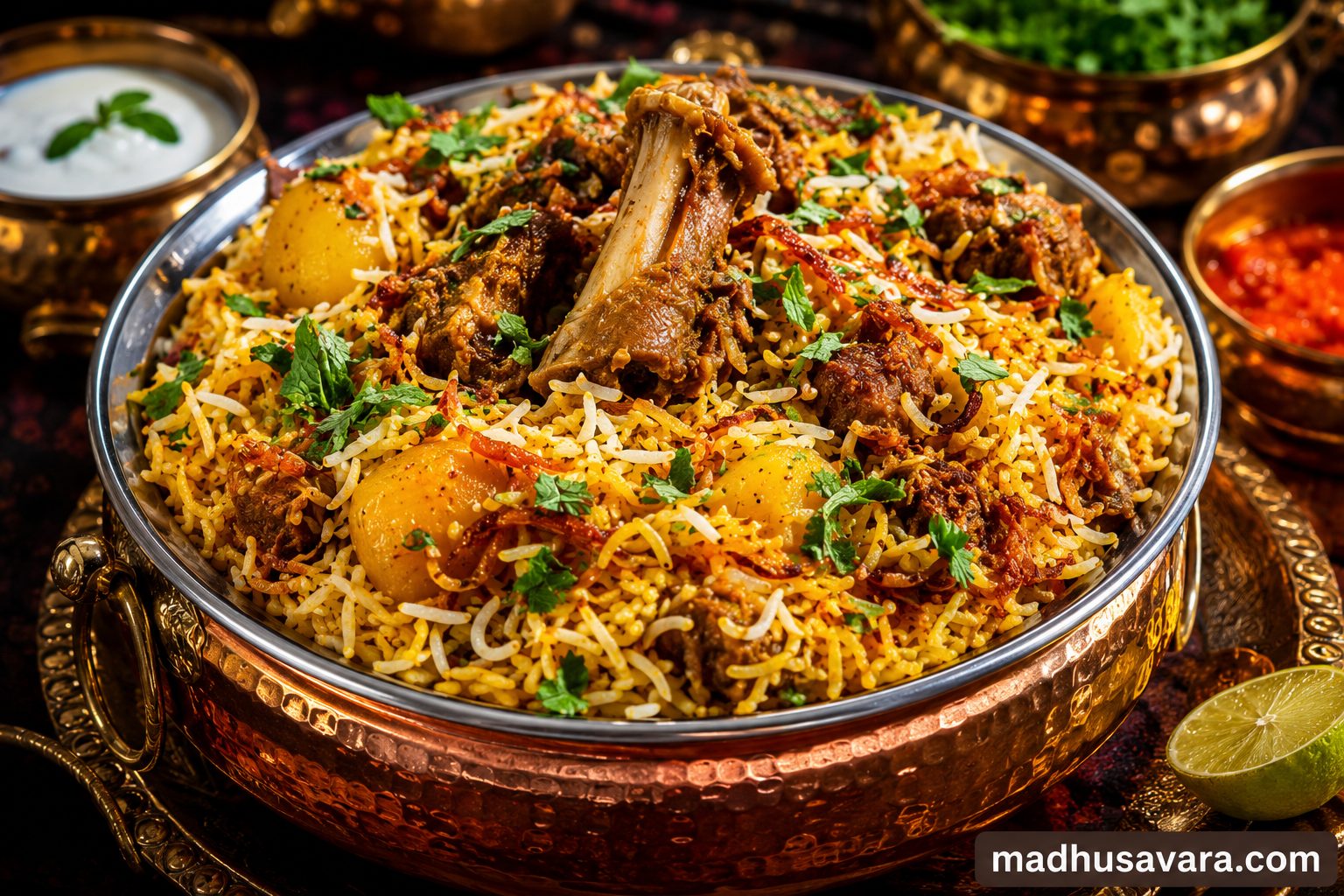




Memoni Biryani Recipe | Authentic Memoni Mutton Biryani | Pakistani Memoni Biryani
Memoni Biryani Recipe is a traditional spicy biryani originating from the Memoni Muslim community of Sindh and Gujarat. It is famous for its bold chilli flavour, generous use of tomatoes, yoghurt, potatoes, fresh herbs and tender mutton cooked together before being layered with fragrant basmati rice. Unlike Hyderabadi Biryani, which depends heavily on dum-marinated meat, Memoni Biryani develops its distinctive taste from a slow-cooked masala that coats every grain of rice.
Servings 8 People
Calories 690kcal
Equipment
- Heavy-bottom biryani potLarge stockpotFrying panMixing bowlsKnifeChopping boardMeasuring spoonsWooden spatulaFine strainerAluminium foil or dough for sealing
Ingredients
- For Marination
- 1 kg mutton bone-in
- 1½ cups thick yoghurt
- 2 tbsp ginger-garlic paste
- 2 tsp Kashmiri chilli powder
- 2 tsp hot chilli powder
- 2 tsp coriander powder
- 1 tsp turmeric
- 1 tsp roasted cumin powder
- 2 tsp garam masala
- Juice of one lemon
- Salt to taste
- 3 tbsp mustard oil
- For Rice
- 750 g aged basmati rice
- 4 litres water
- 2 bay leaves
- 6 cloves
- 5 green cardamoms
- 2 black cardamoms
- 1 cinnamon stick
- 1 star anise
- Salt
- For Gravy
- 4 onions sliced
- 4 tomatoes chopped
- 4 potatoes peeled
- 6 green chillies
- 1 cup mint leaves
- 1 cup coriander leaves
- ½ cup fried onions
- 4 tbsp ghee
- For Layering
- Saffron soaked in warm milk
- Fried onions
- Mint
- Coriander
- Ghee
- Kewra water
- Lemon slices
Instructions
- Step 1 – Marinate the Mutton
- Combine yoghurt, ginger-garlic paste, chilli powders, coriander powder, turmeric, cumin powder, garam masala, lemon juice, salt and mustard oil in a large bowl. Coat every piece of mutton thoroughly. Cover and refrigerate for at least two hours. Overnight marination gives even better flavour and tenderness.
- Step 2 – Fry the Onions
- Heat oil and fry the sliced onions until golden brown. Drain on kitchen paper. Reserve half for the gravy and half for layering.
- Step 3 – Fry the Potatoes
- Lightly fry the peeled potatoes until golden. They will finish cooking during dum and absorb the delicious spices.
- Step 4 – Cook the Mutton Masala
- Heat ghee in a heavy pot. Add chopped tomatoes and cook until soft. Add the marinated mutton along with the entire marinade. Cook over medium heat for about 45 minutes, stirring occasionally.
- When the oil begins separating, add the fried onions, green chillies, mint and coriander. Add the fried potatoes, cover and cook until the mutton is almost tender and the gravy becomes thick, rich and aromatic.
- Step 5 – Cook the Basmati Rice
- Wash the basmati rice gently until the water runs clear. Soak it for 30 minutes before draining.
- Bring 4 litres of water to a rolling boil. Add the bay leaves, cinnamon, cloves, green cardamoms, black cardamoms, star anise and salt.
- Add the soaked rice and cook until it is 70–75% done. The grains should still have a slight bite. Drain immediately and spread the rice on a large tray for a few minutes. Perfectly cooked rice is one of the biggest secrets behind an authentic Memoni Biryani Recipe, as it finishes cooking during dum without becoming sticky.
- Step 6 – Layer the Memoni Biryani
- Once the mutton has become tender and the masala is thick, spread it evenly at the bottom of the biryani pot.
- Cover it with half of the partially cooked rice.
- Sprinkle some fried onions, chopped mint, chopped coriander, saffron milk and a teaspoon of ghee.
- Repeat with the remaining rice.
- Finish with:
- Remaining fried onions
- Fresh mint leaves
- Fresh coriander
- Saffron-infused milk
- Remaining ghee
- Kewra water
- Lemon slices
- These finishing touches create the irresistible aroma that makes Authentic Memoni Biryani so memorable.
- Step 7 – Dum Cooking
- Seal the pot tightly with aluminium foil or traditional wheat dough and place the lid firmly.
- Cook over medium heat for 5 minutes.
- Reduce the heat to the lowest setting and cook for another 25–30 minutes.
- Switch off the heat and allow the biryani to rest for 15 minutes before opening the lid.
- Fluff gently from the bottom using a flat spoon so that the layers remain intact.
- Every grain should be coated with the rich spicy masala while remaining long, separate and fragrant.
Notes
Madhu Savara's Secrets
- Always use bone-in mutton for richer flavour.
- Marinate the meat overnight whenever possible.
- Use aged basmati rice for long, separate grains.
- Never overcook the rice before dum.
- Fry onions patiently until golden, never dark brown.
- Cook the mutton until the oil separates from the masala.
- Rest the biryani for at least 15 minutes before serving.
- Fresh mint and coriander should always be added during layering for maximum aroma.
Madhu Savara's Tips
- Choose shoulder or leg pieces for tender meat.
- Crush mint gently before adding to release its natural oils.
- Taste the gravy before layering; it should be slightly saltier than normal.
- Do not stir vigorously after dum cooking.
- Use homemade fried onions whenever possible.
- Add saffron only after soaking it in warm milk.
- Serve immediately after fluffing for the best texture.
