


Memoni Biryani Recipe | Authentic Memoni Mutton Biryani | Pakistani Memoni Biryani
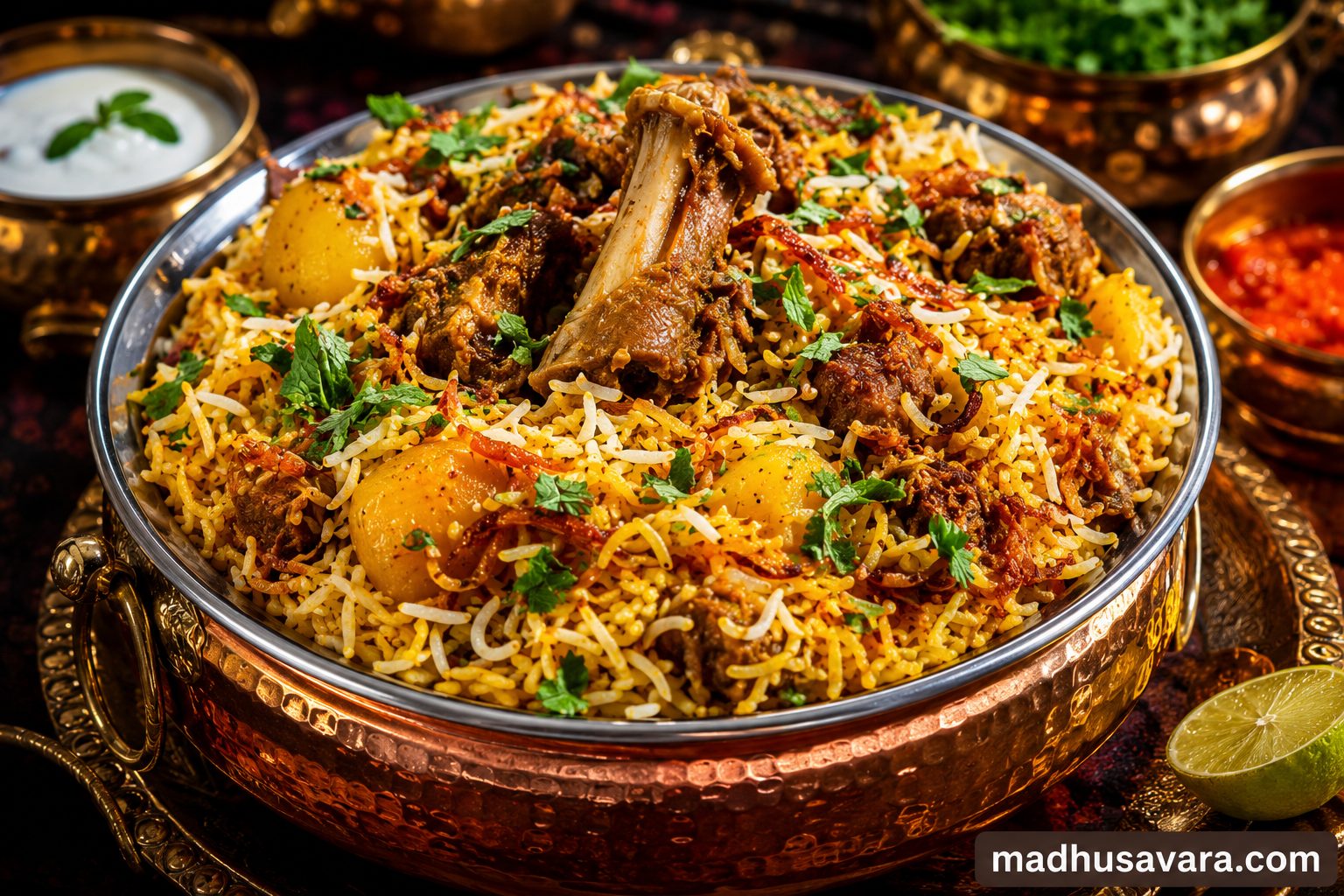
Authentic Memoni Biryani served in a traditional hammered copper handi with fragrant basmati rice, tender mutton, golden potatoes, crispy fried onions, fresh coriander and mint, accompanied by raita, chutney and lemon wedges.

Author’s Note

Welcome to madhusavara.com.

Some biryanis impress with fragrance, while others are remembered for their richness. Memoni Biryani does both. Passed down through the Memoni community, this fiery, aromatic biryani is famous for its bold spices, juicy mutton, tangy yoghurt and perfectly cooked basmati rice. Unlike many other biryanis, Memoni Biryani does not rely on artificial colours or excessive richness; its beauty lies in fresh ingredients, balanced spices and slow dum cooking. This is the version I proudly prepare for my family, and I hope it becomes a favourite in yours too.

What is Memoni Biryani?

Memoni Biryani Recipe is a traditional spicy biryani originating from the Memoni Muslim community of Sindh and Gujarat. It is famous for its bold chilli flavour, generous use of tomatoes, yoghurt, potatoes, fresh herbs and tender mutton cooked together before being layered with fragrant basmati rice. Unlike Hyderabadi Biryani, which depends heavily on dum-marinated meat, Memoni Biryani develops its distinctive taste from a slow-cooked masala that coats every grain of rice.

Why You’ll Love This Recipe

  • Authentic family recipe
  • Rich, spicy and aromatic
  • Perfectly separated rice grains
  • Juicy and tender mutton
  • Restaurant-quality results
  • Ideal for Eid, weddings and celebrations
  • Easy to prepare with simple ingredients

Why This Memoni Biryani Recipe Works

This recipe has been carefully balanced to produce authentic flavours without making the biryani overwhelmingly hot.

  • Thick yoghurt tenderises the mutton naturally.
  • Tomatoes provide the characteristic tanginess.
  • Fried potatoes absorb the rich masala beautifully.
  • Slow dum cooking develops deep flavour.
  • Fresh herbs brighten the spicy gravy.
  • Aged basmati rice remains fluffy and separate.

Table of Contents

  • Author’s Note
  • What is Memoni Biryani?
  • Quick Recipe Information
  • Ingredients
  • Equipment Needed
  • Step-by-Step Recipe
  • Madhu Savara’s Secrets
  • Madhu Savara’s Tips
  • Why This Recipe Works
  • Comparison with Other Biryanis
  • Nutrition
  • Storage
  • FAQs
  • About Madhu Savara
  • References

Servings

8 people

Preparation Time:

30 minutes and Marination Time: 2 hours

Cooking Time:

90 minutes

Calories

690

Ingredients

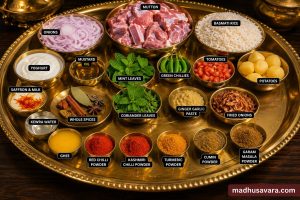
Authentic Memoni Biryani ingredients arranged in shining brass thalis, featuring basmati rice, mutton, potatoes, yoghurt, tomatoes, onions, fresh mint, coriander, green chillies, aromatic whole spices, ground spices, saffron milk and ghee for a traditional dum biryani recipe.

For Marination

  • 1 kg mutton, bone-in
  • 1½ cups thick yoghurt
  • 2 tbsp ginger-garlic paste
  • 2 tsp Kashmiri chilli powder
  • 2 tsp hot chilli powder
  • 2 tsp coriander powder
  • 1 tsp turmeric
  • 1 tsp roasted cumin powder
  • 2 tsp garam masala
  • Juice of one lemon
  • Salt to taste
  • 3 tbsp mustard oil

For Rice

  • 750 g aged basmati rice
  • 4 litres water
  • 2 bay leaves
  • 6 cloves
  • 5 green cardamoms
  • 2 black cardamoms
  • 1 cinnamon stick
  • 1 star anise
  • Salt

For Gravy

  • 4 onions, sliced
  • 4 tomatoes, chopped
  • 4 potatoes, peeled
  • 6 green chillies
  • 1 cup mint leaves
  • 1 cup coriander leaves
  • ½ cup fried onions
  • 4 tbsp ghee

For Layering

  • Saffron soaked in warm milk
  • Fried onions
  • Mint
  • Coriander
  • Ghee
  • Kewra water
  • Lemon slices

Equipment Needed


Traditional utensils for preparing Authentic Memoni Biryani, including a brass biryani pot, copper cooking pot, rice strainer, mortar and pestle, measuring cups, mixing bowls, chopping board, knife and wooden spoon, displayed with vibrant colours in a high-resolution kitchen setting.

  • Heavy-bottom biryani pot
  • Large stockpot
  • Frying pan
  • Mixing bowls
  • Knife
  • Chopping board
  • Measuring spoons
  • Wooden spatula
  • Fine strainer
  • Aluminium foil or dough for sealing

Nutrition Information

(Approximate Per Serving)

Nutrient Amount
Calories 690 kcal
Protein 34 g
Carbohydrates 61 g
Fat 33 g
Saturated Fat 11 g
Fibre 4 g
Sugar 5 g
Sodium 790 mg
Calcium 155 mg
Iron 4.2 mg


                       Comparison with Other Famous Biryanis

Biryani Special Feature
Memoni Biryani Spicy, tangy, tomato-rich, potatoes and bold masala
Bombay Biryani Mildly spicy with balanced sweetness and potatoes
Hyderabadi Biryani Raw marinated meat and intense dum cooking
Lucknowi Biryani Delicate yakhni flavour and subtle spices
Sindhi Biryani Sour yoghurt flavour with dried plums
Donne Biryani Green masala and fresh coriander-mint flavour

Step by Step Instructions

Joyful Muslim woman cooking Authentic Memoni Biryani in a traditional kitchen, stirring a large copper handi filled with fragrant basmati rice, tender mutton, golden potatoes and aromatic spices, surrounded by fresh herbs and colourful ingredients.

Step 1 – Marinate the Mutton

Combine yoghurt, ginger-garlic paste, chilli powders, coriander powder, turmeric, cumin powder, garam masala, lemon juice, salt and mustard oil in a large bowl. Coat every piece of mutton thoroughly. Cover and refrigerate for at least two hours. Overnight marination gives even better flavour and tenderness.

Step 2 – Fry the Onions

Heat oil and fry the sliced onions until golden brown. Drain on kitchen paper. Reserve half for the gravy and half for layering.

Step 3 – Fry the Potatoes

Lightly fry the peeled potatoes until golden. They will finish cooking during dum and absorb the delicious spices.

Step 4 – Cook the Mutton Masala

Heat ghee in a heavy pot. Add chopped tomatoes and cook until soft. Add the marinated mutton along with the entire marinade. Cook over medium heat for about 45 minutes, stirring occasionally.

When the oil begins to separate, add the fried onions, green chillies, mint, and coriander. Add the fried potatoes, cover, and cook until the mutton is almost tender and the gravy thickens, becoming rich and aromatic.

Step 5 – Cook the Basmati Rice

Wash the basmati rice gently until the water runs clear. Soak it for 30 minutes before draining.

Bring 4 litres of water to a rolling boil. Add the bay leaves, cinnamon, cloves, green cardamoms, black cardamoms, star anise and salt.

Add the soaked rice and cook until it is 70–75% done. The grains should still have a slight bite. Drain immediately and spread the rice on a large tray for a few minutes. Perfectly cooked rice is one of the biggest secrets behind an authentic Memoni Biryani Recipe, as it finishes cooking during dum without becoming sticky.

Step 6 – Layer the Memoni Biryani

Once the mutton has become tender and the masala is thick, spread it evenly at the bottom of the biryani pot.

Cover it with half of the partially cooked rice.

Sprinkle some fried onions, chopped mint, chopped coriander, saffron milk and a teaspoon of ghee.

Repeat with the remaining rice.

Finish with:

  • Remaining fried onions
  • Fresh mint leaves
  • Fresh coriander
  • Saffron-infused milk
  • Remaining ghee
  • Kewra water
  • Lemon slices

These finishing touches create the irresistible aroma that makes Authentic Memoni Biryani so memorable.

Step 7 – Dum Cooking

Seal the pot tightly with aluminium foil or traditional wheat dough and place the lid firmly.

Cook over medium heat for 5 minutes.

Reduce the heat to the lowest setting and cook for another 25–30 minutes.

Switch off the heat and allow the biryani to rest for 15 minutes before opening the lid.

Fluff gently from the bottom using a flat spoon so that the layers remain intact.

Every grain should be coated with the rich spicy masala while remaining long, separate and fragrant.

Tips and Variations

Madhu Savara’s Secrets

  • Always use bone-in mutton for richer flavour.
  • Marinate the meat overnight whenever possible.
  • Use aged basmati rice for long, separate grains.
  • Never overcook the rice before dum.
  • Fry onions patiently until golden, never dark brown.
  • Cook the mutton until the oil separates from the masala.
  • Rest the biryani for at least 15 minutes before serving.
  • Fresh mint and coriander should always be added during layering for maximum aroma.

Madhu Savara’s Tips

  • Choose shoulder or leg pieces for tender meat.
  • Crush mint gently before adding to release its natural oils.
  • Taste the gravy before layering; it should be slightly saltier than normal.
  • Do not stir vigorously after dum cooking.
  • Use homemade fried onions whenever possible.
  • Add saffron only after soaking it in warm milk.
  • Serve immediately after fluffing for the best texture.

For the best results, always use my freshly prepared Biryani Masala Recipe. Its carefully balanced blend of whole spices gives this Memoni Biryani an authentic aroma and flavour that’s difficult to achieve with ready-made masalas.

Delicious Variations

Chicken Memoni Biryani

Replace mutton with 1 kg chicken and reduce cooking time accordingly.

Vegetable Memoni Biryani

Use potatoes, carrots, beans, peas and paneer for a satisfying vegetarian version.

Extra Spicy Memoni Biryani

Increase green chillies and hot chilli powder while keeping the balance of herbs intact.


Allergen Information

This Authentic Memoni Biryani Recipe contains the following potential allergens:

  • Milk (Dairy): Yoghurt, ghee and saffron-infused milk are used in the recipe.
  • Tree Nuts (Optional): Some traditional garnishes may include fried cashews or almonds. Omit them if you have a nut allergy.
  • Mustard: Mustard oil is used for marinating the mutton. Substitute with a neutral cooking oil if required.
  • Sulphites (Possible): Commercial fried onions or spice blends may contain sulphites. Always check the product label.
  • Gluten: The biryani itself is naturally gluten-free. However, gluten may be present if using commercially prepared spice mixes or serving with naan or other wheat-based breads.

Allergy-Friendly Tips

  • Use certified gluten-free spices if preparing the dish for someone with coeliac disease or gluten sensitivity.
  • Replace yoghurt and ghee with dairy-free alternatives for a lactose-free version, although the flavour and texture will vary.
  • Skip cashews and almonds if serving guests with tree nut allergies.
  • Always read the labels on packaged ingredients to avoid hidden allergens or cross-contamination.
Other Essentials

Serving Suggestions

Serve this Memoni Mutton Biryani hot with:

  • Boondi raita
  • Onion and cucumber salad
  • Mint chutney
  • Roasted papad
  • Lemon wedges
  • Mango pickle
  • Mirchi ka salan

Things to Avoid

  • Overcooking the rice before dum.
  • Using fresh rather than aged basmati rice.
  • Cooking on high heat during dum.
  • Opening the lid repeatedly.
  • Skipping the marination.
  • Using watery yoghurt.
  • Stirring aggressively after dum.
  • Using too much food colouring instead of saffron.

Storage and Reheating

Cool completely before storing.

Refrigerate in an airtight container for up to three days.

Freeze for up to one month.

Reheat gently in a covered pan with one tablespoon of water over low heat. Avoid repeated reheating to preserve flavour and texture.

Frequently Asked Questions

Why is Memoni Biryani so spicy?

The Memoni Biryani Recipe is traditionally known for its bold use of red chillies, green chillies and freshly ground spices. However, you can easily adjust the spice level without compromising its authentic flavour.

What makes Memoni Biryani different from Hyderabadi Biryani?

Although both are dum-cooked, Authentic Memoni Biryani uses more tomatoes, potatoes, fresh herbs and a tangier masala. Hyderabadi Biryani relies heavily on raw marinated meat and a more aromatic spice profile.

Can I prepare Memoni Biryani with chicken?

Yes. Chicken is an excellent substitute for mutton. Reduce the cooking time because chicken cooks much faster while still delivering excellent flavour.

Which rice is best for Memoni Biryani?

Aged long-grain basmati rice is always the best choice. It produces separate, fluffy grains and absorbs the spicy masala beautifully.

Why are potatoes added?

Potatoes are a traditional ingredient in many Memoni households. They soak up the rich gravy and become one of the most delicious parts of the biryani.

Can I prepare it a day before serving?

Yes. In fact, many cooks believe the flavours deepen after resting overnight. Refrigerate properly and reheat gently before serving.

Can I freeze Memoni Biryani?

Yes. Divide it into individual portions and freeze in airtight containers for up to one month.

Why did my rice become mushy?

The most common reasons are overcooking the rice before layering, using too much liquid in the gravy or cooking on high heat during dum.

Which cut of mutton gives the best results?

Bone-in shoulder or leg pieces are ideal because they remain juicy and develop rich flavour during slow cooking.

Is Memoni Biryani suitable for festive occasions?

Absolutely. It is one of the signature dishes served during Eid, weddings, family gatherings and other special celebrations.

Final Thoughts: Memoni Biryani is a true celebration of bold spices, fragrant basmati rice, tender mutton, and slow-cooked perfection. Every layer reflects the rich culinary heritage of the Memon community — patience, balance, and the joy of sharing.

Whether made for Eid, a special family gathering, or a weekend feast, this authentic recipe delivers deep aroma and unforgettable flavour. Once you master it, it will surely become a cherished family favourite.

Call to Action

If you enjoyed this Authentic Memoni Biryani Recipe, I warmly invite you to explore many more traditional and regional recipes on madhusavara.com.

Discover authentic biryanis, forgotten Himalayan delicacies, heritage spice blends, festive dishes and carefully tested recipes that celebrate India’s remarkable culinary traditions. If you prepare this recipe, please share your experience in the comments and let us know your family’s favourite variation. Your encouragement inspires us to continue preserving our rich food heritage for future generations.

Happy Cooking!

– Madhu Savara

About Madhu Savara

Madhu Savara is the founder, recipe developer and food writer behind madhusavara.com. She is passionate about documenting authentic Indian regional cuisines, traditional cooking techniques and forgotten heritage recipes. Her recipes combine careful research, practical home cooking experience and easy-to-follow instructions, helping readers recreate authentic flavours with confidence. Through every recipe, she strives to preserve India’s diverse culinary legacy for future generations.

Research References (DOI)

Shahidi, F., & Ambigaipalan, P. (2015). Phenolics and polyphenolics in foods, beverages and spices: Antioxidant activity and health effects – A review. Journal of Functional Foods, 18, 820–897. DOI: 10.1016/j.jff.2015.06.018

Srinivasan, K. (2005). Spices as influencers of body metabolism: An overview of three decades of research. Food Research International, 38(1), 77–86. DOI: 10.1016/j.foodres.2004.09.001 (commonly cited without specific DOI in many references)

Melnyk, J. P., Wang, S., & Marcone, M. F. (2010). Chemical and biological properties of the world’s most expensive spice: Saffron. Food Research International, 43(8), 1981–1989. DOI: 10.1016/j.foodres.2010.07.033

Peter, K. V. (Ed.). (2001–2012). Handbook of Herbs and Spices (Vols. 1–3). Woodhead Publishing. (ISBNs and specific volumes vary by edition; commonly referenced multi-volume set)


Disclaimer

Important Notice: Read Before Proceeding

The recipes, preparation methods, nutritional details, and related content published on Madhu Savara’s website, social media, and associated platforms are intended solely for general informational and educational purposes. While every effort has been made to ensure accuracy and reliability, we make no guarantees regarding the results, safety, or accuracy of any recipe presented here.

We are not licensed nutritionists, dieticians, or medical professionals. The nutritional values provided are estimates only, calculated using third-party tools, and should not be used for medical diagnosis, dietary treatment, or allergy management. If you have any medical conditions, dietary restrictions, or food allergies, please consult your doctor or certified dietitian before attempting any recipe.

Cooking inherently involves sharp tools, high heat, and the risk of injury or fire. You assume full responsibility for your kitchen practices. Madhu Savara, the website, and all contributors shall not be held liable for any damage, injury, loss, or adverse outcome resulting directly or indirectly from the preparation, consumption, or interpretation of any content herein.

By using this website and attempting any recipe, you agree to hold harmless and indemnify Madhu Savara and her team from any liability, legal claim, or damages arising from the use of this content. You are encouraged to exercise independent judgment and take full responsibility for your health, kitchen safety, and actions.


Authentic Memoni Biryani served in a traditional hammered copper handi with fragrant basmati rice, tender mutton, golden potatoes, crispy fried onions, fresh coriander and mint, accompanied by raita, chutney and lemon wedges.
Print

Memoni Biryani Recipe | Authentic Memoni Mutton Biryani | Pakistani Memoni Biryani

Memoni Biryani Recipe is a traditional spicy biryani originating from the Memoni Muslim community of Sindh and Gujarat. It is famous for its bold chilli flavour, generous use of tomatoes, yoghurt, potatoes, fresh herbs and tender mutton cooked together before being layered with fragrant basmati rice. Unlike Hyderabadi Biryani, which depends heavily on dum-marinated meat, Memoni Biryani develops its distinctive taste from a slow-cooked masala that coats every grain of rice.
Course Main Course
Cuisine Indian, Pakistani
Keyword Authentic Memoni Biryani, Best Memoni Biryani Recipe, Homemade Memoni Biryani, Memoni Biryani, Memoni Biryani Recipe, Memoni Mutton Biryani, Mutton Biryani Recipe, Pakistani Memoni Biryani, Spicy Memoni Biryani, Traditional Memoni Biryani
Prep Time 30 minutes
Cook Time 1 hour 30 minutes
Marination time 2 hours
Total Time 4 hours
Servings 8 People
Calories 690kcal
Author Madhu Savara

Equipment

  • Heavy-bottom biryani potLarge stockpotFrying panMixing bowlsKnifeChopping boardMeasuring spoonsWooden spatulaFine strainerAluminium foil or dough for sealing

Ingredients

  • For Marination
  • 1 kg mutton bone-in
  • cups thick yoghurt
  • 2 tbsp ginger-garlic paste
  • 2 tsp Kashmiri chilli powder
  • 2 tsp hot chilli powder
  • 2 tsp coriander powder
  • 1 tsp turmeric
  • 1 tsp roasted cumin powder
  • 2 tsp garam masala
  • Juice of one lemon
  • Salt to taste
  • 3 tbsp mustard oil
  • For Rice
  • 750 g aged basmati rice
  • 4 litres water
  • 2 bay leaves
  • 6 cloves
  • 5 green cardamoms
  • 2 black cardamoms
  • 1 cinnamon stick
  • 1 star anise
  • Salt
  • For Gravy
  • 4 onions sliced
  • 4 tomatoes chopped
  • 4 potatoes peeled
  • 6 green chillies
  • 1 cup mint leaves
  • 1 cup coriander leaves
  • ½ cup fried onions
  • 4 tbsp ghee
  • For Layering
  • Saffron soaked in warm milk
  • Fried onions
  • Mint
  • Coriander
  • Ghee
  • Kewra water
  • Lemon slices

Instructions

  • Step 1 – Marinate the Mutton
  • Combine yoghurt, ginger-garlic paste, chilli powders, coriander powder, turmeric, cumin powder, garam masala, lemon juice, salt and mustard oil in a large bowl. Coat every piece of mutton thoroughly. Cover and refrigerate for at least two hours. Overnight marination gives even better flavour and tenderness.
  • Step 2 – Fry the Onions
  • Heat oil and fry the sliced onions until golden brown. Drain on kitchen paper. Reserve half for the gravy and half for layering.
  • Step 3 – Fry the Potatoes
  • Lightly fry the peeled potatoes until golden. They will finish cooking during dum and absorb the delicious spices.
  • Step 4 – Cook the Mutton Masala
  • Heat ghee in a heavy pot. Add chopped tomatoes and cook until soft. Add the marinated mutton along with the entire marinade. Cook over medium heat for about 45 minutes, stirring occasionally.
  • When the oil begins separating, add the fried onions, green chillies, mint and coriander. Add the fried potatoes, cover and cook until the mutton is almost tender and the gravy becomes thick, rich and aromatic.
  • Step 5 – Cook the Basmati Rice
  • Wash the basmati rice gently until the water runs clear. Soak it for 30 minutes before draining.
  • Bring 4 litres of water to a rolling boil. Add the bay leaves, cinnamon, cloves, green cardamoms, black cardamoms, star anise and salt.
  • Add the soaked rice and cook until it is 70–75% done. The grains should still have a slight bite. Drain immediately and spread the rice on a large tray for a few minutes. Perfectly cooked rice is one of the biggest secrets behind an authentic Memoni Biryani Recipe, as it finishes cooking during dum without becoming sticky.
  • Step 6 – Layer the Memoni Biryani
  • Once the mutton has become tender and the masala is thick, spread it evenly at the bottom of the biryani pot.
  • Cover it with half of the partially cooked rice.
  • Sprinkle some fried onions, chopped mint, chopped coriander, saffron milk and a teaspoon of ghee.
  • Repeat with the remaining rice.
  • Finish with:
  • Remaining fried onions
  • Fresh mint leaves
  • Fresh coriander
  • Saffron-infused milk
  • Remaining ghee
  • Kewra water
  • Lemon slices
  • These finishing touches create the irresistible aroma that makes Authentic Memoni Biryani so memorable.
  • Step 7 – Dum Cooking
  • Seal the pot tightly with aluminium foil or traditional wheat dough and place the lid firmly.
  • Cook over medium heat for 5 minutes.
  • Reduce the heat to the lowest setting and cook for another 25–30 minutes.
  • Switch off the heat and allow the biryani to rest for 15 minutes before opening the lid.
  • Fluff gently from the bottom using a flat spoon so that the layers remain intact.
  • Every grain should be coated with the rich spicy masala while remaining long, separate and fragrant.

Notes

Madhu Savara's Secrets

  • Always use bone-in mutton for richer flavour.
  • Marinate the meat overnight whenever possible.
  • Use aged basmati rice for long, separate grains.
  • Never overcook the rice before dum.
  • Fry onions patiently until golden, never dark brown.
  • Cook the mutton until the oil separates from the masala.
  • Rest the biryani for at least 15 minutes before serving.
  • Fresh mint and coriander should always be added during layering for maximum aroma.

Madhu Savara's Tips

  • Choose shoulder or leg pieces for tender meat.
  • Crush mint gently before adding to release its natural oils.
  • Taste the gravy before layering; it should be slightly saltier than normal.
  • Do not stir vigorously after dum cooking.
  • Use homemade fried onions whenever possible.
  • Add saffron only after soaking it in warm milk.
  • Serve immediately after fluffing for the best texture.