
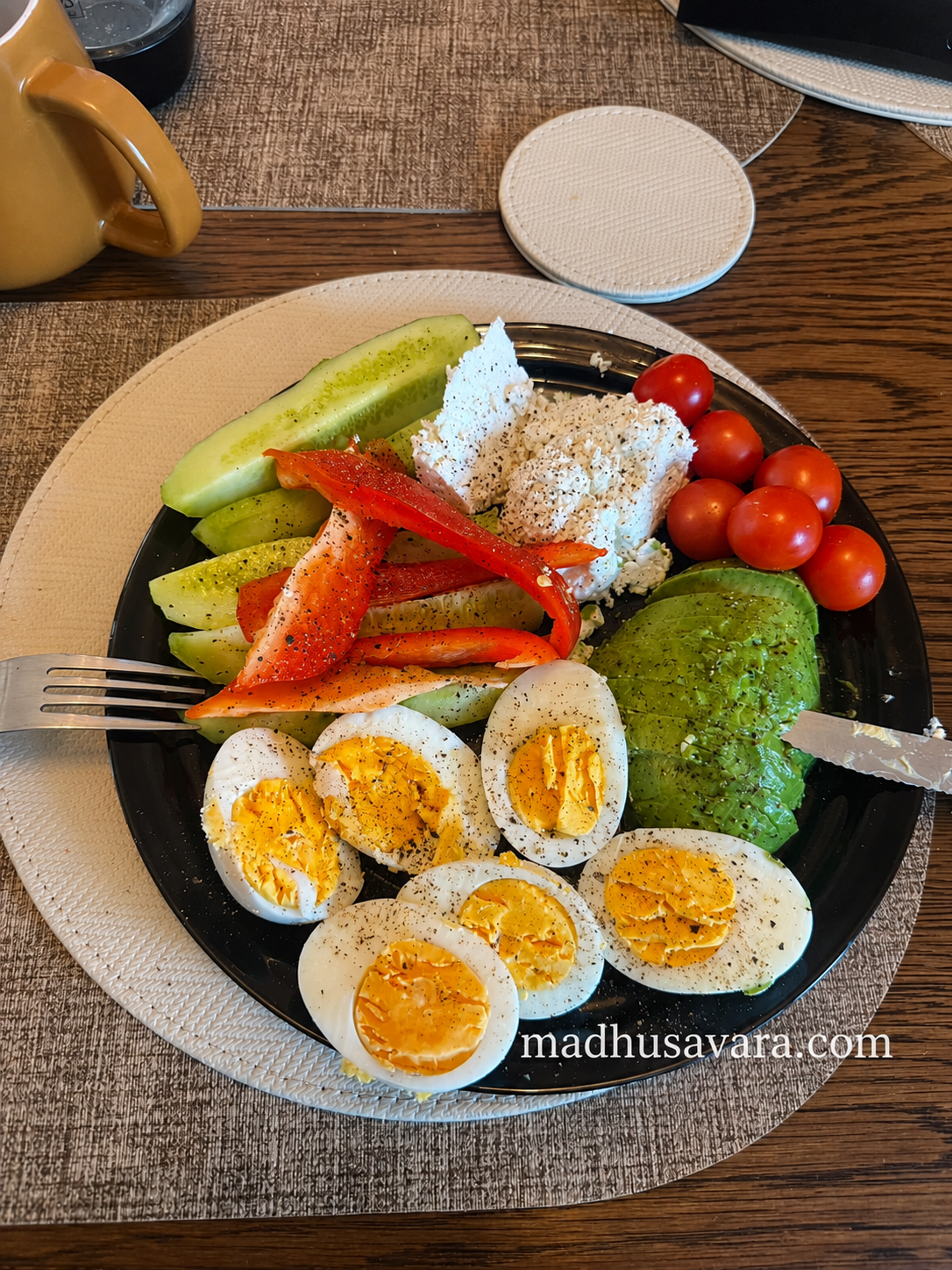
High Protein Breakfast with Eggs and Polish Twaróg Cheese
This high-protein breakfast with eggs and Twaróg cheese is prepared without frying. Boiled eggs provide the main protein component, while Twaróg adds another protein-rich dairy element to the plate.Avocado gives the breakfast a creamy texture, while cucumber, cherry tomatoes and red bell pepper add freshness, colour and crunch. A little salt, black pepper and lemon juice are enough to bring the ingredients together.
Servings 1 People
Calories 500kcal
Equipment
- EquipmentUseSaucepanBoiling the eggsKnifeCutting eggs, avocado and vegetablesChopping boardPreparing vegetables and avocadoForkCrumbling the Twaróg cheeseServing plateArranging the breakfast plateMixing bowlOptional, if you prefer to prepare the ingredients separately
Ingredients
- 3 boiled eggs
- 100 g Polish Twaróg cheese
- ½ avocado
- ½ cucumber
- ½ red bell pepper
- 6 –8 cherry tomatoes
- Salt to taste
- Freshly ground black pepper to taste
- 1 –2 teaspoons fresh lemon juice
Instructions
- . Boil the eggs
- Place the eggs in a saucepan and cover them with water. Bring the water to a boil and cook until the eggs are hard-boiled.
- Cool the eggs, peel them and cut them into halves or quarters.
- Prepare the vegetables
- Wash the cucumber, red bell pepper and cherry tomatoes.
- Slice the cucumber, cut the red bell pepper into thin strips and halve the cherry tomatoes.
- Prepare the avocado
- Cut the avocado in half and remove the stone. Slice the flesh or cut it into bite-sized pieces.
- Sprinkle a little lemon juice over the avocado to keep it fresh and add a light citrus flavour.
- Prepare the Twaróg
- Break the Polish Twaróg cheese into small pieces with your fingers or crumble it gently with a fork.
- There is no need to cook the Twaróg. Its mild flavour works well as part of this fresh cottage cheese breakfast.
- Assemble the breakfast plate
- Arrange the boiled eggs, Twaróg cheese, avocado, cucumber, red bell pepper and cherry tomatoes on a serving plate.
- Season the eggs and vegetables with salt and freshly ground black pepper.
- Finish with a few drops of fresh lemon juice.
- Serve immediately.
Notes
Madhu Savara’s Tips
- Use Polish Twaróg cheese that is fresh and firm enough to crumble easily.
- Do not cook the Twaróg for this breakfast plate; it is best served fresh.
- Hard-boiled eggs can be prepared in advance and refrigerated until required.
- Cut the avocado just before serving for the best texture.
- Add lemon juice according to taste rather than making the plate overly sharp.
- Keep the vegetables fresh and crisp. They provide a pleasant contrast to the eggs, avocado and Twaróg.
- If your Twaróg is particularly dry, crumble it into slightly smaller pieces so that it is easier to eat with the other ingredients.
