Authentic Kashmiri Mutton Biryani Recipe | Traditional Dum-Cooked Royal Biryani
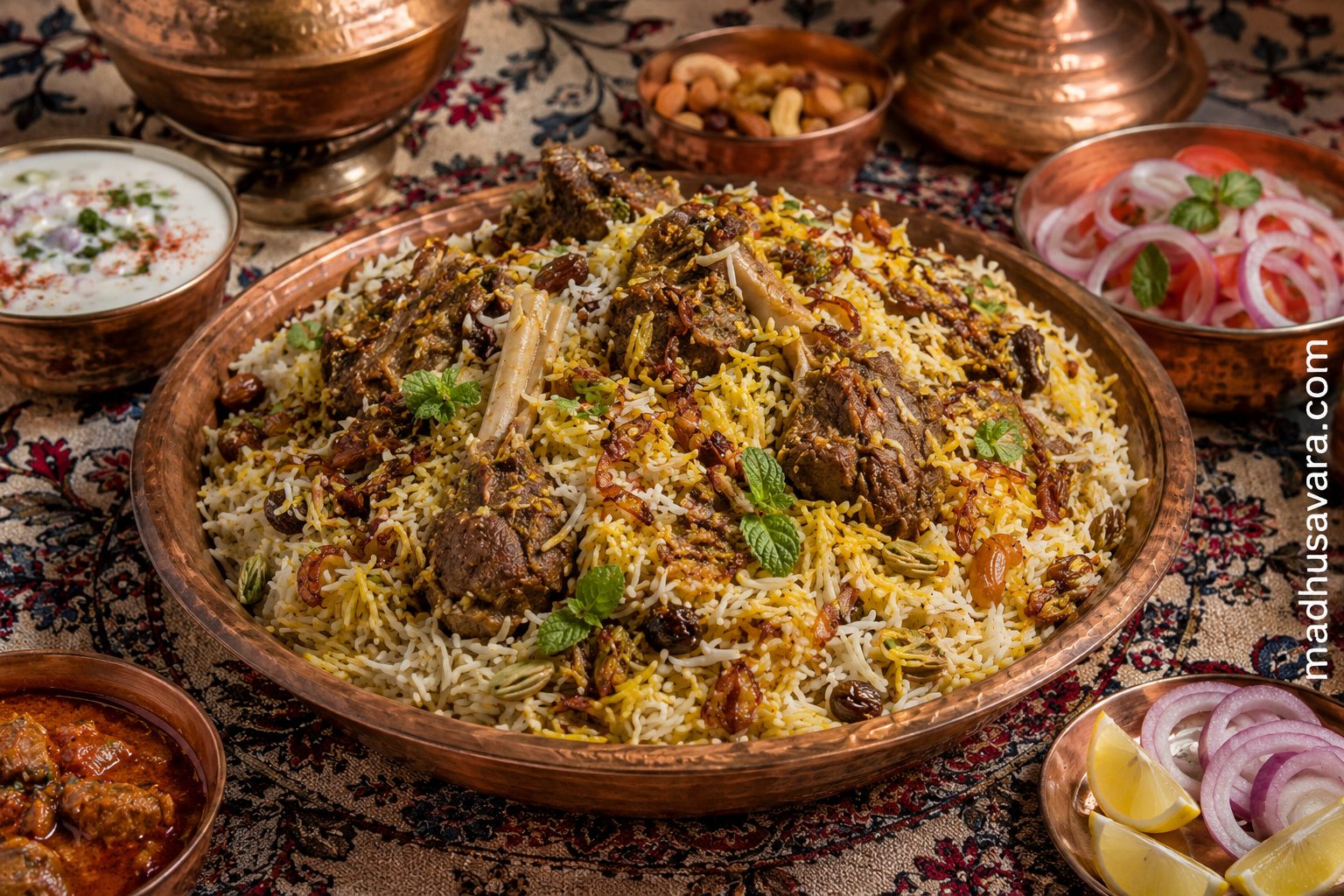
Authentic Kashmiri Mutton Biryani served on a traditional dastarkhan in a copper platter with long-grain saffron basmati rice, tender bone-in mutton, fried onions, mint, raisins, cashews, yoghurt raita, onion salad, lemon wedges, and Kashmiri accompaniments, with the madhusavara.com watermark on the right.

Madhu Savara’s Author’s Note

Namaste! Welcome to madhusavara.com.

Some recipes fill your kitchen with such a wonderful aroma that everyone starts asking, “What’s cooking today?” Kashmiri Mutton Biryani is one such dish. The gentle fragrance of saffron, the richness of slow-cooked mutton, and the aroma of whole spices make it a meal that feels truly special.

Kashmiri cuisine has always impressed me with its simplicity and elegance. The flavours are never overpowering. Every spice has a purpose, and every ingredient is used with care. Unlike many restaurant-style biryanis that rely on heavy masalas and artificial colours, this traditional recipe lets the natural taste of good-quality mutton, fragrant rice, saffron, fennel, and dry ginger shine through.

This recipe is inspired by the cooking traditions of Kashmir and adapted carefully for the home kitchen without compromising its authentic character. If you enjoy preparing regional Indian recipes from scratch, this biryani deserves a place on your dining table. Serve it for Eid, family get-togethers, Sunday lunches, or whenever you want to make an ordinary day feel special.

What is Kashmiri Mutton Biryani?

Kashmiri Mutton Biryani is a traditional rice dish where tender mutton and fragrant basmati rice are cooked together using the dum method. The recipe is flavoured with yoghurt, saffron, fennel powder, dry ginger, whole spices, and desi ghee, creating a biryani that is aromatic, mildly spiced, and beautifully balanced.

The speciality of this biryani lies in its simplicity. Instead of depending on strong chilli flavours, it builds taste through carefully chosen ingredients and slow cooking. As the sealed handi cooks on gentle heat, the rice absorbs the juices from the mutton and the fragrance of saffron and spices, giving every grain a rich yet delicate flavour.

If you enjoy biryanis where the aroma is as memorable as the taste, this Kashmiri Mutton Biryani will never disappoint.

History and Cultural Significance

Kashmir’s food reflects the Valley’s rich cultural heritage and centuries of culinary influences from Persia, Central Asia, and the Mughal courts. Over time, local cooks blended these influences with regional ingredients to create dishes that are elegant, aromatic, and deeply satisfying.

Unlike Rogan Josh, Rista or Gushtaba, biryani never became part of the ceremonial Wazwan. It remained a celebratory home dish prepared for festivals, Eid and family gatherings, where fragrant rice and slow-cooked meat could be enjoyed without the elaborate rituals of a full Wazwan. It gradually became popular in Kashmiri homes during festivals and family celebrations. Local ingredients such as saffron from Pampore, fennel powder, dry ginger, yoghurt, and pure desi ghee gave it a flavour that is distinctly Kashmiri.

Even today, Kashmiri Mutton Biryani is prepared for Eid, weddings, festive gatherings, and special family occasions. A handi of freshly cooked biryani placed in the centre of the dining table brings everyone together, making the meal as memorable as the celebration itself.

Why You’ll Love This Recipe

  • Authentic Kashmiri flavours using traditional ingredients.
  • Mildly spiced and suitable for the whole family.
  • Tender mutton cooked until perfectly juicy.
  • Long, fluffy grains of fragrant basmati rice.
  • Naturally coloured with saffron instead of artificial colours.
  • Step-by-step method that is easy to follow at home.
  • Ideal for festivals, celebrations, and weekend family meals.
  • Leftovers taste just as delicious the next day.

Table of Contents

  1. Madhu Savara’s Author’s Note
  2. What is Kashmiri Mutton Biryani?
  3. History and Cultural Significance
  4. Why You’ll Love This Recipe
  5. Recipe Summary
  6. Preparation Time, Cooking Time and Servings
  7. Nutritional Information
  8. Ingredients
  9. Why These Ingredients Matter
  10. Equipment Needed
  11. Step-by-Step Cooking Method
  12. Madhu Savara’s Tips
  13. Delicious Variations
  14. Things to Avoid
  15. Storage Tips
  16. Serving Suggestions
  17. Frequently Asked Questions
  18. Call to Action
  19. Final Author’s Note

Servings

6 persons

Preparation Time:

30 Minutes, Marination 2 Hours and 10 minutes resting time

Cooking Time:

1 hour 30 minutes

Calories

565

Ingredients

For Marinating the Mutton

  • 750 g bone-in mutton, cleaned and drained
  • 1 cup thick full-fat yoghurt
  • 1 tablespoon fresh ginger paste
  • 4 garlic cloves, crushed (optional)
  • 1 teaspoon Kashmiri red chilli powder
  • ½ teaspoon turmeric powder
  • 1 teaspoon fennel powder
  • ½ teaspoon dry ginger powder (saunth)
  • ½ teaspoon freshly ground black pepper
  • Salt to taste
  • 2 tablespoons mustard oil or desi ghee

For Cooking the Rice

  • 2½ cups aged basmati rice
  • Water for boiling
  • 2 bay leaves
  • 5 green cardamoms
  • 1 black cardamom
  • 5 cloves
  • 1-inch cinnamon stick
  • 1 teaspoon shahi jeera
  • 1 tablespoon salt

For Layering

  • 4 tablespoons desi ghee
  • 3 large onions, thinly sliced
  • 2 tablespoons cashews
  • 2 tablespoons raisins
  • ¼ cup chopped fresh mint leaves
  • ¼ cup chopped fresh coriander leaves
  • A generous pinch of Kashmiri saffron soaked in 3 tablespoons warm milk
  • 1 teaspoon fennel powder
  • ½ teaspoon dry ginger powder
  • ¼ teaspoon green cardamom powder
  • 2 teaspoons rose water or kewra water (optional)
  • 1 tablespoon fresh lemon juice

Why These Ingredients Matter

Bone-in Mutton: 

As the bones simmer gently, the marrow and collagen enrich the cooking juices. During dum, these juices rise into the rice, giving the biryani a fuller flavour without using heavy masalas.

Aged Basmati Rice

Good-quality aged basmati stays fluffy after dum cooking and gives the biryani its signature long grains.

Kashmiri Saffron

Saffron adds a delicate aroma and a beautiful golden colour without using artificial food colouring.

Fennel Powder

Fennel is one of the signature flavours of Kashmiri cooking. It adds a gentle sweetness and a pleasant aroma that makes this biryani unique.

Dry Ginger (Saunth)

Dry ginger balances the richness of the mutton and complements the fennel beautifully.

Desi Ghee

Pure desi ghee binds all the flavours together while adding richness without making the biryani heavy.

Equipment Needed

  • You don’t need any specialised equipment to prepare this biryani. These basic kitchen tools are enough:

    • Heavy-bottomed handi or Dutch oven with a tight-fitting lid – Essential for slow dum cooking and even heat distribution.
    • Large stockpot or deep saucepan – For boiling the basmati rice.
    • Wide frying pan or kadhai – For preparing the birista (golden fried onions) and lightly frying the dry fruits.
    • Large mixing bowl – For marinating the mutton thoroughly.
    • Long-handled slotted spoon – To remove the fried onions and dry fruits without excess oil or ghee.
    • Long fork or flat biryani spoon – For gently fluffing and serving the biryani without breaking the rice grains.
    • Sharp chef’s knife – For slicing onions evenly and chopping fresh herbs.
    • Chopping board – For safe and hygienic preparation.
    • Heavy flat tawa (griddle) – Placed under the handi during dum cooking to prevent the biryani from catching or burning at the bottom.
    • Aluminium foil or whole wheat dough (atta) – To seal the handi and trap the steam for authentic dum cooking.
    • Measuring cups and measuring spoons – To maintain the correct balance of spices and ingredients, especially if making the recipe for the first time.

Nutrition Information

(Approximate Per Serving)

Nutrient Amount
Calories 565 kcal
Protein 29 g
Carbohydrates 57 g
Fat 24 g
Saturated Fat 9 g
Fibre 3 g
Sodium 540 mg

Nutritional values are approximate and may vary depending on the ingredients used.

Step by Step Instructions

Detailed Instructions:

Step 1: Marinate the Mutton

Wash the mutton well and drain away all the excess water. Pat the pieces dry with a clean kitchen towel.

In a large bowl, whisk together the yoghurt, ginger paste, crushed garlic (if using), Kashmiri red chilli powder, turmeric, fennel powder, dry ginger powder, black pepper, mustard oil, and salt.

Add the mutton and mix well so that every piece is coated evenly with the marinade.

Cover the bowl and refrigerate for at least two hours. If time permits, leave it overnight. A longer marination not only tenderises the meat but also allows the spices to penetrate deeply, giving the biryani a richer flavour.

Step 2: Prepare the Birista

While the mutton is marinating, heat the desi ghee in a wide frying pan.

Add the sliced onions in batches and fry them over medium heat until they turn evenly golden brown. Stir regularly to prevent them from burning. Properly fried birista adds sweetness, colour, and depth to the biryani, so do not rush this step.

Remove the onions with a slotted spoon and spread them on kitchen paper.

In the same ghee, fry the cashews until lightly golden. Add the raisins and cook only until they become plump. Remove and keep them aside.

Step 3: Cook the Mutton

Transfer the marinated mutton and all the marinade into a heavy-bottomed handi.

Cook over medium heat for a few minutes, stirring occasionally, until the yoghurt begins releasing its moisture.

Reduce the flame, cover the handi, and cook slowly until the meat yields easily when pressed with a spoon but should not fall off the bone. It will finish cooking during dum.

Stir occasionally to prevent sticking. If required, add only a few tablespoons of hot water. The gravy should remain thick and concentrated because the rice will absorb its flavour during dum cooking.

Step 4: Cook the Rice

While the mutton is cooking, wash the basmati rice gently until the water runs clear. Soak it in fresh water for 30 minutes and then drain.

Bring plenty of water to a rolling boil in a large pot. Add the bay leaves, green cardamom, black cardamom, cloves, cinnamon stick, shahi jeera and salt.

Add the soaked rice and cook until it is about 70% done. The grains should still have a slight bite in the centre. They will finish cooking during the dum stage.

Drain the rice immediately and spread it on a large tray or wide plate. This prevents further cooking and helps keep the grains long and separate.

Step 5: Layer the Biryani

Check the mutton before layering. It should be almost tender with only a little thick gravy left in the handi. If there is too much liquid, cook uncovered for a few more minutes. Too much gravy can make the rice soggy.

Spread half of the cooked rice evenly over the mutton.

Scatter half of the fried onions, mint leaves, coriander leaves, fried cashews, raisins, fennel powder, dry ginger powder and half of the saffron milk over the rice. Sprinkle a few drops of rose water or kewra water if using.

Add the remaining rice and repeat the layering with the remaining garnishes.

Finish by drizzling the lemon juice over the top. It lifts the flavours without making the biryani sour.

Step 6: Dum Cooking

Cover the handi with a tight-fitting lid. Seal the edges with wheat dough or aluminium foil to trap the steam inside.

Place a heavy tawa on low heat and keep the sealed handi over it.

Cook on the lowest flame for 25 to 30 minutes.

Once the flame is switched off, leave the handi untouched for 10 minutes. During this time, the rice finishes absorbing the fragrant steam, making every grain light, separate and full of flavour. Opening the lid too early releases the trapped aroma and interrupts the final stage of cooking.

Step 7: Serve.

Lift the biryani gently from the sides rather than mixing it. This keeps the rice grains intact and ensures each serving has a generous portion of both fragrant rice and tender mutton. Enjoy it while it is still piping hot, when the aroma of saffron and whole spices is at its best.

Tips and Variations

Madhu Savara’s Tips

  • Use good-quality aged basmati rice for the best texture.
  • Bone-in mutton gives a richer flavour than boneless pieces.
  • Overnight marination makes the mutton softer and more flavourful.
  • Fry the onions patiently. Good birista is one of the secrets of an excellent biryani.
  • Do not cook the rice beyond 70% before layering.
  • Always use genuine Kashmiri saffron for authentic aroma and colour.
  • Keep the flame low during dum cooking.
  • Allow the biryani to rest before serving. It makes a noticeable difference to both flavour and texture.
  • If the mutton releases too much liquid, reduce it before adding the rice.
  • A heavy-bottomed handi helps prevent the biryani from catching at the bottom.

Delicious Variations

Kashmiri Chicken Biryani

If you prefer chicken, replace the mutton with 750 g bone-in chicken.

Marinate the chicken for 45 to 60 minutes using the same ingredients.

Cook until the chicken is about 80% done before layering with the rice.

Reduce the dum cooking time to 18 to 20 minutes.

The result is a lighter biryani with the same delicate Kashmiri flavours.

Royal Festive Version

For weddings and festive meals, add sliced almonds, pistachios and a few extra raisins between the rice layers. The dry fruits complement the saffron beautifully and make the biryani even more special.

Extra Saffron Version

If you enjoy the aroma of saffron, soak an extra pinch in warm milk for 20 minutes and drizzle it over the final rice layer before dum cooking.

Allergen Information

This recipe contains the following common allergens:

  • Milk: Yoghurt, desi ghee and milk used for soaking saffron.
  • Tree Nuts: Cashews are used for garnishing. If adding almonds or pistachios in the festive variation, they are also tree nuts.
  • Sulphites: Some commercially available raisins may contain sulphites as preservatives.

Allergy-Friendly Substitutions

  • Replace desi ghee with mustard oil or a neutral cooking oil for a dairy-free version.
  • Use plant-based yoghurt if avoiding dairy, though the flavour and texture will differ slightly.
  • Omit cashews and raisins if you have a nut allergy or prefer a simpler biryani.
  • Always check packaged ingredients such as saffron, spices and dry fruits for allergen information if cooking for someone with food allergies.

Please Note: This recipe is prepared using ingredients that may have been processed in facilities handling milk, nuts, wheat or other allergens. If you have severe food allergies, always read product labels carefully and consult your healthcare professional when necessary.

Other Essentials

Things to Avoid

  • Avoid using freshly harvested basmati rice.
  • Do not overcook the rice before layering.
  • Never skip the marination time.
  • Avoid adding too much water while cooking the mutton.
  • Do not cook the dum on high heat.
  • Avoid opening the handi during dum cooking.
  • Do not use artificial food colours.
  • Avoid mixing the biryani vigorously after cooking.

Storage Tips

Allow the biryani to cool completely before storing.

Transfer it to an airtight container and refrigerate for up to 2 days.

Reheat gently in a covered pan over low heat with one or two tablespoons of water.

Although freezing is possible, freshly prepared rice always tastes better. If making ahead, freeze only the cooked mutton and prepare fresh rice when serving.

Serving Suggestions

Authentic Kashmiri Mutton Biryani is satisfying on its own, but these accompaniments complete the meal beautifully.

Serve with:

  • Kashmiri yoghurt raita
  • Burani raita
  • Onion lachha salad
  • Fresh cucumber and tomato salad
  • Mint chutney
  • Kashmiri Dum Aloo
  • Roasted papad
  • Lemon wedges
  • A cup of warm Kashmiri Kahwa after the meal

Frequently Asked Questions

What makes Kashmiri Mutton Biryani different from other biryanis?

Kashmiri Mutton Biryani is known for its delicate aroma and balanced flavours. It uses saffron, fennel, dry ginger, yoghurt and whole spices instead of relying on heavy chilli and strong masalas.

Is Kashmiri Mutton Biryani spicy?

No. It is mildly spiced and fragrant, making it suitable for people who enjoy subtle flavours.

Which cut of mutton is best?

Bone-in shoulder or leg pieces are the best choice because they stay juicy during slow cooking and add richness to the gravy.

Can I pressure-cook the mutton?

Yes. Cook the marinated mutton until it is about 90% tender, then finish the recipe using the dum method.

Is saffron necessary?

Yes. Saffron gives the biryani its characteristic aroma and natural golden colour. It is one of the signature ingredients of this recipe.

Which rice should I use?

Always use aged long-grain basmati rice for the best results.

Can I prepare this biryani in advance?

Yes. You can prepare it a few hours before serving. Keep it covered and reheat gently before serving.

Why did my biryani turn mushy?

This usually happens when the rice is overcooked before layering or when there is too much liquid in the mutton. Follow the cooking timings carefully for perfectly separate grains.

Call to Action

If you tried this Authentic Kashmiri Mutton Biryani, I would love to know how it turned out. Share your experience in the comments below and let me know if you prepared the mutton or chicken version. Your feedback helps me create better recipes for home cooks across India and beyond.

If you enjoyed this recipe, please share it with your family and friends. You can also explore more authentic regional recipes on madhusavara.com, where every recipe celebrates India’s rich culinary heritage with simple, reliable methods.

Final Author’s Note

Traditional recipes have a special way of bringing families together. A fragrant handi of biryani placed in the middle of the table encourages everyone to slow down, share a meal and enjoy each other’s company.

I hope this Authentic Kashmiri Mutton Biryani brings the same warmth to your home. Cook it with patience, use the best ingredients you can find, and let the gentle flavours speak for themselves

Disclaimer

Important Notice: Read Before Proceeding

The recipes, preparation methods, nutritional details, and related content published on Madhu Savara’s website, social media, and associated platforms are intended solely for general informational and educational purposes. While every effort has been made to ensure accuracy and reliability, we make no guarantees regarding the results, safety, or accuracy of any recipe presented here.

We are not licensed nutritionists, dieticians, or medical professionals. The nutritional values provided are estimates only, calculated using third-party tools, and should not be used for medical diagnosis, dietary treatment, or allergy management. If you have any medical conditions, dietary restrictions, or food allergies, please consult your doctor or certified dietitian before attempting any recipe.

Cooking inherently involves sharp tools, high heat, and the risk of injury or fire. You assume full responsibility for your kitchen practices. Madhu Savara, the website, and all contributors shall not be held liable for any damage, injury, loss, or adverse outcome resulting directly or indirectly from the preparation, consumption, or interpretation of any content herein.

By using this website and attempting any recipe, you agree to hold harmless and indemnify Madhu Savara and her team from any liability, legal claim, or damages arising from the use of this content. You are encouraged to exercise independent judgment and take full responsibility for your health, kitchen safety, and actions.


Authentic Kashmiri Mutton Biryani served on a traditional dastarkhan in a copper platter with long-grain saffron basmati rice, tender bone-in mutton, fried onions, mint, raisins, cashews, yoghurt raita, onion salad, lemon wedges, and Kashmiri accompaniments, with the madhusavara.com watermark on the right.
Print

Authentic Kashmiri Mutton Biryani Recipe | Traditional Dum-Cooked Royal Biryani

Kashmiri Mutton Biryani is a traditional rice dish where tender mutton and fragrant basmati rice are cooked together using the dum method. The recipe is flavoured with yoghurt, saffron, fennel powder, dry ginger, whole spices, and desi ghee, creating a biryani that is aromatic, mildly spiced, and beautifully balanced.
The speciality of this biryani lies in its simplicity. Instead of depending on strong chilli flavours, it builds taste through carefully chosen ingredients and slow cooking. As the sealed handi cooks on gentle heat, the rice absorbs the juices from the mutton and the fragrance of saffron and spices, giving every grain a rich yet delicate flavour.
Course Main Course
Cuisine Kashmiri, North Indian, Indian
Keyword Authentic Kashmiri Biryani, Dum Cooked Kashmiri Biryani, Kashmiri Biryani Masala, Kashmiri Biryani Recipe, Kashmiri Mutton Biryani, Kashmiri Mutton Biryani Recipe, Royal Kashmiri Biryani, Traditional Kashmiri Biryani
Prep Time 5 hours 30 minutes
Cook Time 1 hour 30 minutes
Marination and resting Time 2 hours 10 minutes
Total Time 9 hours 10 minutes
Servings 6 People
Calories 565kcal
Author Madhu Savara

Equipment

  • Heavy-bottomed handi or Dutch oven with a tight-fitting lid – Essential for slow dum cooking and even heat distribution.Large stockpot or deep saucepan – For boiling the basmati rice.Wide frying pan or kadhai – For preparing the birista (golden fried onions) and lightly frying the dry fruits.Large mixing bowl – For marinating the mutton thoroughly.Long-handled slotted spoon – To remove the fried onions and dry fruits without excess oil or ghee.Long fork or flat biryani spoon – For gently fluffing and serving the biryani without breaking the rice grains.Sharp chef’s knife – For slicing onions evenly and chopping fresh herbs.Chopping board – For safe and hygienic preparation.Heavy flat tawa (griddle) – Placed under the handi during dum cooking to prevent the biryani from catching or burning at the bottom.Aluminium foil or whole wheat dough (atta) – To seal the handi and trap the steam for authentic dum cooking.Measuring cups and measuring spoons – To maintain the correct balance of spices and ingredients, especially if making the recipe for the first time.

Ingredients

  • For Marinating the Mutton
  • 750 g bone-in mutton cleaned and drained
  • 1 cup thick full-fat yoghurt
  • 1 tablespoon fresh ginger paste
  • 4 garlic cloves crushed (optional)
  • 1 teaspoon Kashmiri red chilli powder
  • ½ teaspoon turmeric powder
  • 1 teaspoon fennel powder
  • ½ teaspoon dry ginger powder saunth
  • ½ teaspoon freshly ground black pepper
  • Salt to taste
  • 2 tablespoons mustard oil or desi ghee
  • For Cooking the Rice
  • cups aged basmati rice
  • Water for boiling
  • 2 bay leaves
  • 5 green cardamoms
  • 1 black cardamom
  • 5 cloves
  • 1- inch cinnamon stick
  • 1 teaspoon shahi jeera
  • 1 tablespoon salt
  • For Layering
  • 4 tablespoons desi ghee
  • 3 large onions thinly sliced
  • 2 tablespoons cashews
  • 2 tablespoons raisins
  • ¼ cup chopped fresh mint leaves
  • ¼ cup chopped fresh coriander leaves
  • A generous pinch of Kashmiri saffron soaked in 3 tablespoons warm milk
  • 1 teaspoon fennel powder
  • ½ teaspoon dry ginger powder
  • ¼ teaspoon green cardamom powder
  • 2 teaspoons rose water or kewra water optional
  • 1 tablespoon fresh lemon juice

Instructions

  • Step 1: Marinate the Mutton
  • Wash the mutton well and drain away all the excess water. Pat the pieces dry with a clean kitchen towel.
  • In a large bowl, whisk together the yoghurt, ginger paste, crushed garlic (if using), Kashmiri red chilli powder, turmeric, fennel powder, dry ginger powder, black pepper, mustard oil, and salt.
  • Add the mutton and mix well so that every piece is coated evenly with the marinade.
  • Cover the bowl and refrigerate for at least two hours. If time permits, leave it overnight. A longer marination not only tenderises the meat but also allows the spices to penetrate deeply, giving the biryani a richer flavour.
  • Step 2: Prepare the Birista
  • While the mutton is marinating, heat the desi ghee in a wide frying pan.
  • Add the sliced onions in batches and fry them over medium heat until they turn evenly golden brown. Stir regularly to prevent them from burning. Properly fried birista adds sweetness, colour, and depth to the biryani, so do not rush this step.
  • Remove the onions with a slotted spoon and spread them on kitchen paper.
  • In the same ghee, fry the cashews until lightly golden. Add the raisins and cook only until they become plump. Remove and keep them aside.
  • Step 3: Cook the Mutton
  • Transfer the marinated mutton and all the marinade into a heavy-bottomed handi.
  • Cook over medium heat for a few minutes, stirring occasionally, until the yoghurt begins releasing its moisture.
  • Reduce the flame, cover the handi, and cook slowly until the meat yields easily when pressed with a spoon but should not fall off the bone. It will finish cooking during dum.
  • Stir occasionally to prevent sticking. If required, add only a few tablespoons of hot water. The gravy should remain thick and concentrated because the rice will absorb its flavour during dum cooking.
  • Step 4: Cook the Rice
  • While the mutton is cooking, wash the basmati rice gently until the water runs clear. Soak it in fresh water for 30 minutes and then drain.
  • Bring plenty of water to a rolling boil in a large pot. Add the bay leaves, green cardamom, black cardamom, cloves, cinnamon stick, shahi jeera and salt.
  • Add the soaked rice and cook until it is about 70% done. The grains should still have a slight bite in the centre. They will finish cooking during the dum stage.
  • Drain the rice immediately and spread it on a large tray or wide plate. This prevents further cooking and helps keep the grains long and separate.
  • Step 5: Layer the Biryani
  • Check the mutton before layering. It should be almost tender with only a little thick gravy left in the handi. If there is too much liquid, cook uncovered for a few more minutes. Too much gravy can make the rice soggy.
  • Spread half of the cooked rice evenly over the mutton.
  • Scatter half of the fried onions, mint leaves, coriander leaves, fried cashews, raisins, fennel powder, dry ginger powder and half of the saffron milk over the rice. Sprinkle a few drops of rose water or kewra water if using.
  • Add the remaining rice and repeat the layering with the remaining garnishes.
  • Finish by drizzling the lemon juice over the top. It lifts the flavours without making the biryani sour.
  • Step 6: Dum Cooking
  • Cover the handi with a tight-fitting lid. Seal the edges with wheat dough or aluminium foil to trap the steam inside.
  • Place a heavy tawa on low heat and keep the sealed handi over it.
  • Cook on the lowest flame for 25 to 30 minutes.
  • Once the flame is switched off, leave the handi untouched for 10 minutes. During this time, the rice finishes absorbing the fragrant steam, making every grain light, separate and full of flavour. Opening the lid too early releases the trapped aroma and interrupts the final stage of cooking.
  • Step 7: Serve.
  • Lift the biryani gently from the sides rather than mixing it. This keeps the rice grains intact and ensures each serving has a generous portion of both fragrant rice and tender mutton. Enjoy it while it is still piping hot, when the aroma of saffron and whole spices is at its best.

Notes

Tips and Variations
 

Madhu Savara’s Tips

  • Use good-quality aged basmati rice for the best texture.
  • Bone-in mutton gives a richer flavour than boneless pieces.
  • Overnight marination makes the mutton softer and more flavourful.
  • Fry the onions patiently. Good birista is one of the secrets of an excellent biryani.
  • Do not cook the rice beyond 70% before layering.
  • Always use genuine Kashmiri saffron for authentic aroma and colour.
  • Keep the flame low during dum cooking.
  • Allow the biryani to rest before serving. It makes a noticeable difference to both flavour and texture.
  • If the mutton releases too much liquid, reduce it before adding the rice.
  • A heavy-bottomed handi helps prevent the biryani from catching at the bottom.

Delicious Variations

Kashmiri Chicken Biryani

If you prefer chicken, replace the mutton with 750 g bone-in chicken.
Marinate the chicken for 45 to 60 minutes using the same ingredients.
Cook until the chicken is about 80% done before layering with the rice.
Reduce the dum cooking time to 18 to 20 minutes.
The result is a lighter biryani with the same delicate Kashmiri flavours.

Royal Festive Version

For weddings and festive meals, add sliced almonds, pistachios and a few extra raisins between the rice layers. The dry fruits complement the saffron beautifully and make the biryani even more special.

Extra Saffron Version

If you enjoy the aroma of saffron, soak an extra pinch in warm milk for 20 minutes and drizzle it over the final rice layer before dum cooking.