Authentic Bohra Biryani Recipe | Traditional Dawoodi Bohra Chicken Biryani
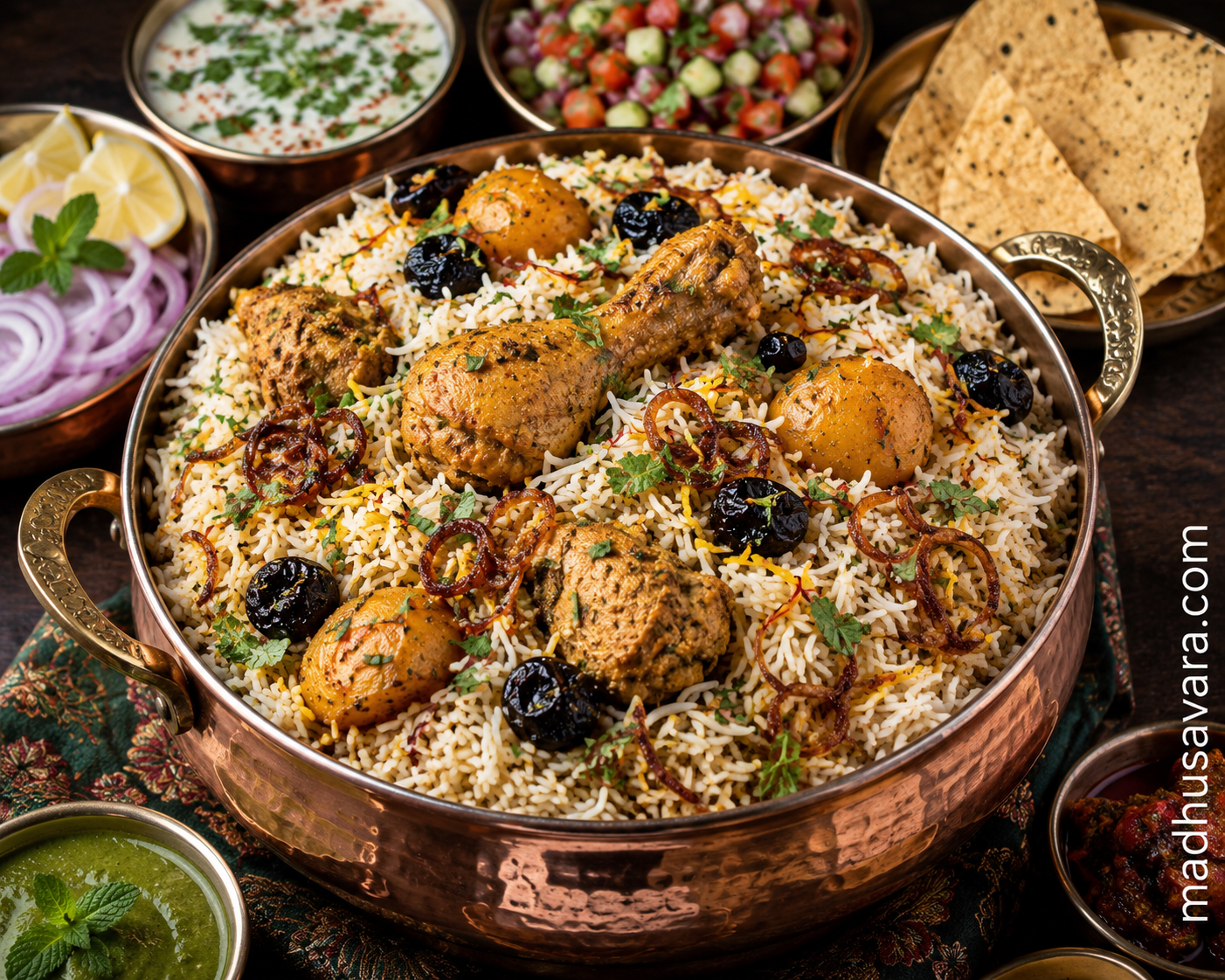
Authentic Bohra Biryani served in a traditional copper handi with tender chicken, potatoes, prunes, fried onions, saffron basmati rice, mint raita, kachumber salad and papad.

Author’s Note

Some recipes demand your attention with bold spices. Others earn a permanent place in your memory through quiet elegance. Authentic Bohra Biryani is one of those rare recipes.

The first time I learnt about the Dawoodi Bohra tradition of sharing meals from a large thaal, I was fascinated by the warmth and togetherness that surrounded the dining experience. At the heart of many of these gatherings was a beautifully layered chicken biryani that reflected the community’s belief that great food is not about excess—it’s about balance, care and sharing.

Unlike many restaurant-style biryanis that depend on heavy masalas, excessive oil or artificial colours, Traditional Dawoodi Bohra Chicken Biryani allows every ingredient to shine. Fragrant basmati rice, succulent chicken, slow-caramelised onions, ripe tomatoes, fresh mint, coriander and the signature touch of prunes come together to create a biryani that is rich in flavour yet remarkably light on the palate.

To develop this recipe, I carefully studied the traditional cooking methods, regional variations and culinary heritage of the Dawoodi Bohra community. I then tested the recipe repeatedly in my own kitchen until it captured the balanced flavours that make Authentic Bohra Biryani so distinctive while remaining practical for today’s home cooks.

I hope that this recipe brings not only wonderful aromas to your kitchen but also the joy of gathering family and friends around the table. After all, the finest recipes are the ones that become part of our happiest memories.

Introduction

Few dishes showcase India’s extraordinary culinary diversity as beautifully as biryani. Travel from one region to another, and you will discover that every community has its own treasured version, shaped by local ingredients, family traditions and generations of culinary wisdom.

Hyderabadi Biryani is celebrated for its bold spices and royal heritage. Kolkata Biryani is admired for its delicate aroma and signature potatoes. Memoni Biryani is known for its vibrant heat and herbaceous flavours. Among these regional classics, Authentic Bohra Biryani occupies a place of its own because of its remarkable balance.

Prepared traditionally by the Dawoodi Bohra Muslim community, this biryani is a masterclass in harmony rather than intensity. Every ingredient has a purpose. Slow-caramelised onions provide natural sweetness, ripe tomatoes add freshness and gentle acidity, yoghurt keeps the chicken tender, fresh mint and coriander brighten every layer, while a few prunes contribute a subtle fruity sweetness that perfectly complements the savoury spices.

This is not a biryani that relies on fiery chillies or heavy masalas to make an impression. Instead, it quietly wins you over with its fragrance, elegance and beautifully layered flavours. The traditional dum cooking method allows the chicken and rice to finish cooking together inside a sealed pot, where aromatic steam gently infuses every grain without making the rice sticky or heavy.

The Dawoodi Bohra community traces its religious heritage to the Fatimid Ismaili tradition, while its cuisine evolved over centuries in Gujarat and western India. Influenced by local produce and centuries of trade across the Arabian Sea, Bohra cooking developed its own distinctive identity—one that values freshness, restraint and perfect flavour balance above excess.

Whether served during Eid, weddings, religious gatherings or family celebrations, Authentic Bohra Biryani continues to symbolise hospitality, generosity and togetherness. If you are looking for a recipe that respects tradition while remaining practical for the modern home kitchen, this carefully researched guide will help you recreate one of India’s most elegant regional biryanis with confidence.

What is Bohra Biryani?

At first glance, Bohra Biryani may look like any other traditional chicken biryani. The difference becomes clear with the very first spoonful. Instead of overwhelming your palate with heat, it offers beautifully balanced layers of savoury, tangy and mildly sweet flavours that unfold gradually, making every bite more enjoyable than the last.

Authentic Bohra Biryani is a traditional layered chicken and rice dish prepared by the Dawoodi Bohra Muslim community, whose culinary traditions have flourished in Gujarat and western India for generations. While it follows the classic biryani technique of layering marinated chicken with partially cooked basmati rice before finishing on dum, its flavour profile is unlike any other regional biryani.

The defining characteristic of Traditional Bohra Biryani is balance. Instead of depending on excessive chilli or overpowering spices, it combines yoghurt-marinated chicken, caramelised onions, ripe tomatoes, potatoes, fragrant whole spices, fresh mint, coriander and a few prunes to create a biryani that is rich, aromatic and wonderfully refined.

Another feature that distinguishes Bohra Biryani is its texture. The rice remains light and fluffy, the chicken stays succulent, and every mouthful carries a perfect harmony of savoury richness, gentle tanginess and delicate sweetness. It is a biryani that rewards patience, careful cooking and high-quality ingredients rather than shortcuts.

For generations, Bohra families have prepared this biryani for weddings, Eid celebrations, religious gatherings and important family occasions. Today, it is equally appreciated by food lovers who enjoy discovering India’s remarkable regional cuisines and the stories that make them unique.

History and Cultural Significance

Food has always been at the heart of Dawoodi Bohra culture, where cooking is regarded as an expression of generosity, gratitude and togetherness. One of the community’s most cherished traditions is sharing meals from a large communal thaal, where family members and guests gather around a single platter. Dining together symbolises equality, unity and mutual respect, making every meal a shared celebration rather than an individual experience.

Bohra Biryani holds a special place in these gatherings because it is both festive and comforting. It is commonly prepared for Eid, weddings, religious celebrations and important family occasions, where a fragrant handi of biryani often becomes the highlight of the meal.

The culinary identity of the Dawoodi Bohra community developed over centuries in Gujarat and western India, enriched by local ingredients and long-standing trade across the Arabian Sea. This unique blend of influences produced a cuisine that values freshness, careful seasoning and harmony rather than excessive spice.

That philosophy continues to define Authentic Bohra Biryani today. Every layer reflects patience, craftsmanship and generations of culinary wisdom passed down through Bohra home kitchens. More than just a rice dish, it is a celebration of heritage, hospitality and the timeless pleasure of bringing people together over good food.

Table of Contents

  1. What is Bohra Biryani?
  2. History and Cultural Significance
  3. Why You’ll Love This Authentic Bohra Biryani Recipe
  4. Recipe Snapshot
  5. Ingredients
  6. Understanding the Key Ingredients
  7. Preparation Before Cooking
  8. How to Make Authentic Bohra Biryani
  9. Madhu Savara’s Tips for the Best Bohra Biryani
  10. Common Mistakes to Avoid
  11. Why This Recipe Works
  12. Variations
  13. Bohra Biryani vs Other Famous Indian Biryanis
  14. Serving Suggestions
  15. Storage and Reheating
  16. Nutritional Information
  17. Allergen Information
  18. Frequently Asked Questions
  19. Conclusion
  20. About the Author

Servings

8 people

Preparation Time:

,30 minutes, 4 hours (overnight recommended)

Cooking Time:

1 hour 10 minutes

Calories

640

Ingredients

The beauty of Authentic Bohra Biryani lies in the quality of its ingredients rather than their quantity. Fresh herbs, ripe tomatoes, good-quality yoghurt and aged basmati rice make a noticeable difference to the final result.

For Marinating the Chicken

  • 1 kg chicken, bone-in, cut into medium-sized pieces
  • 250 g thick curd (full-fat yoghurt)
  • 2 tablespoons ginger-garlic paste
  • 2 teaspoons Kashmiri red chilli powder
  • 1 teaspoon turmeric powder
  • 2 teaspoons coriander powder
  • 1 teaspoon roasted cumin powder
  • 1½ teaspoons garam masala
  • Salt to taste
  • Juice of 1 fresh lemon
  • 2 tablespoons crushed fried onions
  • 2 tablespoons chopped fresh mint
  • 2 tablespoons chopped fresh coriander

Why this marinade works: Yoghurt gently tenderises the chicken while allowing the spices to penetrate the meat. Fried onions add natural sweetness and body, while lemon juice brightens the overall flavour without making the marinade sour.

For Cooking the Rice

  • 750 g aged long-grain basmati rice
  • 3 litres water
  • 2 tablespoons salt
  • 2 bay leaves
  • 5 green cardamoms
  • 1 black cardamom
  • 6 cloves
  • 1-inch cinnamon stick
  • 1 teaspoon cumin seeds

Madhu Savara’s Tip: Always choose aged basmati rice. It absorbs flavour beautifully and remains light and separate after dum cooking.

For the Bohra Masala

  • 3 large onions, thinly sliced
  • 3 medium ripe tomatoes, sliced
  • 3 medium potatoes, peeled and halved
  • 4 green chillies, slit lengthwise
  • ½ cup chopped fresh mint
  • ½ cup chopped fresh coriander
  • 3 tablespoons pure ghee
  • 2 tablespoons cooking oil

Whole Spices

  • 1 black cardamom
  • 4 green cardamoms
  • 5 cloves
  • 1 bay leaf
  • 1-inch cinnamon stick
  • 1 blade mace
  • ½ teaspoon black peppercorns
  • 1 teaspoon shah jeera (caraway seeds)

These whole spices release their essential oils slowly during cooking, giving the biryani its characteristic aroma without overpowering the other ingredients.

For Layering

  • 1 cup fried onions
  • Extra chopped mint leaves
  • Extra chopped coriander leaves
  • 8–10 soft prunes (preferred) or 2 tablespoons golden raisins
  • A generous pinch of saffron soaked in 2 tablespoons warm milk
  • 2 tablespoons melted ghee
  • Lemon slices for garnish

Why are prunes important?

One of the defining features of Traditional Dawoodi Bohra Chicken Biryani is the restrained use of prunes. They are not added to make the biryani sweet. Instead, they soften the acidity of the tomatoes and yoghurt, creating the beautifully balanced flavour that distinguishes Bohra Biryani from most other regional biryanis.

Understanding the Key Ingredients

One of the reasons Authentic Bohra Biryani tastes so different from other regional biryanis is that every ingredient has a specific purpose. Nothing is added simply for colour or quantity. Understanding these ingredients will help you appreciate why this traditional recipe has remained a favourite in Bohra homes for generations.

Aged Basmati Rice – The Foundation of Every Great Biryani

The quality of the rice can make or break a biryani. Always choose aged long-grain basmati rice that is at least one year old. As rice ages, it loses excess moisture, allowing the grains to remain long, fluffy and separate after cooking.

Freshly harvested rice contains more moisture and is more likely to become sticky during dum cooking. Washing the rice thoroughly removes excess starch, while soaking it for about 30–40 minutes helps the grains cook evenly without breaking.

Bone-in Chicken – Better Flavour and Juicier Meat

Traditional Bohra families usually prepare this biryani with bone-in chicken because the bones enrich the masala as the biryani cooks slowly on dum. The meat also remains juicy and tender compared to boneless pieces, which can dry out during the final steaming.

A combination of thighs, drumsticks and breast pieces gives the best balance of flavour and texture.

Thick Yoghurt – The Natural Tenderiser

Yoghurt plays a far more important role than simply flavouring the chicken. Its natural acidity gently breaks down the muscle fibres, making the meat tender without turning it mushy. It also binds the spices to the chicken, ensuring every piece is evenly coated with flavour.

For the best results, use thick full-fat curd. If the yoghurt is watery, strain it through a muslin cloth for 20–30 minutes before marinating.

Fried Onions – The Heart of the Masala

Perfectly caramelised onions are one of the defining features of Traditional Bohra Biryani. As they slowly turn deep golden brown, their natural sugars caramelise, creating sweetness and depth that cannot be achieved with sugar or ready-made fried onions.

Take your time with this step. Rushing the onions or frying them over high heat can leave them bitter instead of beautifully caramelised.

Madhu Savara’s Tip: Fry a larger batch of onions than you need. They keep well in an airtight container and save valuable time when making biryani again.

Tomatoes – The Bohra Signature

Unlike several other famous biryanis that use tomatoes sparingly, Authentic Bohra Biryani Recipe relies on ripe tomatoes to provide freshness and gentle acidity. They balance the richness of the onions and ghee while helping to create a light yet flavourful masala.

Choose ripe red tomatoes that are naturally sweet. Avoid very sour tomatoes, as they can overpower the delicate flavour profile.

Potatoes – A Traditional Addition

Many people associate potatoes with Kolkata Biryani, but they are also a cherished ingredient in many Bohra households. As the potatoes cook slowly with the chicken, they absorb the aromatic masala and often become everyone’s favourite part of the meal.

Select medium-sized potatoes that hold their shape well during cooking.

Prunes – The Secret Behind the Balance

Ask anyone familiar with Bohra cuisine what makes this biryani unique, and they will almost certainly mention prunes.

Only a few are added, but their role is significant. Rather than making the biryani sweet, prunes soften the tanginess of tomatoes and yoghurt while adding gentle fruity notes that linger pleasantly on the palate.

This subtle contrast is one of the defining characteristics of Traditional Dawoodi Bohra Chicken Biryani.

Fresh Herbs – The Final Burst of Freshness

Fresh mint and coriander are never an afterthought in Bohra Biryani. They add brightness, fragrance and freshness that lift the richness of the meat and rice.

Always use freshly chopped herbs just before cooking. Wilted herbs lose both aroma and flavour.

Equipment Needed

Traditional Utensils Used for Bohra Biryani

While this recipe can easily be prepared in a modern kitchen, traditional Bohra cooks have long relied on a few time-tested utensils that help develop the biryani’s distinctive flavour and texture.

Handi

A heavy-bottomed handi is the traditional vessel used for cooking Bohra Biryani. Its rounded shape distributes heat evenly and allows the dum process to cook the rice gently without scorching the bottom.

Iron Tawa

During the final dum stage, the handi is often placed on a thick iron tawa. The tawa acts as a heat diffuser, preventing direct flame from burning the bottom layer while allowing the biryani to cook slowly.

Degh

For weddings, Eid celebrations and large community gatherings, Bohra Biryani is traditionally prepared in a large degh (a wide, heavy cooking pot) over a slow charcoal fire. This method produces exceptional aroma and is still followed by many traditional cooks.

Long-Handled Spoon

A long, flat spoon makes it easier to lift the biryani gently from the bottom without breaking the delicate grains of rice.

Muslin Cloth or Dough Seal

Some traditional cooks seal the rim of the handi with dough or a damp muslin cloth before placing the lid. This helps trap steam inside the pot, allowing the flavours to develop fully during dum cooking.

Modern Alternative: A heavy Dutch oven, thick-bottomed stockpot or cast-iron casserole with a tight-fitting lid works beautifully in today’s kitchens.

Nutrition Information

The following values are approximate and may vary depending on the brand of ingredients used, the quantity of ghee and the size of each serving.

Nutrient Approximate Amount (Per Serving)
Calories 640 kcal
Protein 33 g
Carbohydrates 58 g
Fat 29 g
Saturated Fat 9 g
Fibre 4 g
Sugar 6 g
Sodium 920 mg
Potassium 610 mg
Calcium 145 mg
Iron 3.8 mg

Nutritional values are estimates only and should not be considered medical or dietary advice.

Step by Step Instructions

Preparation Before Cooking

Step 1: Marinate the Chicken

  • Mix the chicken with all the marinade ingredients.
  • Cover and refrigerate for at least 4 hours or overnight for the best flavour.

Step 2: Prepare the Rice

  • Wash the basmati rice until the water runs clear.
  • Soak for 30–40 minutes and drain.

Step 3: Fry the Onions

  • Fry the sliced onions over medium heat until deep golden brown.
  • Drain on kitchen paper and keep aside.

Step 4: Prepare the Remaining Ingredients

  • Peel and halve the potatoes.
  • Slice the tomatoes.
  • Slit the green chillies.
  • Chop the mint and coriander.
  • Soak the saffron in warm milk.
  • Measure all the spices before cooking.

How to Make Authentic Bohra Biryani

Step 1: Parboil the Rice

  • Bring 3 litres of water to a boil with salt and the whole spices.
  • Add the soaked rice and cook until 70–75% done.
  • Drain immediately.

Step 2: Fry the Potatoes

  • Heat the ghee and oil in a heavy-bottomed handi.
  • Fry the potatoes lightly until pale golden. Remove and set aside.

Step 3: Prepare the Masala

  • Add the whole spices to the same handi and sauté until fragrant.
  • Add the onions and cook until golden brown.
  • Stir in the green chillies and tomatoes.
  • Cook until the tomatoes soften, and the masala thickens.

Step 4: Cook the Chicken

  • Add the marinated chicken with all the marinade.
  • Cook for 12–15 minutes.
  • Add the potatoes and cook until the chicken is almost done and the masala is thick.
  • Stir in half the mint and coriander.

Step 5: Layer the Biryani

  • Spread the chicken evenly in the handi.
  • Add half the rice.
  • Sprinkle fried onions, mint, coriander and prunes.
  • Drizzle saffron milk and ghee.
  • Repeat with the remaining rice and garnish.

Step 6: Dum Cooking

  • Cover the handi tightly or seal with dough.
  • Cook on low heat for 25–30 minutes.
  • Rest for 10–15 minutes.
  • Fluff the rice gently and serve hot.

Common Mistakes to Avoid

  • Overcooking the rice before dum.
  • Using a watery chicken masala.
  • Burning the fried onions.
  • Cooking dum over high heat.
  • Adding too many prunes.
  • Stirring the biryani instead of fluffing it.

Why This Recipe Works

  • Yoghurt keeps the chicken tender.
  • Caramelised onions add natural sweetness.
  • Tomatoes balance the richness.
  • Prunes provide the signature Bohra flavour.
  • Aged basmati rice stays light and fluffy.
  • Dum cooking blends the flavours beautifully.

Variations

  • Mutton Bohra Biryani: Replace chicken with tender goat meat.
  • Chicken & Egg Biryani: Add boiled eggs while layering.
  • Keema Bohra Biryani: Use spiced minced chicken or mutton.
  • Dry Fruit Version: Garnish with fried cashews and almonds.
  • Mild Version: Reduce the green chillies.
  • Festive Version: Add extra saffron, ghee and fried onions.

Bohra Biryani vs Other Famous Biryanis

Feature Bohra Hyderabadi Memoni Kolkata
Spice Level Medium High High Mild
Tomatoes Yes Minimal Moderate Very little
Potatoes Yes Rare No Yes
Prunes Yes No No Occasionally
Flavour Balanced Bold Spicy Delicate

Serving Suggestions

Serve hot with:

  • Mint or cucumber raita
  • Kachumber salad
  • Roasted papad
  • Green chutney
  • Lemon wedges
  • Pickled onions
  • Firni or Shahi Tukda
  • Sweet or salted lassi

Tips and Variations

Madhu Savara’s Expert Tips for Perfect Bohra Biryani

Follow these simple tips for consistently delicious results:

  • Use premium aged basmati rice for long, fluffy grains.
  • Marinate the chicken for at least 4 hours; overnight is best.
  • Fry the onions until deep golden brown, never burnt.
  • Keep the chicken masala thick before layering.
  • Use only 6–10 prunes to maintain the authentic flavour balance.
  • Add freshly chopped mint and coriander just before layering.
  • Cook on low heat during dum for even cooking.
  • Rest the biryani for 10–15 minutes before serving.
  • Fluff the rice gently with a flat spoon; do not stir.

Traditional Variations of Bohra Biryani

  • Mutton Bohra Biryani: Prepared with tender goat meat instead of chicken.
  • Chicken & Egg Bohra Biryani: Layered with boiled eggs for festive occasions.
  • Keema Bohra Biryani: Made with spiced minced chicken or mutton.
  • Dry Fruit Bohra Biryani: Garnished with fried cashews, almonds and raisins.
  • Mild Home-Style Version: Uses fewer green chillies while retaining the traditional spices.
  • Festive Bohra Biryani: Enriched with extra saffron, ghee and fried onions.

Serving Suggestions

Serve Authentic Bohra Biryani with:

  • Mint or cucumber raita
  • Kachumber salad
  • Roasted papad
  • Green chutney
  • Pickled onions
  • Lemon wedges
  • Firni or Malida
  • Sweet or salted lassi

Traditionally, Bohra Biryani is enjoyed from a shared thaal, celebrating the community’s values of hospitality, togetherness and sharing.

Allergen Information

This recipe may contain the following allergens:

  • Milk: Present in yoghurt, ghee and saffron milk.
  • Tree Nuts: Only if you choose to garnish with cashews or almonds.
  • Sulphites: Some commercially available prunes may contain sulphites as preservatives.

The recipe is naturally free from eggs (unless you add them as a variation) and does not contain seafood.

If preparing this biryani for guests with food allergies, always check the labels on packaged ingredients before cooking.

Other Essentials

Storage and Reheating

One of the advantages of Authentic Bohra Biryani is that its flavours continue to develop after a few hours, making the leftovers just as enjoyable as the freshly cooked dish when stored correctly.

Refrigerating

Allow the biryani to cool to room temperature before transferring it to an airtight container. Refrigerate within two hours of cooking and consume within 2 days for the best flavour and texture.

Freezing

Bohra Biryani freezes well. Divide it into individual portions, place them in freezer-safe containers or bags, and freeze for up to 1 month. Thaw overnight in the refrigerator before reheating.

Reheating

For the best results, sprinkle 1–2 tablespoons of water over the biryani, cover the pan with a lid and reheat gently over low heat for 8–10 minutes. This restores moisture without drying the rice.

You can also microwave individual portions. Cover the bowl loosely and heat in short intervals, stirring gently once halfway through.

Avoid reheating the biryani multiple times, as repeated heating affects both flavour and food safety.

Frequently Asked Questions

Can I prepare Bohra Biryani without prunes?

Yes, but prunes are one of the signature ingredients of Authentic Bohra Biryani. They add a delicate fruity note that balances the tomatoes and yoghurt. If unavailable, you may substitute a small quantity of golden raisins, although the flavour will be slightly different.

Can I use boneless chicken?

You can, but bone-in chicken produces a richer and more flavourful biryani. The bones release natural juices during cooking, keeping the meat tender and enriching the masala.

Why did my rice become soft?

The most common reason is overcooking the rice before layering. For dum biryani, the rice should be only 70–75% cooked so that it finishes cooking inside the sealed handi.

Can I prepare this recipe in advance?

Yes. In fact, many home cooks feel that Bohra Biryani tastes even better after resting for a few hours because the flavours continue to blend beautifully.

Which rice is best for Bohra Biryani?

Always use aged long-grain basmati rice. It absorbs flavours well while remaining light, fluffy and separate after dum cooking.

Is Bohra Biryani very spicy?

No. Traditional Bohra Biryani is known for its balance rather than intense heat. The spices are aromatic and flavourful without overpowering the palate.

Can I make this recipe with mutton?

Absolutely. Mutton is another popular choice in Bohra households. Simply allow extra cooking time so that the meat becomes tender before layering it with the rice.

Conclusion

Every regional biryani has its own story, but Authentic Bohra Biryani stands apart for the quiet confidence with which it celebrates balance. It does not depend on excessive spice or rich gravies to impress. Instead, it brings together fragrant basmati rice, tender chicken, caramelised onions, tomatoes, fresh herbs and the gentle sweetness of prunes to create a meal that is elegant, comforting and deeply satisfying.

What makes this biryani truly memorable is not only its flavour but also the tradition behind it. For generations, Dawoodi Bohra families have prepared this dish for weddings, Eid celebrations, religious gatherings and family feasts, where food is shared from a communal thaal as a symbol of unity, generosity and gratitude. Every layer reflects patience, care and the joy of cooking for others.

If you follow the techniques explained in this guide—marinating the chicken well, cooking the rice to the correct stage and allowing the biryani to finish gently on dum—you will be rewarded with a fragrant handi that captures the spirit of this remarkable regional speciality.

I hope this recipe inspires you to explore more of India’s rich culinary heritage and brings the warmth of a traditional Bohra meal into your own home. If you try this recipe, I’d love to hear about your experience. Your feedback, tips and family variations help keep these treasured regional recipes alive for future generations.

Happy Cooking!

– Madhu Savara

About the Author

Madhu Savara is a passionate home cook, food writer and the creator of madhusavara.com, where she documents India’s rich culinary heritage one recipe at a time. Her work focuses on authentic regional cuisines, traditional cooking techniques and forgotten family recipes that deserve to be preserved for future generations.

From the festive dishes of Himachal Pradesh to the royal biryanis of India and everyday home-style meals, her recipes combine careful research with practical kitchen experience. Every recipe is tested in a home kitchen and written in clear, easy-to-follow Indian English so that readers can cook with confidence while understanding the history and culture behind the dish.

Her mission is simple: to preserve authentic Indian food traditions, celebrate regional diversity and help home cooks recreate timeless recipes with confidence, honesty and respect for tradition.

If you enjoy exploring India’s culinary heritage, you’ll find many more authentic recipes, cooking guides and regional food stories here on madhusavara.com.

Disclaimer

Important Notice: Read Before Proceeding

The recipes, preparation methods, nutritional details, and related content published on Madhu Savara’s website, social media, and associated platforms are intended solely for general informational and educational purposes. While every effort has been made to ensure accuracy and reliability, we make no guarantees regarding the results, safety, or accuracy of any recipe presented here.

We are not licensed nutritionists, dieticians, or medical professionals. The nutritional values provided are estimates only, calculated using third-party tools, and should not be used for medical diagnosis, dietary treatment, or allergy management. If you have any medical conditions, dietary restrictions, or food allergies, please consult your doctor or certified dietitian before attempting any recipe.

Cooking inherently involves sharp tools, high heat, and the risk of injury or fire. You assume full responsibility for your kitchen practices. Madhu Savara, the website, and all contributors shall not be held liable for any damage, injury, loss, or adverse outcome resulting directly or indirectly from the preparation, consumption, or interpretation of any content herein.

By using this website and attempting any recipe, you agree to hold harmless and indemnify Madhu Savara and her team from any liability, legal claim, or damages arising from the use of this content. You are encouraged to exercise independent judgment and take full responsibility for your health, kitchen safety, and actions.


Authentic Bohra Biryani served in a traditional copper handi with tender chicken, potatoes, prunes, fried onions, saffron basmati rice, mint raita, kachumber salad and papad.
Print

Authentic Bohra Biryani Recipe | Traditional Dawoodi Bohra Chicken Biryani

Authentic Bohra Biryani is a traditional layered chicken biryani prepared by the Dawoodi Bohra community of Gujarat and western India. It is known for its refined flavour rather than intense heat, using caramelised onions, tomatoes, potatoes, whole spices, fresh mint, coriander and a few prunes to create its signature balance.
The chicken is marinated in yoghurt and spices, layered with partially cooked basmati rice, and finished on dum, allowing the flavours to blend gently while keeping the rice light and fluffy. The result is a fragrant, well-balanced biryani that reflects the simplicity, care and culinary traditions of Bohra home cooking.
Course Main Course
Cuisine Dawoodi Bohra, Gujarati, Indian
Keyword Authentic Bohra Biryani Recipe, Authentic Indian Recipes, Basmati Rice Recipes, Bohra Biryani, Bohra Biryani Recipe, Chicken Biryani Recipe, Dawoodi Bohra Cuisine, Dum Biryani, Eid Recipes, Festive Recipes, Gujarati Cuisine, Homemade Chicken Biryani, Indian Biryani Recipes, Indian Food Heritage, madhusavara, One Pot Chicken Recipe, Regional Indian Recipes, Slow Cooked Biryani, Traditional Bohra Biryani, Traditional Indian Food
Prep Time 30 minutes
Cook Time 1 hour 10 minutes
Marination Time 4 hours
Total Time 5 hours 40 minutes
Servings 8 People
Calories 640kcal
Author Madhu Savara

Equipment

  • Heavy-bottomed handi or Dutch ovenLarge cooking pot (for boiling rice)Iron tawa (optional, for dum cooking)Frying panMixing bowlsSlotted spoonSharp knife and chopping boardMeasuring cups and spoonsFlat serving spoon

Ingredients

  • For the Chicken Marinade
  • 1 kg bone-in chicken
  • 250 g thick yoghurt
  • 2 tbsp ginger-garlic paste
  • 2 tsp Kashmiri red chilli powder
  • 1 tsp turmeric powder
  • 2 tsp coriander powder
  • 1 tsp roasted cumin powder
  • tsp garam masala
  • Salt to taste
  • Juice of 1 lemon
  • 2 tbsp crushed fried onions
  • 2 tbsp chopped mint
  • 2 tbsp chopped coriander
  • For the Rice
  • 750 g aged basmati rice
  • 3 litres water
  • 2 tbsp salt
  • 2 bay leaves
  • 5 green cardamoms
  • 1 black cardamom
  • 6 cloves
  • 1- inch cinnamon
  • 1 tsp cumin seeds
  • For the Masala
  • 3 large onions sliced
  • 3 tomatoes sliced
  • 3 medium potatoes halved
  • 4 green chillies slit
  • ½ cup mint leaves
  • ½ cup coriander leaves
  • 3 tbsp ghee
  • 2 tbsp oil
  • Whole Spices
  • 1 black cardamom
  • 4 green cardamoms
  • 5 cloves
  • 1 bay leaf
  • 1- inch cinnamon
  • 1 blade mace
  • ½ tsp peppercorns
  • 1 tsp shah jeera
  • For Layering
  • 1 cup fried onions
  • Mint leaves
  • Coriander leaves
  • 8 –10 prunes
  • Saffron soaked in 2 tbsp warm milk
  • 2 tbsp melted ghee

Instructions

  • Step 1: Marinate the Chicken
  • Combine all the marinade ingredients with the chicken.
  • Mix well until evenly coated.
  • Cover and refrigerate for at least 4 hours or overnight.
  • Step 2: Prepare the Rice
  • Wash the basmati rice until the water runs clear.
  • Soak for 30 minutes and drain.
  • Boil water with salt and whole spices.
  • Add the rice and cook until 70–75% done.
  • Drain immediately and keep aside.
  • Step 3: Fry the Onions
  • Heat the oil in a pan.
  • Fry the sliced onions until deep golden brown.
  • Remove and drain on kitchen paper.
  • Step 4: Prepare the Masala
  • Heat the ghee and oil in a heavy-bottomed handi.
  • Add the whole spices and sauté for 30 seconds.
  • Add the onions, tomatoes and green chillies.
  • Cook until the tomatoes soften completely.
  • Step 5: Cook the Chicken
  • Add the marinated chicken with all the marinade.
  • Cook for 12–15 minutes.
  • Add the potatoes.
  • Cook until the chicken is almost done and the masala is thick.
  • Stir in half the mint and coriander.
  • Step 6: Layer the Biryani
  • Spread the chicken evenly in the handi.
  • Cover with half the rice.
  • Sprinkle fried onions, herbs and prunes.
  • Drizzle saffron milk and ghee.
  • Repeat with the remaining rice and garnish.
  • Step 7: Dum Cooking
  • Cover the handi with a tight-fitting lid.
  • Cook on very low heat for 25–30 minutes.
  • Rest for 10–15 minutes before opening.
  • Step 8: Serve
  • Fluff the rice gently with a flat spoon.
  • Garnish with fresh herbs if desired.
  • Serve hot with mint raita, onion salad, papad and lemon wedges.

Notes

Tips

  • Marinate the chicken overnight for the best flavour.
  • Use aged long-grain basmati rice.
  • Cook the rice only 70–75% before layering.
  • Fry onions until deep golden, not burnt.
  • Keep the chicken masala thick, not watery.
  • Use only a few prunes for authentic flavour balance.
  • Cook on low heat during dum.
  • Rest the biryani for 10–15 minutes before serving.
  • Fluff gently; never stir vigorously.

Variations

  • Replace chicken with mutton.
  • Add boiled eggs for a festive version.
  • Garnish with fried cashews and almonds.
  • Reduce green chillies for a milder flavour.
  • Increase saffron for special occasions.
  • Use boneless chicken if preferred (bone-in gives better flavour).

Notes

  • Bone-in chicken gives the most authentic flavour.
  • Thick yoghurt prevents a watery marinade.
  • Fresh mint and coriander make a noticeable difference.
  • Do not skip the dum stage.
  • Prunes are the signature ingredient of Bohra Biryani.