
Chilra Recipe – Authentic Himachali Fermented Bread | Traditional Chilra
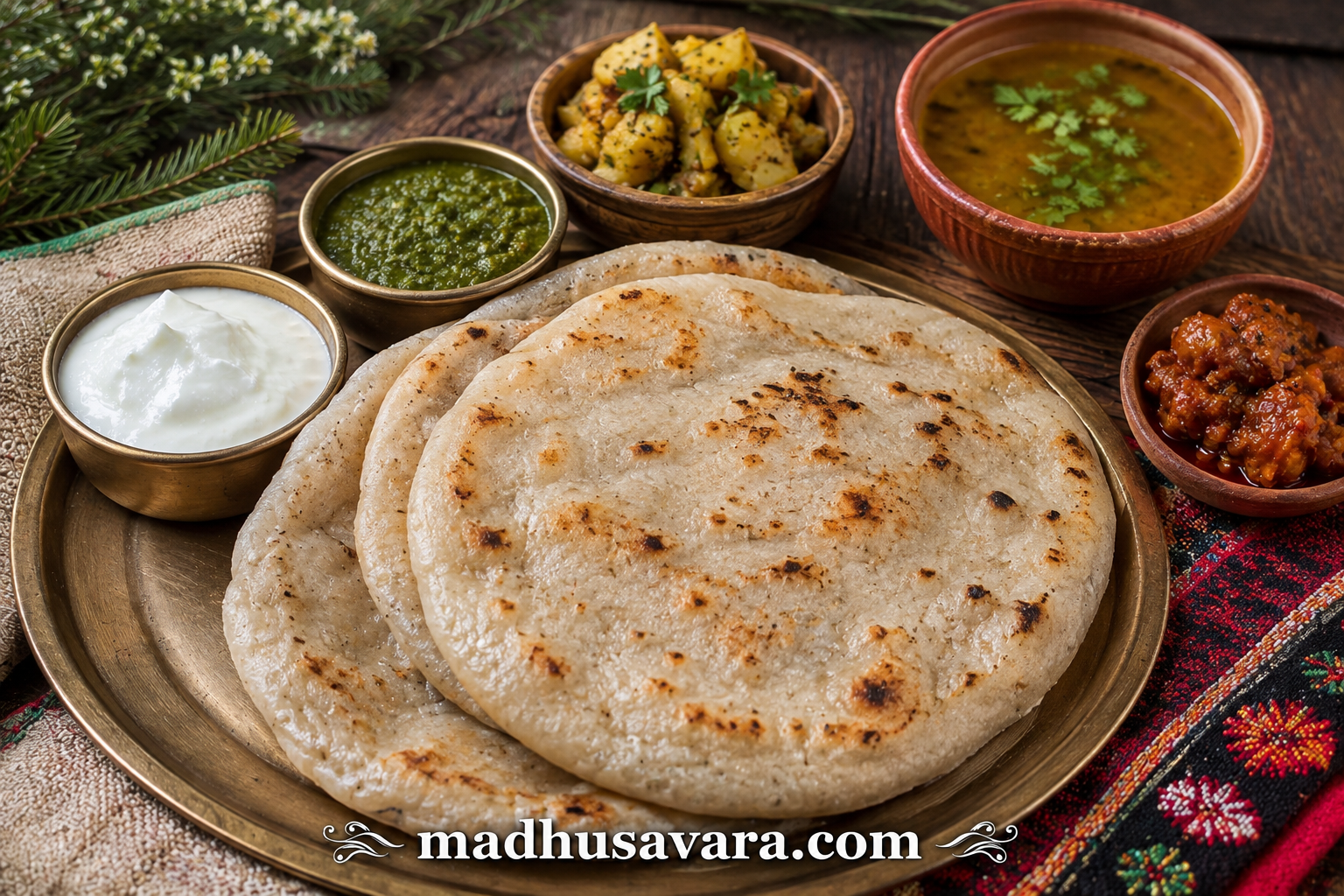
Chilra is a traditional Himachali fermented bread made with rice flour, buckwheat flour, wheat flour or a combination of these grains. Also known as Pahadi Chilra, this soft, thick Himachali fermented pancake is cooked on a hot tawa and has a pleasant, mild tang from fermentation. Chilra Himalayan Bread is simple, wholesome and delicious with curd, chutney or a traditional Himachali accompaniment.
Servings 10 Chilra
Calories 145kcal
Equipment
- Mixing bowlWhisk or spoonIron or non-stick tawaLadleSpatula
Ingredients
- 2 cups rice flour
- ½ –¾ cup water
- 2 –3 tablespoons leftover fermented batter
- ½ teaspoon salt
- 1 –2 teaspoons oil or ghee for greasing the tawa
- 1½ cups buckwheat flour for Lahaul-style Chilra
- ½ cup wheat flour for Lahaul-style Chilra
- 2 –3 tablespoons traditional treh khameer or malera, for Lahaul-style Chilra
- ½ teaspoon active dry yeast optional for the quick version
Instructions
- Step 1: Prepare the Chilra Batter
- Add 2 cups rice flour to a mixing bowl. For Lahaul-style Chilra, use the buckwheat and wheat flour combination.
- Add ½ teaspoon salt.
- Gradually add ½–¾ cup water, whisking continuously to make a smooth, lump-free batter.
- Keep the Chilra batter slightly thicker than dosa batter, but loose enough to pour easily.
- Step 2: Ferment the Chilra Batter
- Mix 2–3 tablespoons of fermented batter or traditional starter into the prepared batter.
- Cover the bowl and keep it in a warm place for 8–10 hours or overnight.
- The fermented Chilra batter should develop a mild sour aroma and appear slightly risen.
- Step 3: Heat the Tawa
- Place an iron or non-stick tawa over medium heat.
- Lightly grease the tawa with oil or ghee.
- Allow the tawa to heat properly before cooking the Himachali Chilra.
- Step 4: Cook the Chilra
- Gently stir the fermented Chilra batter once.
- Pour one ladleful of batter into the centre of the hot tawa.
- Spread it gently into a round, slightly thick Himachali fermented pancake, approximately 15–18 cm in diameter.
- Cook over medium heat for 2–3 minutes, until the underside turns golden and small holes appear on the surface.
- Carefully flip the Chilra and cook the other side for 1–2 minutes.
- Add a few drops of oil or ghee around the edges if required.
- Repeat with the remaining Chilra batter.
- Step 5: Serve the Chilra
- Stack the cooked Chilra Himalayan Bread on a plate.
- Cover with a clean cloth to retain its softness.
- Serve Himachali Chilra warm with fresh curd, coriander chutney, potato preparation or another preferred accompaniment.

0 Comments