
Madhu Savara’s Note
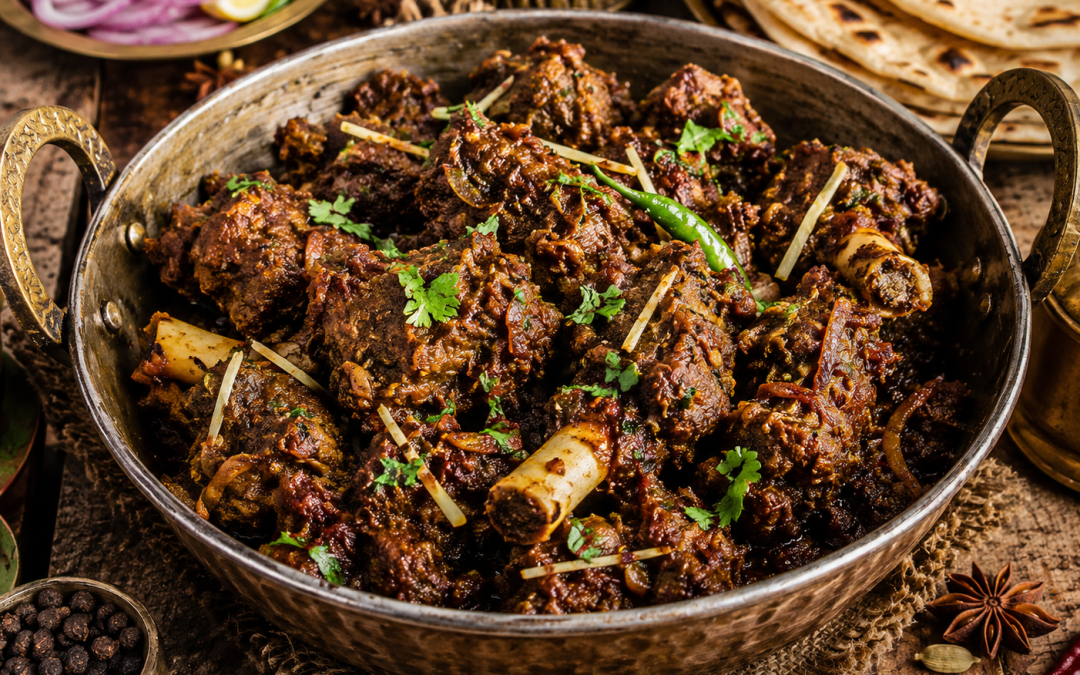
Punjab has gifted the world many iconic dishes such as Butter Chicken, Sarson da Saag and Chole Bhature. Yet, beyond these celebrated favourites lies another side of Punjabi cuisine that quietly survives in old family kitchens. These are the recipes that were never created for restaurant menus or fashionable cookbooks. They were cooked at home, shared around the family table and lovingly passed from one generation to the next. Ranjha Gosht is one such forgotten meat dish of Punjab.
I first tasted Ranjha Gosht many years ago at a relative’s home in Punjab’s Doaba region. There was nothing elaborate about the meal. No one spoke of it as a special recipe or a forgotten delicacy. It was simply lunch prepared for the family, the way it had always been cooked. The mutton was slow-cooked until it became beautifully tender, the spices blended gently into the meat, and every bite carried the warmth that only home-cooked food can offer. Long after the meal was over, its flavour stayed with me.
What impressed me most was its honesty. Ranjha Gosht did not depend on rich gravies, butter or cream to make an impression. Its character came from good-quality mutton, everyday spices and the patience to let everything cook slowly. It reflected the quiet confidence of traditional Punjabi kitchens, where recipes were learnt by watching mothers and grandmothers, not by measuring ingredients or reading recipe books.
Today, Ranjha Gosht is remembered in only a few homes, while many younger people have never even heard its name. That is what inspired me to write about this traditional Punjabi mutton dish on madhusavara.com. Every forgotten recipe carries the memories of the families who cooked it, the festivals they celebrated and the stories they shared around the dining table. Through this blog, I hope to preserve one small piece of Punjab’s rich culinary heritage before it quietly fades from memory.
Introduction
Among Punjab’s many traditional meat dishes, Ranjha Gosht is perhaps one of the least talked about. It never achieved the fame of Butter Chicken or the popularity of other well-known Punjabi recipes, yet it remained a cherished family favourite in many homes for generations. Prepared with patience rather than haste, it represented a style of cooking where flavour was built slowly and meals were meant to be enjoyed together.
Today, this forgotten meat dish of Punjab survives mostly in the memories of older generations and in a handful of families who still prepare it the traditional way. It was never created to follow changing food trends or attract attention. Instead, Ranjha Gosht earned its reputation through simple ingredients, careful cooking and the unmistakable richness that only slow-cooked mutton can deliver.
As more people begin to explore India’s regional food traditions, recipes like Ranjha Gosht deserve to be remembered once again. They remind us that Punjabi cuisine extends far beyond the handful of dishes that have become internationally famous. Hidden behind those familiar names are recipes that have quietly shaped family kitchens for decades. Ranjha Gosht is one of those timeless dishes, carrying with it the flavours, traditions and memories of an earlier Punjab.
The Story Behind the Name
The name Ranjha Gosht immediately reminds people of Heer and Ranjha, the immortal lovers whose story has been part of Punjab’s cultural heritage for centuries. It is only natural to wonder whether this traditional Punjabi meat dish has some connection with that famous legend.
The truth, however, is less dramatic and perhaps even more interesting. There is no reliable historical evidence to suggest that Ranjha Gosht originated from the Heer-Ranjha story. Like many old Punjabi dishes, its name seems to have evolved through local tradition rather than written history. Over the years, different families have shared their own explanations, each adding another layer to the story without claiming to be the only version.
Some elders believe the name reflected the kind of hearty meal that would satisfy a hardworking farmer after a long day in the fields. Others simply accepted it as a name that became part of everyday Punjabi life with the passing of time. Whatever its true origin, Ranjha Gosht has endured not because of its name, but because of the memories and flavours it continues to carry.
History of Ranjha Gosht
The story of Ranjha Gosht begins in the villages of Punjab rather than in royal kitchens. Like many traditional Punjabi recipes, it belongs to the people who cooked with what they had, depended on seasonal ingredients and believed that good food should never be hurried.
In those days, preparing mutton was often reserved for family gatherings, festivals or the arrival of special guests. Heavy handis rested over wood fires or glowing charcoal for hours, allowing the meat to soften gradually while the spices blended into a rich and balanced flavour. Time was never treated as an inconvenience; it was simply another ingredient in the cooking.
As generations passed, Ranjha Gosht travelled from one household to another. Every family added its own little touch, yet the spirit of the dish remained unchanged. Homes with a village tandoor often preferred the gentle smoky flavour that came from the clay oven, while others continued to prepare it on the household chulha and, later, on the kitchen stove. These two approaches eventually became the best-known ways of preparing this traditional Punjabi mutton dish, while preserving the same warmth and character that had defined it for generations.
Ranjha Gosht in Punjabi Food Culture
In the Punjab of earlier days, Ranjha Gosht was never everyday food. Meat itself was considered a luxury in many households, so when it was cooked, it usually marked an occasion worth remembering. It might be a family gathering, the arrival of relatives from another village or simply a Sunday when everyone was together under one roof.
The recipe rarely existed on paper. It lived in the hands of mothers and grandmothers, who measured spices by instinct and judged the cooking by sight, aroma and experience. Children learnt the dish by watching, helping and listening, long before they ever entered the kitchen on their own.
The aroma of Ranjha Gosht was often enough to gather everyone around the dining area before the meal was served. Fresh rotis, naan or steamed rice, sliced onions and a simple seasonal salad were all that accompanied it. Nothing on the table tried to compete with the slow-cooked mutton. That simplicity remains one of the defining qualities of this forgotten meat dish of Punjab.
Why Ranjha Gosht Is Different
What makes Ranjha Gosht memorable is not richness but restraint. It does not rely on butter, cream or an elaborate blend of spices to stand apart. Instead, it celebrates the natural flavour of the mutton, allowing every ingredient to play its part without overpowering the dish.
Slow cooking gives Ranjha Gosht its true identity. As the meat cooks gently over time, the spices settle naturally into every piece, creating a depth of flavour that cannot be rushed. It is this patient style of cooking that has always distinguished the dish from many modern meat preparations.
Perhaps that is why Ranjha Gosht continues to live in the memories of those who grew up with it. For them, it is not just another traditional Punjabi meat dish. It is the taste of family gatherings, unhurried afternoons and kitchens where recipes were preserved through practice rather than written instructions.
Two Traditional Ways to Cook Ranjha Gosht
Like many old family recipes, Ranjha Gosht changed gently as it travelled from one household to another. The heart of the dish remained the same, but the cooking method often depended on the kitchen, the fuel available and the family’s traditions. Over the years, two authentic versions became closely associated with this forgotten meat dish of Punjab. One drew its distinctive character from the village tandoor, while the other became a cherished part of everyday home cooking. Neither replaced the other; they simply reflected different ways of preserving the same tradition.
Tandoor Ranjha Gosht
The village tandoor was once at the centre of community life in Punjab. Families gathered there every day to bake rotis, and once the bread was ready, the gentle heat left inside the clay oven was often put to good use. It was in this warmth that Tandoor Ranjha Gosht slowly developed its rich flavour and unmistakable smoky aroma.
Unlike modern cooking, nothing was hurried. The meat was left to cook gradually, allowing the spices and natural juices to blend beautifully. The smoky fragrance from the tandoor became part of the dish itself, giving Tandoor Ranjha Gosht a character that many older Punjabis still remember with affection.
The complete preparation has been shared separately as Traditional Tandoor Ranjha Gosht Recipe, where every step of this heritage method is explained in detail.
Home Style Ranjha Gosht
Not every household had a village tandoor, but that never meant giving up Ranjha Gosht. Across Punjab, families prepared this traditional Punjabi mutton Recipe in heavy handis placed over a chulha and, later, on the kitchen stove. Although the cooking method changed, the essence of the dish remained exactly the same.
Home Style Ranjha Gosht depended on slow simmering rather than smoke. As the meat cooked gently, the spices blended naturally without overpowering its flavour. The result was a comforting dish that found a permanent place at family gatherings and special meals, proving that a traditional recipe did not need a tandoor to retain its identity.
The complete preparation has been shared separately as Home Style Ranjha Gosht Recipe.
Both versions continue to honour the same tradition. Whether prepared in a village tandoor or in the family kitchen, Ranjha Gosht remains one of the finest examples of Punjab’s rich culinary heritage.
Which Version Should You Choose?
For generations, Punjabi families have enjoyed both versions of Ranjha Gosht, and neither can truly be called more authentic than the other. The choice has always depended on the kitchen, the occasion and the cooking tradition followed within the family.
The tandoor version carries a gentle smoky flavour that reflects village life and community cooking, while the home-style version brings the same warmth and depth to an ordinary kitchen. Both celebrate the same traditional Punjabi meat dish, and both deserve an equal place in Punjab’s food heritage.
Why Ranjha Gosht Is Disappearing
Like many forgotten meat dishes of Punjab, Ranjha Gosht has gradually disappeared from everyday cooking. It was never because people stopped enjoying it. Life simply changed.
Community tandoors became less common, family meals grew shorter and recipes that once passed naturally from one generation to the next were often left undocumented. Many younger families grew up knowing the names of restaurant dishes but never had the opportunity to taste recipes that had quietly remained within village homes.
As the older generation grew smaller, countless traditional recipes faded with them. Ranjha Gosht is among those dishes that deserve to be remembered before they become nothing more than a distant memory.
Keeping the Tradition Alive
Traditional recipes survive because families continue to cook them, talk about them and pass them on without changing their soul. Ranjha Gosht has reached us through exactly that tradition. It travelled from one kitchen to another, not through printed recipe books, but through observation, practice and shared meals.
Documenting recipes like Ranjha Gosht is not simply about preserving ingredients or cooking methods. It is about preserving a part of Punjab’s cultural identity. Every family that still remembers this forgotten meat dish of Punjab keeps alive a story that deserves to be shared with future generations.
Final Thoughts
Some recipes become famous because they are served in restaurants. Others earn their place quietly through generations of family cooking. Ranjha Gosht belongs to the second kind.
Its strength has never been popularity. It lies in its simplicity, its slow cooking and the memories it carries. Long before social media and celebrity chefs, dishes like Ranjha Gosht were bringing families together around the dining table, one meal at a time.
While writing this article, I was reminded that our greatest food traditions are not always the ones we hear about most often. Many continue to live quietly in family kitchens, waiting for someone to remember them. Ranjha Gosht is one of those treasures, and it deserves to remain a living part of Punjab’s culinary heritage rather than a forgotten name from the past.
Related Articles
If you enjoyed learning about Ranjha Gosht, you may also like exploring these traditional recipes on madhusavara.com:
- Traditional Tandoor Ranjha Gosht Recipe
- Home Style Ranjha Gosht Recipe
- Traditional Punjabi Heritage Recipes
- Forgotten Recipes of Punjab
Author’s Bio
Madhu Savara is the founder and author of madhusavara.com, where she documents India’s regional food heritage with a special focus on Punjab and the Himalayan region. Her work celebrates traditional recipes, forgotten ingredients and family cooking methods that have quietly survived across generations. Through careful research and personal storytelling, she hopes to preserve these culinary traditions for future generations and inspire a deeper appreciation of India’s rich food heritage.
