
Bhey Pakora Recipe – Crispy Bhein Pakora | Lotus Stem Fritters
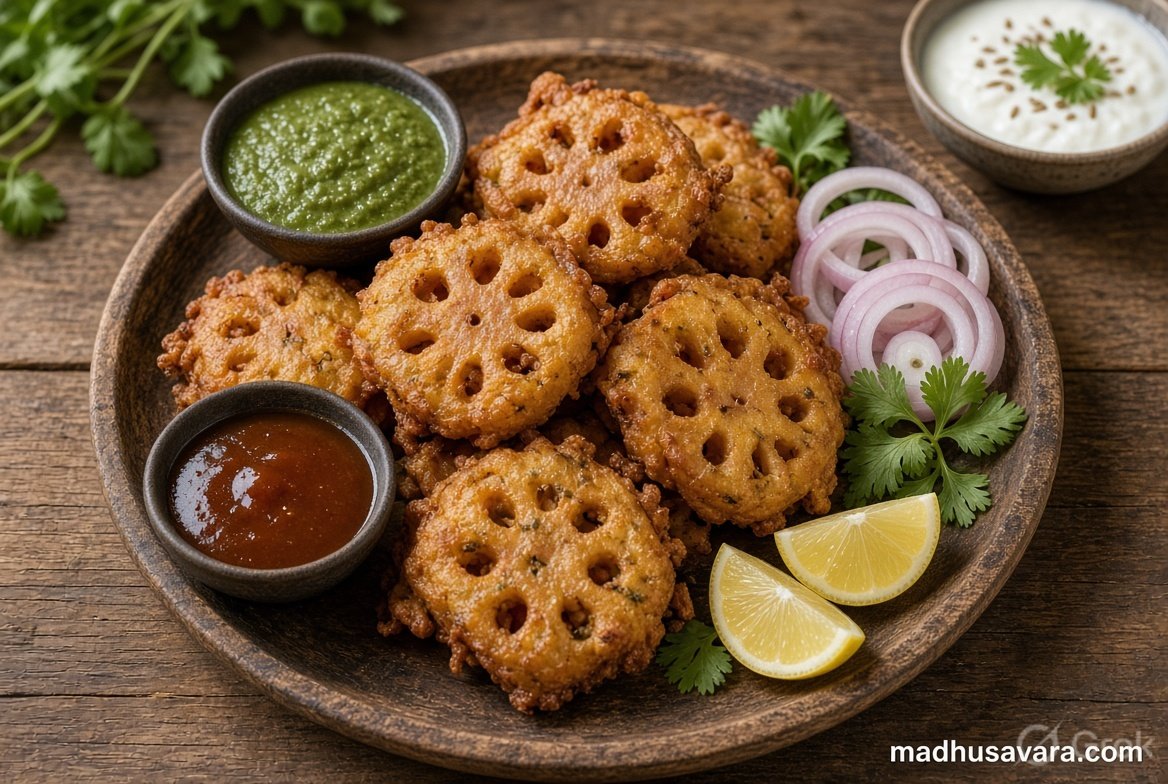
Authentic Himachali Bhey Pakora lotus stem fritters served with green chutney tamarind chutney onion rings lemon and curd on wooden table

Author’s Note

I have always enjoyed the delicate crunch and mild, slightly sweet flavour of bhey, also known as bhein or kamal kakdi. This humble lotus stem is used in many Indian kitchens in different ways, and Bhey Pakora is one of the simplest and most enjoyable preparations.

In this Bhey Pakora Recipe, thin slices of lotus stem are lightly cooked, coated with a seasoned besan batter and fried until crisp and golden. These Crispy Bhein Pakoras, also known as Lotus Stem Pakora or Kamal Kakdi Pakora, are especially enjoyable with hot chai and a fresh green chutney.

I hope you enjoy making these traditional Bhey Pakoras at home as much as I enjoy sharing this simple Indian tea-time snack with you.

— Madhu Savara
Author & Owner, madhusavara.com

Description of the Recipe

Bhey Pakora Recipe, also known as Bhein Pakora, Lotus Stem Pakora, Lotus Stem Fritters or Kamal Kakdi Pakora, is a traditional Indian snack made with thinly sliced lotus stem. The Bhey slices are lightly cooked until tender, coated in a spiced besan batter and deep-fried until crisp and golden. The lotus stem remains slightly crunchy inside, while the coating becomes light and crisp. These Crispy Bhein Pakoras are especially delicious with hot chai and make a wonderful tea-time snack.

Origin and Significance

Bhey, also called Bhein or Kamal Kakdi, is the edible stem of the lotus plant and has been used in Indian cooking for generations. It is particularly familiar in Sindhi and North Indian kitchens, where it is prepared in curries, sabzis and snacks. Bhey Pakora is a simple example of how a traditional Indian vegetable can be transformed into a crispy and flavourful snack. The combination of tender lotus stem, seasoned besan and crisp frying makes Lotus Stem Pakora a popular choice for family tea time, winter evenings and monsoon snacks.

Table of Contents

  1. Author’s Note
  2. Description of the Recipe
  3. Origin and Significance
  4. Ingredients
  5. Nutritional Value
  6. Equipment Needed
  7. Step-by-Step Recipe
  8. Allergen Information
  9. Madhu Savara’s Tips and Variations
  10. Things to Avoid
  11. Storage
  12. Serving Suggestions
  13. Frequently Asked Questions
  14. Call to Action
  15. Final Thoughts
  16. Author’s Bio

Servings

4 People

Preparation Time:

20 minutes

Cooking Time:

20 Minutes

Calories

220

Ingredients

List

For the Lotus Stem

  • 300–350 g fresh lotus stem (Bhey / Bhein / Kamal Kakdi)
  • ½ tsp salt
  • Water for boiling

For the Bhey Pakora Batter

  • 1 cup (100–110 g) besan (gram flour)
  • 2 tbsp rice flour
  • ½ tsp ajwain (carom seeds), lightly crushed
  • ¼ tsp turmeric powder
  • ½–¾ tsp red chilli powder
  • ¼ tsp hing (asafoetida), optional
  • 1 tsp finely chopped ginger
  • 1–2 green chillies, finely chopped
  • Salt to taste
  • A pinch of baking soda, optional
  • ¾–1 cup cold water, as needed
  • 1 tsp hot oil

For Frying

  • Oil for deep frying

Equipment Needed

Needed

  • Peeler
  • Sharp knife
  • Large mixing bowl
  • Heavy-bottomed kadai or deep frying pan
  • Slotted spoon
  • Kitchen towel or absorbent paper
  • Colander

Nutrition Information

Check Value

Approximate nutritional values per serving, based on 4 servings:

NutrientAmount per serving
Calories220 kcal
Carbohydrates22–26 g
Protein6–8 g
Fat8–12 g
Fibre4–6 g
IronGood source
SodiumDepends on salt added

Values are approximate and may vary depending on the size of the Bhey Pakoras, exact ingredient quantities and the amount of oil absorbed during frying.

Step by Step Instructions

Recipe

1. Clean the Lotus Stem

Scrape the outer skin from the bhey (bhein or kamal kakdi) using a peeler or knife. Wash the lotus stem thoroughly under running water, making sure the water passes through the holes to remove any trapped mud. Cut the cleaned lotus stem into thin round slices, about 3–4 mm thick.

2. Parboil the Bhey Slices

Bring water and ½ tsp salt to a boil. Add the lotus stem slices and cook for 4–6 minutes, until just tender but still slightly firm and crunchy. Drain well in a colander and place the slices on a clean kitchen towel to remove excess moisture.

3. Prepare the Bhey Pakora Batter

Add besan, rice flour, ajwain, turmeric powder, red chilli powder, hing, ginger, green chillies and salt to a mixing bowl. Gradually add cold water and whisk to make a smooth, medium-thick Bhey Pakora batter. The batter should coat the lotus stem evenly without being runny. Add 1 tsp hot oil and baking soda, if using, and mix well. Rest the batter for 5–10 minutes.

4. Heat the Oil

Heat sufficient oil in a heavy-bottomed kadai over medium heat for deep frying. Test the oil by dropping a little Bhey Pakora batter into it. The batter should rise steadily to the surface without browning immediately.

5. Fry the Bhey Pakoras

Dip each lotus stem slice into the batter, ensuring it is evenly coated. Gently slide the coated slices into the hot oil. Fry in batches, turning occasionally, until the Bhein Pakoras are golden, crisp and cooked through. Do not overcrowd the kadai.

6. Drain and Serve

Remove the Crispy Bhey Pakoras with a slotted spoon and place them on absorbent paper to remove excess oil. Serve the hot Bhey Pakora, Bhein Pakora or Lotus Stem Pakora immediately with chutney and hot chai.

Tips and Variations

Madhu Savara’s Tips and Variations

  • For crisp Bhey Pakoras: Keep the rice flour in the batter and use cold water to achieve a crisp coating.
  • For authentic flavour: Lightly crush the ajwain before adding it to the batter. It adds a traditional flavour to the Bhein Pakora.
  • For stuffed Bhey Pakora: Place a little green chutney or dry spice mixture between two thin lotus stem slices, then dip them in the batter and fry.
  • For extra flavour: Add finely chopped fresh coriander leaves or a small pinch of garam masala to the Lotus Stem Pakora batter.
  • For a lighter version: Shallow-fry the Bhey Pakoras over medium heat, turning them carefully until evenly crisp.
  • If the lotus stem is fibrous: Slice the bhey slightly thinner and parboil it for an additional minute before preparing the pakoras.

Allergen Information

Check Information

  • Contains: Chickpea (besan).
  • May contain: Traces of other legumes, depending on the besan brand and processing facility.
  • Gluten-free: Bhey Pakora can be gluten-free when pure besan and rice flour are used. Check the product labels for possible cross-contamination.
  • Vegetarian: Suitable for a vegetarian diet.
  • Vegan: Suitable for a vegan diet when plant-based cooking oil is used.
Other Essentials

Things to Avoid

  • Do not skip cleaning the lotus stem (bhey) thoroughly. Mud can remain inside the holes and affect the taste of the Bhey Pakora.
  • Do not over-boil the bhey or bhein. The slices should be tender but still firm.
  • Do not make the Bhey Pakora batter too thin, as it will not coat the lotus stem properly.
  • Avoid very high heat while frying. The Bhein Pakora can brown too quickly without cooking evenly.
  • Do not overcrowd the kadai, as this can lower the oil temperature and make the Lotus Stem Pakora greasy.
  • For the best crispness, serve the Crispy Bhey Pakoras soon after frying.

Storage

Bhey Pakora is best served fresh. Store leftover Bhein Pakoras in an airtight container in the refrigerator for up to 1 day. Reheat them in a preheated oven or air fryer at 180°C for a few minutes to regain some crispness. Freezing is not recommended because it can affect the texture of the Lotus Stem Pakora.

Serving Suggestions

Serve hot Bhey Pakora with green coriander-mint chutney, tamarind chutney, tomato ketchup or a sprinkle of chaat masala. These Crispy Bhein Pakoras are especially enjoyable with hot masala chai and make a delicious Indian tea-time snack.

Frequently Asked Questions

Can I use frozen or canned lotus stem for Bhey Pakora?

Fresh bhey (bhein) gives the best texture. If using frozen lotus stem, thaw it completely and pat it dry before briefly parboiling. Canned lotus stem is softer and may not give the same texture as fresh Lotus Stem Pakora.

Why are my Bhey Pakoras oily?

Bhey Pakoras can become oily if the frying oil is not hot enough or if the batter is too thin. Maintain medium heat and use a medium-thick batter that coats the lotus stem evenly.

Is Bhey Pakora gluten-free?

Yes, Bhey Pakora can be gluten-free when prepared with pure besan and rice flour. Always check the labels of the flours for possible cross-contamination.

Can I air-fry Bhey Pakora?

Yes. Lightly brush or spray the coated Bhey Pakoras with oil and air-fry at 180–190°C, turning them halfway through cooking, until golden and crisp. The texture will be different from deep-fried Lotus Stem Fritters.

How do I know if lotus stem is fresh?

Fresh lotus stem should feel firm and have a clean, fresh appearance without dark spots or an unpleasant smell.

Call to Action

Try this Bhey Pakora Recipe at home and share your experience in the comments. If you enjoyed these Crispy Bhein Pakoras, explore more traditional Indian recipes and regional dishes at madhusavara.com.

Final Thoughts

Bhey Pakora Recipe is a simple way to turn fresh lotus stem into a crisp and flavourful Indian snack. Properly cleaning and parboiling the bhey, preparing the right consistency of batter and frying at the correct temperature are the key steps for good Crispy Bhein Pakora. Serve these Lotus Stem Pakoras hot with chutney and chai for a satisfying tea-time snack.

Author’s Bio

Madhu Savara is the founder, writer and editor of madhusavara.com, where she shares traditional Indian recipes, Himalayan and regional cuisine, forgotten foods, spices, agriculture and sustainable living. Her recipes focus on practical home cooking, traditional methods and the cultural background of regional dishes.

Disclaimer

Important Notice: Read Before Proceeding

The recipes, preparation methods, nutritional details, and related content published on Madhu Savara’s website, social media, and associated platforms are intended solely for general informational and educational purposes. While every effort has been made to ensure accuracy and reliability, we make no guarantees regarding the results, safety, or accuracy of any recipe presented here.

We are not licensed nutritionists, dieticians, or medical professionals. The nutritional values provided are estimates only, calculated using third-party tools, and should not be used for medical diagnosis, dietary treatment, or allergy management. If you have any medical conditions, dietary restrictions, or food allergies, please consult your doctor or certified dietitian before attempting any recipe.

Cooking inherently involves sharp tools, high heat, and the risk of injury or fire. You assume full responsibility for your kitchen practices. Madhu Savara, the website, and all contributors shall not be held liable for any damage, injury, loss, or adverse outcome resulting directly or indirectly from the preparation, consumption, or interpretation of any content herein.

By using this website and attempting any recipe, you agree to hold harmless and indemnify Madhu Savara and her team from any liability, legal claim, or damages arising from the use of this content. You are encouraged to exercise independent judgment and take full responsibility for your health, kitchen safety, and actions.


Authentic Himachali Bhey Pakora lotus stem fritters served with green chutney tamarind chutney onion rings lemon and curd on wooden table
Print

Bhey Pakora Recipe – Crispy Bhein Pakora | Lotus Stem Fritters

Bhey Pakora Recipe, also known as Bhein Pakora, Lotus Stem Pakora, Lotus Stem Fritters or Kamal Kakdi Pakora, is a traditional Indian snack made with thinly sliced lotus stem. The Bhey slices are lightly cooked until tender, coated in a spiced besan batter and deep-fried until crisp and golden. The lotus stem remains slightly crunchy inside, while the coating becomes light and crisp. These Crispy Bhein Pakoras are especially delicious with hot chai and make a wonderful tea-time snack.
Course Snack
Cuisine Himachal, North India
Keyword Bhein Pakora, Bhey Pakora, Bhey Pakora Recipe, Crispy Bhein Pakora, How to Make Bhey Pakora, Kamal Kakdi Pakora, Lotus Stem Fritters, Lotus Stem Pakora
Prep Time 20 minutes
Cook Time 20 minutes
Total Time 40 minutes
Servings 4 People
Calories 220kcal
Author Madhu Savara

Equipment

  • PeelerSharp knifeLarge mixing bowlHeavy-bottomed kadai or deep frying panSlotted spoonKitchen towel or absorbent paperColander

Ingredients

  • For the Lotus Stem
  • 300 –350 g fresh lotus stem Bhey / Bhein / Kamal Kakdi
  • ½ tsp salt
  • Water for boiling
  • For the Bhey Pakora Batter
  • 1 cup 100–110 g besan (gram flour)
  • 2 tbsp rice flour
  • ½ tsp ajwain carom seeds, lightly crushed
  • ¼ tsp turmeric powder
  • ½ –¾ tsp red chilli powder
  • ¼ tsp hing asafoetida, optional
  • 1 tsp finely chopped ginger
  • 1 –2 green chillies finely chopped
  • Salt to taste
  • A pinch of baking soda optional
  • ¾ –1 cup cold water as needed
  • 1 tsp hot oil
  • For Frying
  • Oil for deep frying

Instructions

  • Clean the Lotus Stem
  • Scrape the outer skin from the bhey (bhein or kamal kakdi) using a peeler or knife. Wash the lotus stem thoroughly under running water, making sure the water passes through the holes to remove any trapped mud. Cut the cleaned lotus stem into thin round slices, about 3–4 mm thick.
  • Parboil the Bhey Slices
  • Bring water and ½ tsp salt to a boil. Add the lotus stem slices and cook for 4–6 minutes, until just tender but still slightly firm and crunchy. Drain well in a colander and place the slices on a clean kitchen towel to remove excess moisture.
  • Prepare the Bhey Pakora Batter
  • Add besan, rice flour, ajwain, turmeric powder, red chilli powder, hing, ginger, green chillies and salt to a mixing bowl. Gradually add cold water and whisk to make a smooth, medium-thick Bhey Pakora batter. The batter should coat the lotus stem evenly without being runny. Add 1 tsp hot oil and baking soda, if using, and mix well. Rest the batter for 5–10 minutes.
  • Heat the Oil
  • Heat sufficient oil in a heavy-bottomed kadai over medium heat for deep frying. Test the oil by dropping a little Bhey Pakora batter into it. The batter should rise steadily to the surface without browning immediately.
  • Fry the Bhey Pakoras
  • Dip each lotus stem slice into the batter, ensuring it is evenly coated. Gently slide the coated slices into the hot oil. Fry in batches, turning occasionally, until the Bhein Pakoras are golden, crisp and cooked through. Do not overcrowd the kadai.
  • Drain and Serve
  • Remove the Crispy Bhey Pakoras with a slotted spoon and place them on absorbent paper to remove excess oil. Serve the hot Bhey Pakora, Bhein Pakora or Lotus Stem Pakora immediately with chutney and hot chai.

Notes

Madhu Savara’s Tips and Variations

  • For crisp Bhey Pakoras: Keep the rice flour in the batter and use cold water to achieve a crisp coating.
  • For authentic flavour: Lightly crush the ajwain before adding it to the batter. It adds a traditional flavour to the Bhein Pakora.
  • For stuffed Bhey Pakora: Place a little green chutney or dry spice mixture between two thin lotus stem slices, then dip them in the batter and fry.
  • For extra flavour: Add finely chopped fresh coriander leaves or a small pinch of garam masala to the Lotus Stem Pakora batter.
  • For a lighter version: Shallow-fry the Bhey Pakoras over medium heat, turning them carefully until evenly crisp.
  • If the lotus stem is fibrous: Slice the bhey slightly thinner and parboil it for an additional minute before preparing the pakoras.
 

2 Comments

Submit a Comment

Your email address will not be published. Required fields are marked *

Recipe Rating