Aktori Recipe | Traditional Himachali Aktori Bread | Buckwheat Pancake
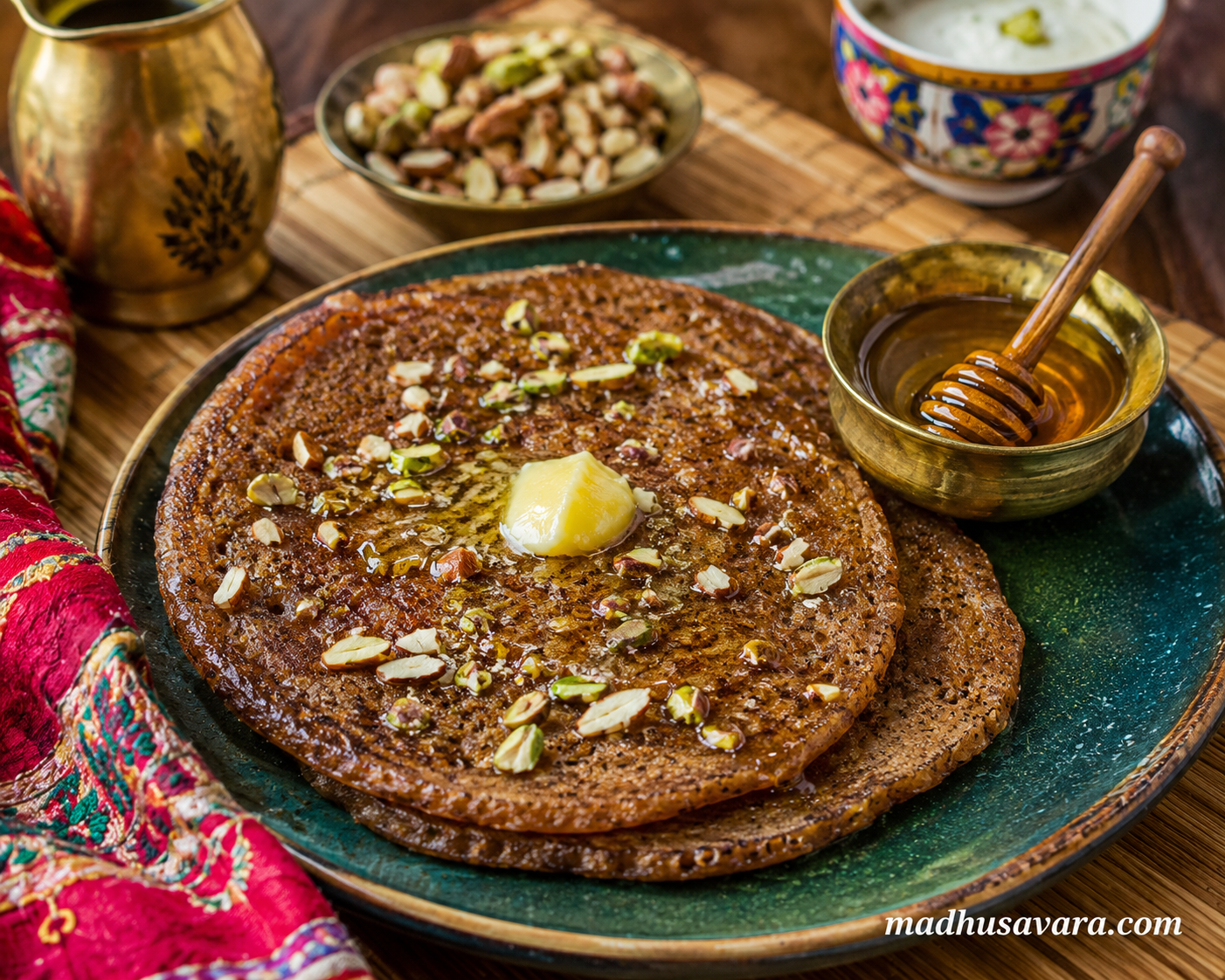
Himachali Aktori pancakes served with ghee, honey, nuts and curd on a traditional table setting.

Madhu Savara’s Author’s Note

Aktori recipe is one of those quiet Himalayan preparations that still holds its place in Kinnaur and Lahaul-Spiti kitchens. This traditional Himachali Aktori bread is made with buckwheat flour and wheat flour, cooked thick on a tawa, and eaten warm. I have kept this Aktori pancake recipe straightforward so that anyone can prepare authentic Pahadi Aktori at home without changing its basic character.

Description of the Recipe

Aktori recipe gives you a thick, soft Himachali Aktori bread with a clear buckwheat flavour. The batter is mixed from kuttu atta, wheat flour, milk, water and a little sugar, then cooked slowly into golden Aktori pancakes. Unlike regular roti, this Aktori bread is denser and more filling. It is a classic traditional Himachali bread from the high-altitude regions and works well for breakfast or as a simple festive dish.

Origin

Aktori comes from Kinnaur and Lahaul-Spiti in Himachal Pradesh. Buckwheat grows well in these cold, dry valleys, so kuttu has long been part of local cooking. Traditional Himachali Aktori bread was prepared during harvest time, religious ceremonies and family gatherings. The Aktori pancake remains closely tied to the food habits of the tribal communities of these mountain regions.

Significance

Aktori recipe matters because it uses grains that actually grow in the high Himalayas. Buckwheat is hardy and nutritious, and when combined with wheat flour, it makes a satisfying Aktori bread. In Pahadi homes, this traditional Himachali bread is still made for special occasions and everyday meals. Preparing Aktori at home keeps a living link with Himachali food culture.

Why People Will Love It

You will like this Aktori recipe if you want something different from regular wheat roti. The earthy taste of buckwheat comes through clearly in every Aktori pancake. The method is simple, the ingredients are few, and the result is a soft yet firm Himachali Aktori bread that feels wholesome. It suits breakfast, tea time or a light festive plate, and it carries the genuine flavour of Pahadi cooking

Table of Contents

  • Madhu Savara’s Author’s Note
  • Description of the Recipe
  • Origin
  • Significance
  • Why People Will Love It
  • Nutritional Value
  • Ingredients
  • Equipment Needed
  • Step-by-Step Instructions
  • Allergen Information
  • Madhu Savara’s Tips and Variations
  • Things to Avoid
  • Storage
  • Frequently Asked Questions
  • CTA
  • Final Thoughts
  • About Madhu Savara

Servings

4 People

Preparation Time:

15 Minutes

Cooking Time:

20 Minutes

Calories

230

Ingredients

Needed

For the Aktori Batter

  • 1 cup buckwheat flour (kuttu atta)
  • 1 cup whole wheat flour (atta)
  • ½ cup milk, preferably at room temperature
  • ½ cup water, or as needed to achieve a thick, pourable batter
  • 3–4 tablespoons sugar, adjust according to taste
  • 1 teaspoon baking soda
  • Ghee or oil, as required for cooking

For Serving — Optional

  • A little ghee, for drizzling
  • Honey, as desired
  • Lightly crushed nuts, such as almonds or walnuts

Madhu Savara’s Note: The batter should be thick but pourable, rather like a thick pancake batter. Add water gradually rather than all at once, as the amount required can vary depending on the flour. For a more traditional flavour, ghee is an excellent choice for cooking the Aktori.

Equipment Needed

Needed

  • Mixing bowl – for preparing the Aktori batter
  • Whisk or sturdy spoon – for mixing the flours and making a smooth batter
  • Measuring cups and spoons – for accurate ingredient measurements
  • Tawa or non-stick pan – for cooking the Aktori evenly
  • Ladle – for portioning and spreading the batter
  • Spatula – for turning and cooking the Aktori on both sides

Nutrition Information

Value

Approximate nutritional values per Aktori. Actual values may vary depending on the size of the Aktori, the proportion of buckwheat and wheat flour, and the amount of ghee used.

NutrientApproximate Value
Calories230 kcal
CarbohydratesMainly from buckwheat flour and wheat flour
ProteinModerate, from buckwheat, wheat flour and milk
FatVaries according to the amount of ghee or oil used
FibreProvides dietary fibre, particularly from buckwheat flour

Please note: These values are approximate estimates for general guidance. The actual nutritional content will vary with the ingredients, quantities and size of each Aktori.

Step by Step Instructions

Instructions

Step 1: Prepare the Aktori Batter

  1. In a mixing bowl, combine the buckwheat flour (kuttu atta) and whole wheat flour (atta).
  2. Add the sugar and baking soda and mix the dry ingredients evenly.
  3. Gradually add the milk and water, stirring continuously to prevent lumps.
  4. Whisk until you have a smooth, thick and pourable batter. The batter should be noticeably thicker than dosa batter but not so thick that it cannot be spread gently.
  5. Cover and let the batter rest for 10–15 minutes. This allows the flours to hydrate and makes the batter easier to cook.

Step 2: Cook the Himachali Aktori

  1. Place a tawa over medium-low heat and allow it to warm evenly.
  2. Lightly grease the tawa with ghee or oil.
  3. Pour a ladleful of batter into the centre of the tawa.
  4. Using the back of the ladle, gently spread the batter into a thick, round pancake. Avoid spreading it too thin, as Aktori is traditionally enjoyed as a substantial, soft pancake-like bread.
  5. Cook over low to medium heat until the surface begins to set, small bubbles appear, and the underside turns golden brown.
  6. Carefully loosen the edges with a spatula and flip the Aktori.
  7. Cook the other side until it is evenly cooked and lightly golden.
  8. Transfer the cooked Aktori to a plate and repeat with the remaining batter, greasing the tawa lightly whenever required.

Step 3: Serve the Aktori

Serve Himachali Aktori warm, preferably straight from the tawa. A little ghee drizzled over the top adds richness, while honey provides a pleasant sweetness. It can also be enjoyed plain or with a little fresh curd, depending on your preference.

Madhu Savara’s Tip: Keep the heat moderate and give the Aktori enough time to cook through. Cooking it too quickly on high heat can brown the outside before the centre is properly cooked.

Tips and Variations

Madhu Savara’s Tips and Variations

  • Keep the flame medium-low so the Aktori pancake cooks through without burning.
  • If the batter feels too thick, add a spoon of milk or water. If too thin, add a little more flour.
  • You can reduce the sugar or use a little jaggery powder for a milder taste.
  • Traditional Aktori bread is meant to be thick; avoid spreading it like a thin dosa.
  • Fresh batter gives the best texture for this Aktori recipe.
  • A small amount of ghee on the finished Aktori brings out the Pahadi character.

Allergen Information

Information

  • Contains gluten from whole wheat flour.
  • Contains dairy from milk (and from ghee if used).
  • This Aktori recipe is not gluten-free because wheat flour is included. Pure buckwheat versions exist in some households but need different handling.
Other Essentials

Things to Avoid

  • Do not make the Aktori too thin.
  • Do not cook on high heat; the outside browns fast while the centre stays underdone.
  • Do not skip the short resting time for the batter.
  • Do not add too much baking soda.
  • Do not leave the cooked Aktori bread stacked tightly while still very hot; a little air helps keep the texture better.

Storage

Aktori tastes best fresh and warm. Leftover Aktori bread can be kept in an airtight container in the refrigerator for up to one day. Reheat on a tawa with a little ghee. Avoid storing for longer periods as the texture dries out.

Frequently Asked Questions

Can I make Aktori recipe without wheat flour?

Yes. Some traditional versions use only buckwheat flour. The batter becomes denser and needs gentle handling. The taste and texture of the Aktori pancake will be more strongly of kuttu.

Is Aktori the same as a regular pancake?

No. Aktori is a traditional Himachali bread made with buckwheat flour. It has a distinct earthy flavour and thicker body. It belongs to Pahadi cooking, not to Western-style pancakes.

Can I use only water instead of milk in the Aktori recipe?

Yes. Milk adds softness. Water works if you prefer a simpler version. The Aktori bread will still hold well.

Is this Aktori recipe gluten-free?

No, because whole wheat flour is used. For a gluten-free style, only pure buckwheat flour should be used, and all ingredients should be checked carefully.

How is Aktori different from Patande?

Patande is mainly a wheat-flour pancake linked to Sirmaur. Aktori recipe uses buckwheat flour and comes from Kinnaur and Lahaul-Spiti. Both are traditional Himachali breads, but they differ in grain and region.

What is the best way to serve Aktori bread?

Serve the Aktori pancake warm with a little ghee or honey. It also goes well plain or with curd.

CTA

If you try this Aktori recipe, tell us how your Himachali Aktori bread turned out and whether you served it with ghee or honey. Your notes help other readers who want to make authentic Pahadi Aktori at home.

Final Thoughts

Aktori recipe brings a genuine piece of high-altitude Himachali cooking into the home kitchen. Made with buckwheat flour and wheat flour, this traditional Himachali Aktori bread is simple, filling and full of the earthy taste of kuttu. Whether you call it Aktori pancake or Aktori bread, it remains one of the honest preparations of Kinnaur and Lahaul-Spiti that still deserves a place on the table.

About Madhu Savara

Madhu Savara is the founder and owner of Madhusavara.com. The website focuses on authentic Indian recipes, Himalayan and Pahadi food, regional traditions, forgotten ingredients, agriculture and sustainable living. Recipes and food knowledge are presented in a clear, practical manner so that readers can understand and cook traditional dishes at home.

Disclaimer

Important Notice: Read Before Proceeding

The recipes, preparation methods, nutritional details, and related content published on Madhu Savara’s website, social media, and associated platforms are intended solely for general informational and educational purposes. While every effort has been made to ensure accuracy and reliability, we make no guarantees regarding the results, safety, or accuracy of any recipe presented here.

We are not licensed nutritionists, dieticians, or medical professionals. The nutritional values provided are estimates only, calculated using third-party tools, and should not be used for medical diagnosis, dietary treatment, or allergy management. If you have any medical conditions, dietary restrictions, or food allergies, please consult your doctor or certified dietitian before attempting any recipe.

Cooking inherently involves sharp tools, high heat, and the risk of injury or fire. You assume full responsibility for your kitchen practices. Madhu Savara, the website, and all contributors shall not be held liable for any damage, injury, loss, or adverse outcome resulting directly or indirectly from the preparation, consumption, or interpretation of any content herein.

By using this website and attempting any recipe, you agree to hold harmless and indemnify Madhu Savara and her team from any liability, legal claim, or damages arising from the use of this content. You are encouraged to exercise independent judgment and take full responsibility for your health, kitchen safety, and actions.


Himachali Aktori pancakes served with ghee, honey, nuts and curd on a traditional table setting.
Print

Aktori Recipe | Traditional Himachali Aktori Bread | Buckwheat Pancake

Aktori recipe gives you a thick, soft Himachali Aktori bread with a clear buckwheat flavour. The batter is mixed from kuttu atta, wheat flour, milk, water and a little sugar, then cooked slowly into golden Aktori pancakes. Unlike regular roti, this Aktori bread is denser and more filling. It is a classic traditional Himachali bread from the high-altitude regions and works well for breakfast or as a simple festive dish.
Course Main Course
Cuisine Himachal, Himachali Cuisine, Pahadi Cuisine, North Indian Cuisine, Indian Cuisine,
Keyword Aktori Recipe
Prep Time 15 minutes
Cook Time 20 minutes
Total Time 35 minutes
Servings 4 People
Calories 230kcal
Author Madhu Savara

Equipment

  • Mixing bowl – for preparing the Aktori batterWhisk or sturdy spoon – for mixing the flours and making a smooth batterMeasuring cups and spoons – for accurate ingredient measurementsTawa or non-stick pan – for cooking the Aktori evenlyLadle – for portioning and spreading the batterSpatula – for turning and cooking the Aktori on both sides

Ingredients

  • For the Aktori Batter
  • 1 cup buckwheat flour kuttu atta
  • 1 cup whole wheat flour atta
  • ½ cup milk preferably at room temperature
  • ½ cup water or as needed to achieve a thick, pourable batter
  • 3 –4 tablespoons sugar adjust according to taste
  • 1 teaspoon baking soda
  • Ghee or oil as required for cooking
  • For Serving — Optional
  • A little ghee for drizzling
  • Honey as desired
  • Lightly crushed nuts such as almonds or walnuts

Instructions

  • Step 1: Prepare the Aktori Batter
  • In a mixing bowl, combine the buckwheat flour (kuttu atta) and whole wheat flour (atta).
  • Add the sugar and baking soda and mix the dry ingredients evenly.
  • Gradually add the milk and water, stirring continuously to prevent lumps.
  • Whisk until you have a smooth, thick and pourable batter. The batter should be noticeably thicker than dosa batter but not so thick that it cannot be spread gently.
  • Cover and let the batter rest for 10–15 minutes. This allows the flours to hydrate and makes the batter easier to cook.
  • Step 2: Cook the Himachali Aktori
  • Place a tawa over medium-low heat and allow it to warm evenly.
  • Lightly grease the tawa with ghee or oil.
  • Pour a ladleful of batter into the centre of the tawa.
  • Using the back of the ladle, gently spread the batter into a thick, round pancake. Avoid spreading it too thin, as Aktori is traditionally enjoyed as a substantial, soft pancake-like bread.
  • Cook over low to medium heat until the surface begins to set, small bubbles appear, and the underside turns golden brown.
  • Carefully loosen the edges with a spatula and flip the Aktori.
  • Cook the other side until it is evenly cooked and lightly golden.
  • Transfer the cooked Aktori to a plate and repeat with the remaining batter, greasing the tawa lightly whenever required.
  • Step 3: Serve the Aktori
  • Serve Himachali Aktori warm, preferably straight from the tawa. A little ghee drizzled over the top adds richness, while honey provides a pleasant sweetness. It can also be enjoyed plain or with a little fresh curd, depending on your preference.
  • Madhu Savara’s Tip: Keep the heat moderate and give the Aktori enough time to cook through. Cooking it too quickly on high heat can brown the outside before the centre is properly cooked.

Notes

Tips and Variations

  • Keep the flame medium-low so the Aktori pancake cooks through without burning.
  • If the batter feels too thick, add a spoon of milk or water. If too thin, add a little more flour.
  • You can reduce the sugar or use a little jaggery powder for a milder taste.
  • Traditional Aktori bread is meant to be thick; avoid spreading it like a thin dosa.
  • Fresh batter gives the best texture for this Aktori recipe.
  • A small amount of ghee on the finished Aktori brings out the Pahadi character.