Marchu Bread Recipe | Authentic Himachali Mithdu Sweet Fermented Bread
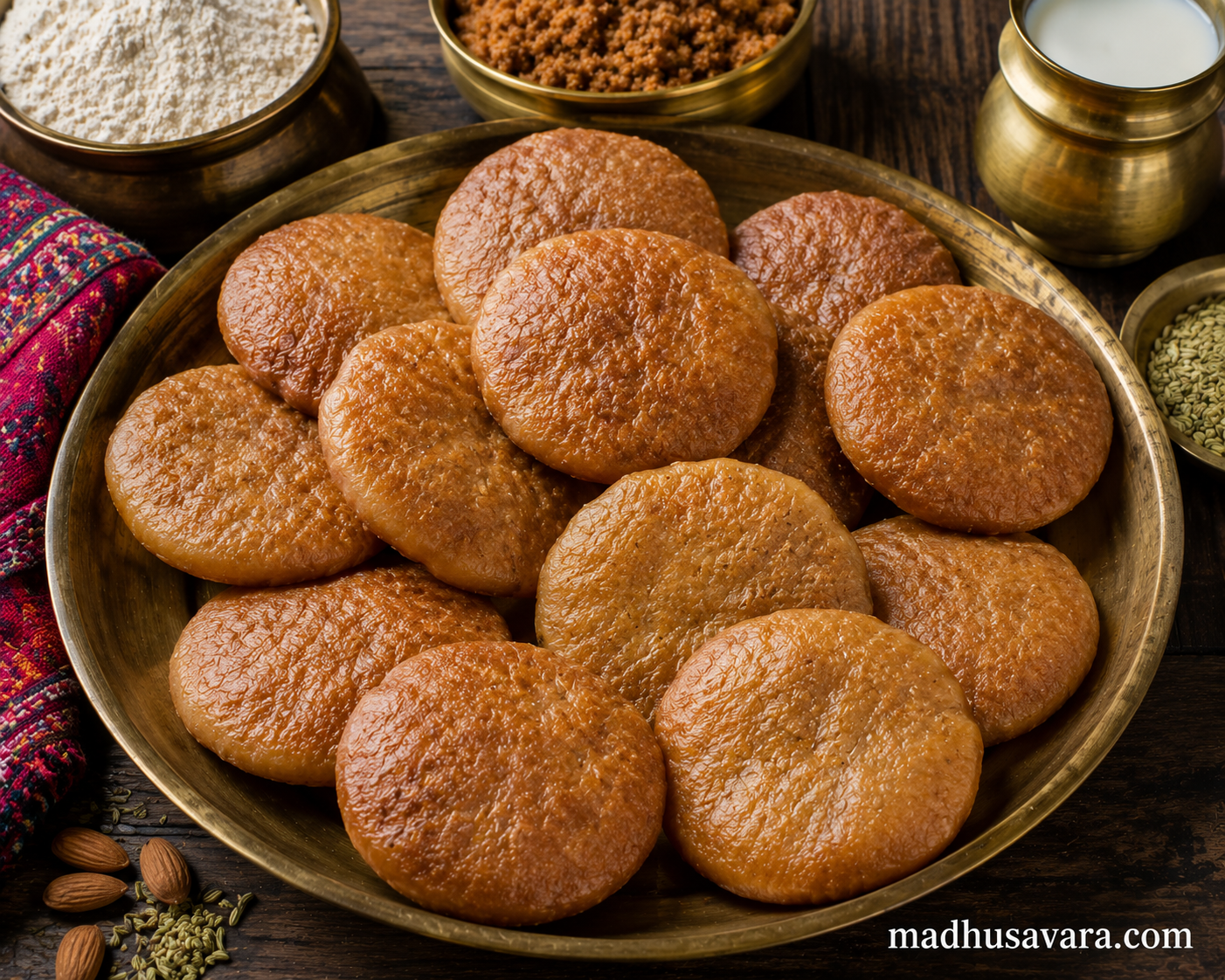
Traditional Himachali Marchu or Mithdu sweet bread, hand-pressed and deep-fried, served on a brass platter with jaggery, flour, milk and fennel seeds.

Author’s Note

By Madhu Savara, Author & Owner of madhusavara.com

Namaste! Marchu, popularly known as Mithdu, is a traditional sweet fermented bread from the Kangra and Mandi regions of Himachal Pradesh. It is one of those old Himachali preparations that carries the warmth and simplicity of home cooking and is often associated with festive and special occasions.

Similar to Bhaturu in its use of fermented dough, Marchu has its own distinct character. The addition of jaggery gives it a gentle sweetness, while wheat flour and semolina create a wholesome texture. After the dough is allowed to ferment naturally, the bread is shaped and deep-fried until beautifully puffed and golden.

In this recipe, I have followed the traditional method as closely as possible, using simple ingredients and allowing the natural fermentation process to develop its characteristic taste and texture. Marchu or Mithdu is more than just a sweet bread—it is a small but meaningful part of Himachal Pradesh’s rich food heritage, lovingly prepared and enjoyed during special moments with family and community.

Description of the Recipe

Marchu, also known as Mithdu, is a traditional sweet fermented bread from the Kangra and Mandi regions of Himachal Pradesh. Made with wheat flour and semolina, the dough is enriched with jaggery, milk, fennel seeds and dry fruits, giving it a pleasant sweetness and a rich, festive flavour.

After fermentation, the dough is shaped and, traditionally, pressed into carved wooden moulds before being deep-fried until golden brown. Crisp on the outside and soft within, Marchu is a delightful traditional Himachali bread, often enjoyed with a hot cup of tea.

Origin

Marchu or Mithdu comes from the traditional kitchens of Kangra and Mandi, where fermented breads have been prepared for generations. Its sweet taste, fermented dough and festive preparation give it a character of its own.

Significance

Marchu is traditionally prepared for happy occasions such as weddings, birthdays and local festivals. It is shared with family, friends and guests, making it a special part of Himachali celebrations. For many families in Kangra and Mandi, this simple sweet bread carries the familiar taste of home, hospitality and tradition.

Table of Contents

  1. Author’s Note
  2. Description of the Recipe
  3. Origin
  4. Significance
  5. Nutritional Value
  6. Ingredients
  7. Equipment Needed
  8. Step-by-Step Marchu / Mithdu Recipe
  9. Allergen Information
  10. MadhuSavara’s Tips and Variations
  11. Things to Avoid
  12. Storage
  13. Serving With
  14. Frequently Asked Questions
  15. Call to Action
  16. Final Thoughts
  17. Author’s Bio

Servings

12 pieces

Preparation Time:

25 Minutes plus 4 hours Resting time

Cooking Time:

30 minutes

Calories

220

Ingredients

List

For the Dough (Makes 12 Marchu)

  • 2 cups whole wheat flour (atta)
  • ½ cup semolina (suji)
  • ½ to ¾ cup grated or powdered jaggery, adjusted to taste
  • ½ cup warm milk, or as required to knead the dough
  • 2–3 tablespoons ghee or oil
  • 1 teaspoon active dry yeast or 2–3 tablespoons Malera (fermented leftover dough)
  • 1 teaspoon meethi saunf (fennel seeds)
  • 2–3 tablespoons mixed dry fruits, such as raisins, chopped almonds or cashews (optional)
  • Oil or ghee, for deep frying

Equipment Needed

Needed

  • Large Mixing Bowl – for combining and kneading the Marchu/Mithdu dough.
  • Clean Kitchen Cloth or Lid – to cover the dough while it rests.
  • Clean Flat Surface or Plate – for shaping and gently hand-pressing the dough into Marchu. Traditional Marchu is hand-pressed; no carved wooden mould is required.
  • Deep Kadhai or Heavy-Bottomed Frying Pan – for deep-frying the Marchu evenly.
  • Slotted Spoon – for turning and safely removing the fried Marchu from the hot oil or ghee.
  • Kitchen Paper or Wire Rack – for draining excess oil after frying.

Nutrition Information

Nutritional Value

Approximate values per Marchu, based on a batch of 12 pieces. Values may vary depending on the amount of jaggery, ghee or oil used and the oil absorbed during deep frying.

NutrientApprox. per Marchu
Energy220 kcal
Carbohydrates30–35 g
Protein3–4 g
Total Fat6–8 g
Saturated Fat1.5–2.5 g
Fibre2–3 g
Sugar10–14 g
Sodium5–15 mg
Calcium25–40 mg
Iron1–1.5 mg


Step by Step Instructions

Recipe Detail

Step 1: Prepare the Dough

In a large bowl, combine whole wheat flour and semolina. Add grated jaggery, fennel seeds, dry fruits and yeast or Malera. Pour in warm milk and add oil or ghee. Knead into a firm, smooth dough, adding a little more milk only if needed.

Step 2: Ferment the Dough

Lightly grease the dough with oil. Cover the bowl with a clean cloth or lid and keep it in a warm place to ferment. In summer, fermentation takes about 2–4 hours, while in winter it may take 6–8 hours. The dough is ready when it has risen, and small cracks appear on the surface.

Step 3: Shape the Marchu

Divide the fermented dough into equal lemon-sized portions. Place one portion between the two traditional carved wooden moulds and press firmly to create the characteristic Marchu design.

If wooden moulds are unavailable, flatten each portion gently with your palms into a small disc about ½ cm thick.

Step 4: Deep-Fry the Marchu

Heat oil or ghee in a deep kadhai over medium heat. To check the temperature, drop a small piece of dough into the oil; it should rise steadily without browning immediately.

Gently slide a few Marchu into the hot oil. Fry over medium heat, turning occasionally, until evenly golden brown and cooked through. Do not overcrowd the kadhai.

Step 5: Drain and Cool

Remove the fried Marchu with a slotted spoon and place them on kitchen paper to drain excess oil. Allow them to cool slightly before serving.

Tips and Variations

MadhuSavara’s Tips and Variations

  • Use traditional Malera, if available. It gives Marchu/Mithdu its authentic Himachali character, with a distinctive flavour and texture that reflects the traditional preparation.
  • Adjust the jaggery according to your family’s taste. Marchu should be pleasantly sweet, not overwhelmingly sugary, allowing the flavour of the wheat, semolina and other traditional ingredients to come through.
  • Keep the fat in the dough moderate. Too much oil or ghee can make the dough heavy. Use only enough to achieve a soft, manageable dough and the desired texture after frying.
  • Shape every Marchu by hand. Divide the dough into small portions and gently press them into thick, even discs. The hand-pressed shape is an important part of the traditional character of Himachali Marchu/Mithdu.
  • For a gentle variation, add a pinch of cardamom powder with the fennel seeds. Keep it subtle so that the original flavour of traditional Marchu remains the focus.
  • Do not roll the discs too thin. A slightly thick, hand-pressed Marchu cooks more evenly and develops the characteristic texture expected from this traditional Himachali sweet bread.

Allergen Information

Information

  • Contains Gluten: Marchu/Mithdu is prepared with whole wheat flour (atta) and semolina (suji).
  • Contains Milk: Milk is used in the dough, depending on the recipe.
  • May Contain Tree Nuts: If dry fruits or nuts are added, the recipe may contain tree nuts.
  • May Contain Milk Derivatives: When prepared or deep-fried using ghee, it contains milk-derived ingredients.
  • Allergy Advice: People with allergies or sensitivities to wheat, gluten, milk, or nuts should check all ingredients carefully before consumption.
Other Essentials

Things to Avoid

  • Do not make the Marchu/Mithdu dough too soft. The dough should be firm yet pliable, making it easier to shape and hand-press into even discs before frying.
  • Avoid frying Marchu on a high flame. If the oil is too hot, the outside can brown quickly while the centre may remain undercooked. Maintain a medium flame and fry patiently for an even golden colour and proper cooking.
  • Do not skip the fermentation stage. Whether you are using traditional Malera or another fermenting agent, adequate fermentation is important for developing the characteristic texture and mild fermented flavour of traditional Himachali Marchu.
  • Do not make the Marchu discs too thin. Keep them moderately thick so that they retain their hand-pressed shape and cook evenly during deep-frying.
  • Avoid overcrowding the kadhai. Fry only a few Marchu at a time to maintain the temperature of the oil and allow each piece to cook evenly.

Storage

  • Allow the Marchu/Mithdu to cool completely before storing. Packing warm fried bread can create moisture and affect its texture.
  • Store the cooled Marchu in a clean, airtight container at room temperature and consume within 2–3 days, depending on the weather and storage conditions.
  • For longer storage, refrigerate in an airtight container for up to 4–5 days.
  • Before serving, warm the Marchu lightly on a tawa over low heat or heat briefly in a microwave. Avoid overheating, as it may make the bread dry or tough.

Serving Suggestions

  • Serve Himachali Marchu/Mithdu warm or at room temperature with a cup of chai for a simple traditional-style serving.
  • Include this traditional Himachali sweet bread in a family tea-time spread, festive meal or special gathering.
  • Serve it alongside other regional Himachali dishes when exploring the flavours of Kangra and Mandi food traditions.

Frequently Asked Questions

What is the difference between Marchu and Bhaturu?

Bhaturu and Marchu/Mithdu are both associated with Himachali fermented bread traditions, but they differ in preparation and character. Bhaturu is generally prepared as a savoury or everyday fermented bread and is commonly cooked on a tawa, while Marchu/Mithdu is a sweeter preparation made with ingredients such as jaggery and is deep-fried.

Can I make Marchu without commercial yeast?

Yes. If traditional Malera, or fermented leftover dough used as a starter, is available and forms part of your family or regional method, it can be used instead of commercial yeast.

Why did my Marchu become hard after frying?

Marchu can turn hard if the dough is too dry, the discs are pressed too thin, or the frying temperature is too high. Keep the dough firm but pliable, hand-press it evenly and fry on a steady medium flame.

Is Marchu the same as Babru?

No. Babru and Marchu/Mithdu are different preparations. Babru is commonly made as a fried bread with a filling, often using urad dal, whereas Marchu/Mithdu is prepared as a sweet, fermented and hand-pressed Himachali bread.

Can Marchu be prepared without Malera?

Yes, depending on the method being followed. If Malera is unavailable, another suitable fermentation method may be used, although the flavour and fermentation time may differ from a traditional preparation using Malera.

MadhuSavara’s Kitchen Note

Marchu/Mithdu is best approached with patience rather than shortcuts. Pay attention to the dough consistency, allow sufficient time for fermentation and keep the frying temperature moderate. These small details make a noticeable difference to the final texture of this traditional Himachali sweet bread.

Final Thoughts

Marchu, also known as Mithdu, represents the simplicity of traditional Himachali cooking, where everyday ingredients are transformed through careful fermentation, hand-shaping and slow frying. Made with ingredients such as wheat flour, semolina, jaggery and Malera, this regional sweet bread deserves to be documented with care while respecting the variations found across Himachal Pradesh.

Author’s Note

Madhu Savara is the founder, writer and editor of madhusavara.com, where she documents Indian recipes with a focus on regional, traditional and Himalayan food. Her work aims to present home-style recipes with practical cooking guidance while giving due importance to the ingredients, methods and food traditions behind them.

Disclaimer

Important Notice: Read Before Proceeding

The recipes, preparation methods, nutritional details, and related content published on Madhu Savara’s website, social media, and associated platforms are intended solely for general informational and educational purposes. While every effort has been made to ensure accuracy and reliability, we make no guarantees regarding the results, safety, or accuracy of any recipe presented here.

We are not licensed nutritionists, dieticians, or medical professionals. The nutritional values provided are estimates only, calculated using third-party tools, and should not be used for medical diagnosis, dietary treatment, or allergy management. If you have any medical conditions, dietary restrictions, or food allergies, please consult your doctor or certified dietitian before attempting any recipe.

Cooking inherently involves sharp tools, high heat, and the risk of injury or fire. You assume full responsibility for your kitchen practices. Madhu Savara, the website, and all contributors shall not be held liable for any damage, injury, loss, or adverse outcome resulting directly or indirectly from the preparation, consumption, or interpretation of any content herein.

By using this website and attempting any recipe, you agree to hold harmless and indemnify Madhu Savara and her team from any liability, legal claim, or damages arising from the use of this content. You are encouraged to exercise independent judgment and take full responsibility for your health, kitchen safety, and actions.


Traditional Himachali Marchu or Mithdu sweet bread, hand-pressed and deep-fried, served on a brass platter with jaggery, flour, milk and fennel seeds.
Print

Marchu Bread Recipe | Authentic Himachali Mithdu Sweet Fermented Bread

Marchu, also known as Mithdu, is a traditional sweet fermented bread from the Kangra and Mandi regions of Himachal Pradesh. Made with wheat flour and semolina, the dough is enriched with jaggery, milk, fennel seeds and dry fruits, giving it a pleasant sweetness and a rich, festive flavour.
After fermentation, the dough is shaped and, traditionally, pressed into carved wooden moulds before being deep-fried until golden brown. Crisp on the outside and soft within, Marchu is a delightful traditional Himachali bread, often enjoyed with a hot cup of tea.
Course Snack
Cuisine Himachal, North India
Keyword Marchu Recipe
Prep Time 25 minutes
Cook Time 30 minutes
Resting Time 4 hours
Total Time 4 hours 55 minutes
Servings 12 pieces
Calories 220kcal
Author Madhu Savara

Equipment

  • Large Mixing Bowl – for combining and kneading the Marchu/Mithdu dough.Clean Kitchen Cloth or Lid – to cover the dough while it rests.Clean Flat Surface or Plate – for shaping and gently hand-pressing the dough into Marchu. Traditional Marchu is hand-pressed; no carved wooden mould is required.Deep Kadhai or Heavy-Bottomed Frying Pan – for deep-frying the Marchu evenly.Slotted Spoon – for turning and safely removing the fried Marchu from the hot oil or ghee.Kitchen Paper or Wire Rack – for draining excess oil after frying.

Ingredients

  • 2 cups whole wheat flour atta
  • ½ cup semolina suji
  • ½ to ¾ cup grated or powdered jaggery adjusted to taste
  • ½ cup warm milk or as required to knead the dough
  • 2 –3 tablespoons ghee or oil
  • 1 teaspoon active dry yeast or 2–3 tablespoons Malera fermented leftover dough
  • 1 teaspoon meethi saunf fennel seeds
  • 2 –3 tablespoons mixed dry fruits such as raisins, chopped almonds or cashews (optional)
  • Oil or ghee for deep frying

Instructions

  • Step 1: Prepare the Dough
  • In a large bowl, combine whole wheat flour and semolina. Add grated jaggery, fennel seeds, dry fruits and yeast or Malera. Pour in warm milk and add oil or ghee. Knead into a firm, smooth dough, adding a little more milk only if needed.
  • Step 2: Ferment the Dough
  • Lightly grease the dough with oil. Cover the bowl with a clean cloth or lid and keep it in a warm place to ferment. In summer, fermentation takes about 2–4 hours, while in winter it may take 6–8 hours. The dough is ready when it has risen, and small cracks appear on the surface.
  • Step 3: Shape the Marchu
  • Divide the fermented dough into equal lemon-sized portions. Place one portion between the two traditional carved wooden moulds and press firmly to create the characteristic Marchu design.
  • If wooden moulds are unavailable, flatten each portion gently with your palms into a small disc about ½ cm thick.
  • Step 4: Deep-Fry the Marchu
  • Heat oil or ghee in a deep kadhai over medium heat. To check the temperature, drop a small piece of dough into the oil; it should rise steadily without browning immediately.
  • Gently slide a few Marchu into the hot oil. Fry over medium heat, turning occasionally, until evenly golden brown and cooked through. Do not overcrowd the kadhai.
  • Step 5: Drain and Cool
  • Remove the fried Marchu with a slotted spoon and place them on kitchen paper to drain excess oil. Allow them to cool slightly before serving.

Notes

  • Use traditional Malera, if available. It gives Marchu/Mithdu its authentic Himachali character, with a distinctive flavour and texture that reflects the traditional preparation.
  • Adjust the jaggery according to your family’s taste. Marchu should be pleasantly sweet, not overwhelmingly sugary, allowing the flavour of the wheat, semolina and other traditional ingredients to come through.
  • Keep the fat in the dough moderate. Too much oil or ghee can make the dough heavy. Use only enough to achieve a soft, manageable dough and the desired texture after frying.
  • Shape every Marchu by hand. Divide the dough into small portions and gently press them into thick, even discs. The hand-pressed shape is an important part of the traditional character of Himachali Marchu/Mithdu.
  • For a gentle variation, add a pinch of cardamom powder with the fennel seeds. Keep it subtle so that the original flavour of traditional Marchu remains the focus.
  • Do not roll the discs too thin. A slightly thick, hand-pressed Marchu cooks more evenly and develops the characteristic texture expected from this traditional Himachali sweet bread.


0 Comments

Submit a Comment

Your email address will not be published. Required fields are marked *

Recipe Rating